

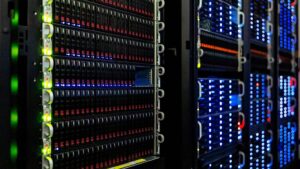
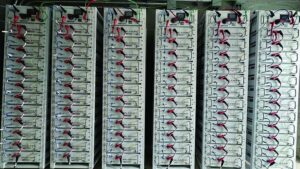
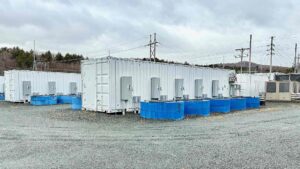
The visible story of 2026 is AI demand for power. The consequential story sits at the fence line, where that demand meets the grid. On 16 November six US transmission operators file tariff revisions answering a June order from the Federal Energy Regulatory Commission, and those filings will decide how quickly a data center BESS interconnection wins approval and what the battery must do after energisation. The behind-the-meter pack is no longer just backup: it is becoming the evidence a developer needs to prove the site can behave like a responsible grid participant.
Get an Interconnection-Ready BESS Quotation
Send your point of connection, load profile and ride-through requirement. We return an LFP BESS configuration with PCS, controls and certification scope within 48 hours.
Why Does the FERC 2026 Deadline Matter for Data Center BESS Interconnection?
On 18 June 2026 the Commission opened six separate show-cause proceedings, one each for PJM, SPP, NYISO, MISO, CAISO and ISO New England, preliminarily defining a large load as a site of 50 megawatts or more connecting above 69 kilovolts. Compliance filings for the abeyance cases fall due on 16 November 2026, so the working rules are being written now rather than after another summer of record demand. The queue is the pressure behind the deadline: Berkeley Lab counted 2,061 gigawatts of generation and storage waiting for interconnection at the end of 2025, and only 13 percent of capacity requested between 2000 and 2020 reached commercial operation. In PJM the 14 July 2026 capacity auction for the 2028/29 delivery year cleared 6,831 megawatts short of the reliability requirement at the price cap of 325 dollars per megawatt-day. A developer that can demonstrate flexible, controllable load has a measurable advantage in that environment.
What Happened When 3,800 MW of Data Center Load Tripped?
On 22 July 2026 a fault on a 230 kilovolt line in Dominion Energy’s zone of northern Virginia caused about 3,800 megawatts of data centre load to disconnect without warning, the largest such loss in PJM history and more than twice a comparable 2024 event. PJM responded on 8 September with a proposal that makes ride-through a condition of connection for large computational loads: stay connected through voltage excursions between 0.50 and 0.90 per unit, restore at least 90 percent of load within two seconds, and hold power within 10 percent of normal during frequency disturbances. Texas moved first: ERCOT’s NOGRR282 rules took effect on 1 August 2026, and two days later Governor Greg Abbott directed ERCOT and the Public Utility Commission to pause pending data-centre interconnection approvals pending an audit. ERCOT was already assessing roughly 474 gigawatts of connection requests, about 90 percent of it from data centres and more than five times the state’s record peak demand.
| Region | Rule or event | Date | What the BESS must demonstrate |
|---|---|---|---|
| FERC | Six Section 206 show-cause orders on large loads | 18 Jun 2026; filings due 16 Nov 2026 | Study procedure, cost allocation and terms for flexible load |
| PJM | Large Load definition and registry accepted | 9 Oct 2026; effective 12 Oct 2026 | 50 MW threshold at a single electrical site |
| PJM | Large computational load ride-through proposal | Filing planned Nov 2026 | 90% load restoration within 2 seconds |
| ERCOT | NOGRR282 ride-through for Large Computational Loads | Effective 1 Aug 2026 | Voltage and frequency ride-through at the point of connection |
| NERC | Initial mandatory standards for computational loads ordered | Due 31 Dec 2026 | Regional thresholds to be harmonised in 2027 |
| MISO | Same-substation generation review proposal | 2026 proposal | Fast track for load paired with on-site supply |
How Does a Battery Make a Data Centre Grid-Aware?
The engineering answer is to place a fast, actively cooled battery between the utility feed and the compute load so the grid sees a smooth demand while the servers see exactly what they need. DIMAAG launched its ZettaWatt platform in August 2026 with that premise. A 300 kilowatt demonstration at its Fremont, California facility reduced grid-side power fluctuation to less than 1 percent even as the DC-side compute load changed sharply. Electric Power Engineers validated the architecture in PSCAD against a Texas grid model and an AI data centre load profile, and the company presented it to ERCOT’s Large Load Working Group in April 2026. The commercial system ships in modules up to 5 megawatts and runs on an 800 volt DC backbone. The detail buyers should notice is thermal: a battery that continuously absorbs and injects power generates heat all day, unlike a standby UPS that rests between outages, so cell-level cooling and duty-cycle weathering belong in the specification.
What Did the Latest 120 MWh Financing Signal to Buyers?
On 10 November 2026 Calibrant Energy closed a 145 million dollar debt facility led by Investec for solar and storage projects, including a 120 MWh BESS serving a hyperscale data centre customer in PJM territory. Citi, Liberty Bank and Siemens Financial Services participated, and Calibrant now holds more than 5.9 gigawatt-hours of storage in operation, construction or exclusive development. Chief executive Phil Martin described on-site storage as a fast, reliable way for data centre operators to come online and remain responsible grid citizens. Read that as a financing signal: lenders are underwriting the interconnection timeline, not only the equipment, and a battery that can be shown to reduce network upgrades is now bankable collateral for a faster energisation date.
What Do Cell Prices Mean for an Interconnection-Driven BESS?
Hardware is getting cheaper even as the compliance requirement rises. InfoLink’s 11 November 2026 spot assessment put battery-grade lithium carbonate at roughly 89,000 renminbi per tonne, spodumene SC6 at about 1,150 dollars per tonne, 314 Ah LFP cells at an average 0.348 renminbi per watt-hour and a two-hour DC-side liquid-cooled container at 0.49 renminbi per watt-hour in China. SMM’s daily assessment the same day averaged lithium carbonate near 90,450 renminbi per tonne. BloombergNEF puts global stationary pack prices near 70 dollars per kWh. SNE Research and Mysteel continue to track the shipment and material flows that set those numbers. None of these figures includes the PCS, the controls or the interconnection studies that a large-load connection demands, so a cell price is a starting point rather than a budget.
What Should Buyers Put in the RFQ Before the Rules Change?
Specify the behaviour the grid operator will test, not just the megawatt-hours. Ask for the ride-through envelope at the point of connection, the ramp-rate limit the site will hold, and whether the PCS must operate in grid-forming mode. Then fix the physical and commercial details.
- Ride-through and restoration curve at the point of connection, with a test report rather than a simulation alone.
- Ramp-rate ceiling and demand-response interface that the operator can dispatch during an emergency.
- PCS mode – grid-following or grid-forming – tied to the islanding and black-start requirement.
- Cell format and cooling duty sized for continuous cycling, including the heat rejection at maximum ramp.
- Certification pack – UL 9540, UL 9540A, UL 1973, IEC 62619, UN 38.3 and IEEE 1547 as required by the market.
- Throughput warranty in MWh and an availability guarantee measured at the point of connection.
Compare the containerized BESS enclosure options, the utility-scale battery storage power blocks and the commercial and industrial ESS range before you fix the interface point, because that decision drives both the study scope and the cabling cost.
The Buyer’s Questions, Answered
Why does a BESS change data centre interconnection timing?
Because grid operators now judge a large load by how it behaves during a fault, not only by how much power it requests. A battery on the DC side absorbs the fast swing, holds the facility through a voltage sag and lets the operator demonstrate ride-through at the point of connection. That evidence shortens the study cycle and can avoid a dedicated network upgrade.
What is a ‘large computational load’ in 2026?
Definitions differ by region but cluster around 50 megawatts. FERC accepted PJM’s definition of 50 MW or more at a single electrical site on 9 October 2026, effective 12 October. PJM’s separate ride-through proposal covers data centres and crypto sites connected at 100 kilovolts or above that aggregate at least 50 MW, with compliance required before a new site energises.
How fast must a data centre battery respond?
Milliseconds for the first response, seconds for restoration. PJM’s draft requires at least 90 percent of load restored within two seconds after voltage returns, and the load must stay within 10 percent of normal during a frequency event. That is a power-conversion and controls specification as much as an energy-capacity question.
Which standards should an interconnection-grade BESS carry?
Ask for UL 9540 system listing, UL 9540A container-level fire testing, UL 1973 and IEC 62619 cell certification, UN 38.3 for transport, and IEEE 1547 for the grid interface. In North America the AHJ will also want the fire test summary and a documented protection study before energisation, so request them with the quotation rather than after the order.
How much does a data centre BESS cost in 2026?
It depends on duration and region, not on the headline cell price alone. InfoLink’s 11 November 2026 assessment put 314 Ah LFP cells at about 0.348 renminbi per watt-hour and a two-hour DC-side liquid-cooled container at about 0.49 renminbi per watt-hour in China. BloombergNEF puts stationary storage packs near 70 dollars per kWh globally. Budget for PCS, controls and interconnection studies separately.
Sources: Federal Energy Regulatory Commission large-load proceedings at ferc.gov; PJM large-load and ride-through material at pjm.com; InfoLink Consulting storage spot prices at infolink-group.com; SMM lithium assessments at smm.cn; BloombergNEF storage outlook at about.bnef.com; Calibrant financing coverage at datacenters.economictimes.indiatimes.com; ZettaWatt validation context at energydigital.com.
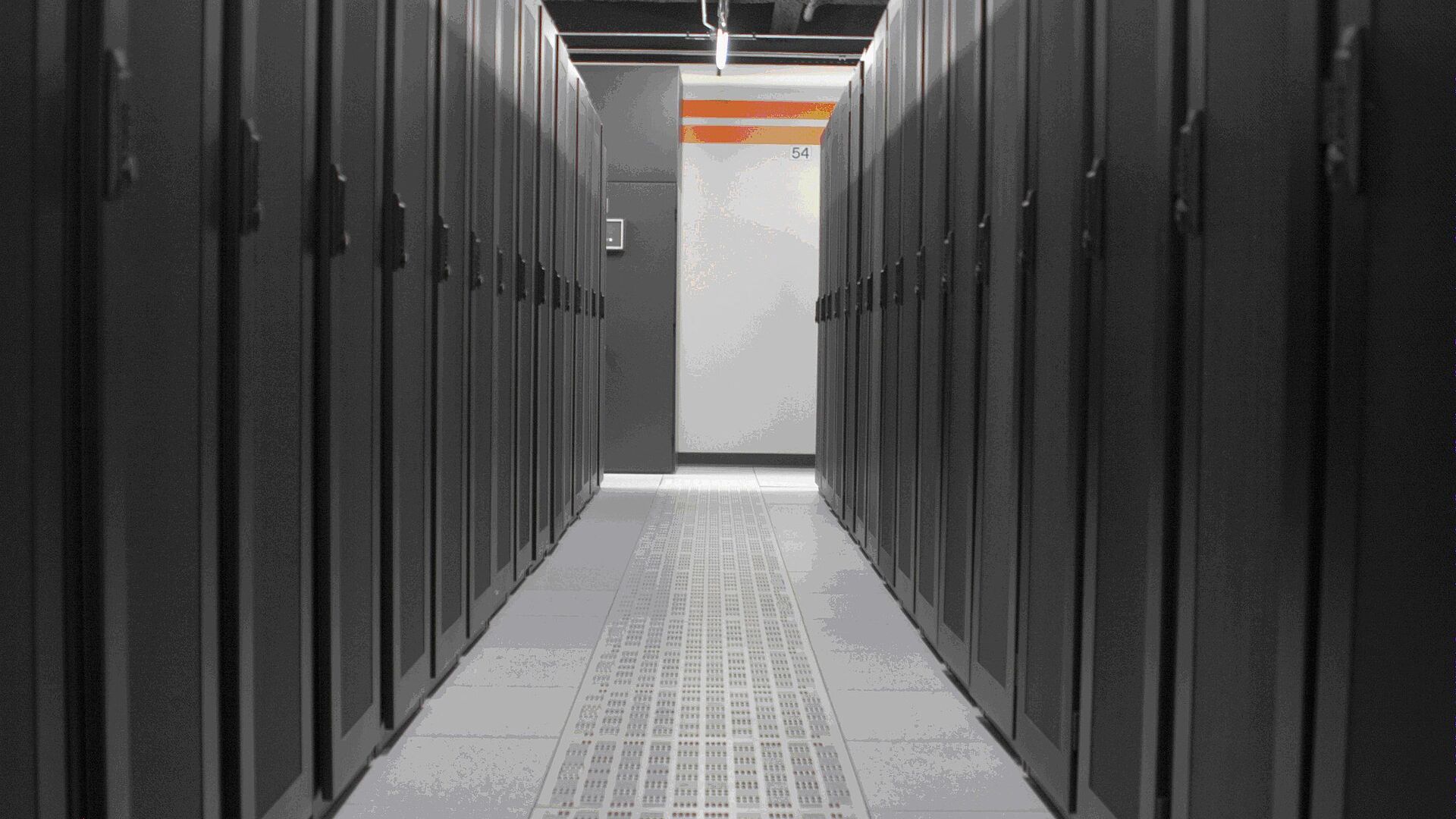
Hero photo: “Inside site” by Switch and Data, Wikimedia Commons, CC BY-SA 4.0 (cropped to 16:9).