


BESS cell selection has moved on from a simple capacity comparison. In 2026 a buyer choosing between a 280Ah, 314Ah and 587Ah prismatic LFP cell is really choosing a container size, a warranty structure and a supply chain at the same time. The headline amp-hour number tells you almost nothing on its own: volumetric energy density decides how many megawatt-hours fit inside a 20 ft enclosure, the published cycle life decides the replacement date, and the test report decides whether the cell can be shipped legally at all. This guide sets out figures that were actually published, explains how to compare formats on a level basis, and ends with a checklist a purchasing team can paste into an RFQ. No supplier claim is repeated as fact unless a named source stands behind it.
Get a Cell Shortlist Before You Issue the RFQ
Send your target megawatt-hours, duration and delivery market. We return a like-for-like comparison of 280Ah, 314Ah and 587Ah LFP cells with certificate scope and an indicative budget within 48 hours.
What Does BESS Cell Selection Actually Decide?
Choose the cell and you have effectively chosen the architecture around it. A 314Ah LFP cell is 3.2 volts nominal, the same voltage as the 280Ah cell it replaced, so a 16S rack stays inside the familiar 44.8 to 58.4 volt window and an existing hybrid inverter needs no voltage changes. What changes is everything downstream of the voltage: cell count, busbar quantity, rack steel, cooling plate area and the number of connections a quality team must torque and log. On a utility-scale block of several gWh, those balance-of-system items are a material share of cost.
The second decision is thermal. Larger prismatic formats pack more lithium into one case and produce more heat per cell, but they also reduce the total number of joints, and the industry’s argument in favour of 587Ah and 628Ah cells is that a smaller number of larger units is easier to manage than thousands of smaller ones. Whether that holds depends on the cooling design and the cell-to-cell temperature spread the buyer is willing to accept. Ask for the spread, not just the nameplate capacity.
Third, the cell sets the documentary burden. A stationary battery in North America is normally assessed against UL 1973 at battery level and UL 9540 at system level, while industrial cells are certified to IEC 62619 and every shipped lithium battery needs a UN 38.3 transport record. The authority having jurisdiction decides what is required on a specific site. FERC and PJM rules shape how a large grid-connected asset is dispatched, and Eurelectric tracks the equivalent European market design, but none of those rules change the fact that the cell certificate must name the exact model being delivered. A generic catalogue statement is not evidence.
Why Did 280Ah Give Way to 314Ah Cells?
The 280Ah prismatic cell was the workhorse of the first containerised storage generation. CATL’s first-generation product delivered roughly 350 to 370 Wh/L, 6,000 to 8,000 cycles, and about 3.72 MWh in a 20 ft container. Its successor at 314Ah lifted volumetric density to roughly 390 to 400 Wh/L, cycle life to 8,000 to 10,000, and container energy to about 5 MWh, while keeping the case dimensions within half a millimetre of the original. That is why existing rack and busbar tooling could be reused, and why the change propagated through the market so quickly.
The practical gain for a buyer is energy per square metre rather than a higher voltage. A 16S rack built from 280Ah cells stores about 14.33 kWh; the same rack with 314Ah cells stores about 16.07 kWh, an increase of roughly 12 percent with no change in footprint. In a container that difference is multiplied across every rack. It also changes the cost per delivered kilowatt-hour: fewer cells are needed for the same capacity, so fewer interconnects, fewer balance leads and fewer tray positions are purchased. The trade-off is that 314Ah cells draw more current at the same C-rate, so the BMS and fuse selection must be checked rather than copied from an older design.
What Do 587Ah, 588Ah and 628Ah Cells Change?
The third generation targets a different problem: how to get more megawatt-hours into the same 20 ft box without adding a second container. CATL’s 587Ah cell is quoted at 430 to 434 Wh/L, at least 12,000 cycles, a designed life above 20 years, 96.5 percent round-trip efficiency and an operating range from minus 40 to plus 70 degrees Celsius. That supports a 6.25 MWh container. REPT’s 588Ah cell is specified at 430 Wh/L, 190 Wh/kg, 10,000 to 12,000 cycles and up to 96.5 percent efficiency. EVE describes its 628Ah Mr Big as testing between 670 and 680 Ah in practice, at 386 Wh/L and 8,000 cycles to 80 percent state of health.
Hithium has taken the large-format route further with 587Ah, 1175Ah and 1300Ah cells aimed at long-duration storage. The pattern across all of them is the same: energy density and container capacity rise, cell count falls, and the round-trip efficiency figure improves. None of those published numbers is a guarantee for a specific shipment, and several are the manufacturer’s own test results rather than independently witnessed data. Treat them as a shortlisting filter, then require the report.
| Cell format | Nominal capacity | Volumetric density | Published cycle life | 20 ft container | Indicative price |
|---|---|---|---|---|---|
| CATL 280Ah, first generation | 280 Ah | 350 to 370 Wh/L | 6,000 to 8,000 cycles | about 3.72 MWh | about 73.5 dollars per kWh, CATL Mall August 2026 |
| CATL 314Ah, second generation | 314 Ah | 390 to 400 Wh/L | 8,000 to 10,000 cycles | about 5 MWh | RMB 0.348 per Wh, InfoLink November 2026 |
| CATL 587Ah, third generation | 587 Ah | 430 to 434 Wh/L | at least 12,000 cycles | about 6.25 MWh | not publicly listed |
| EVE Mr Big | 628 Ah nominal, 670 to 680 Ah tested | 386 Wh/L | 8,000 cycles to 80 percent SOH | not stated | not publicly listed |
| REPT 588Ah | 588 Ah | 430 Wh/L | 10,000 to 12,000 cycles | not stated | not publicly listed |
| Hithium large format | 587 Ah, 1175 Ah, 1300 Ah | not stated | application specific | not stated | not publicly listed |
| 280Ah spot tender, CEEC 5 GWh package | 280 Ah | not stated | not stated | not stated | RMB 0.34 per Wh, about 47 dollars per kWh, May 2026 |
How Do You Compare Cell Formats on a Level Basis?
Most comparison tables fail because they mix layers. A cell price in renminbi per watt-hour is not a pack price in dollars per kWh, and neither is an installed EPC price. BloombergNEF’s 2025 volume-weighted lithium-ion pack price was a record-low 108 dollars per kWh, with stationary storage the cheapest segment at about 70 dollars per kWh; the same dataset put a Chinese pack near 84 dollars and a European pack roughly 56 percent higher. Benchmark Mineral Intelligence has argued that a US-made LFP cell costs about 56 percent more than its Chinese equivalent and stays more than 40 percent dearer out to 2030. Those are structural differences, not a negotiation gap.
Compare cells at one state of charge, one temperature and one C-rate. A cycle-life claim at 25 degrees Celsius and 0.5C is not comparable with a test at 45 degrees and 1C. Record the depth of discharge, the end-of-life state-of-health threshold, and whether the figure is a laboratory result or a witnessed production batch. When a supplier quotes a 6,000-cycle cell, ask whether that means 80 percent or 70 percent remaining capacity, because the difference is several years of service. Only then divide the delivered megawatt-hours by the price to get a figure that means something.
Which Certificates Must the Cell Itself Carry?
Standards are not interchangeable, and a buyer should know which question each one answers. IEC 62619:2022 covers the safety of secondary lithium cells and batteries in industrial applications, including stationary storage; check the edition, the tested configuration and the operating conditions on the report. UL 1973:2022 addresses batteries for stationary and certain auxiliary power applications in North America. UL 9540:2023 evaluates the complete energy storage system. UN 38.3 is a transport test, not a product approval. A result for one model or arrangement does not automatically cover another, so compare the report scope with the quotation, the datasheet and the delivered labels.
The practical verification step is traceability. Require a UN 38.3 test summary with the report number and accredited laboratory, the IEC 62619 or UL 1973 certificate naming the exact cell type, a material safety data sheet, and batch records that link a delivered serial number back to a production lot. China’s GB/T 36276 applies to grid-scale storage in that market, and EN 50549 is the European grid-connection reference. Fire engineering is a separate assessment: UL 9540A is the test method used as evidence in NFPA 855 permitting, and neither is replaced by a cell certificate. The containerized BESS enclosure chosen later must match the configuration that was tested.
How Do You Verify a Grade A Cell Before You Buy?
Grade A is not a standard term. Neither IEC 62619, UL 1973 nor UN 38.3 defines Grade A, Grade A plus or Grade AA; those are commercial labels used by brokers. Verification has to be against measurable thresholds. A useful working definition is a prime-yield cell that delivers at least 98 percent of nameplate capacity at 0.5C and 25 degrees Celsius, has AC internal resistance inside the maker’s milliohm limit, which is around 0.25 milliohm for a 314Ah cell, and carries an intact laser DataMatrix code. A scratched or ground-off code is a warning sign, because manufacturers deface codes on cells rejected under warranty.
Internal resistance cannot be measured with a handheld multimeter. It needs a dedicated 1 kHz AC micro-ohmmeter that separates electrochemical impedance from contact resistance. On arrival, sample cells from several batches and check the voltage spread after ageing: in a 16S string, a spread above about 15 mV makes a passive balancer dissipate heat continuously and can cut usable pack energy by 5 to 15 percent. Independent sampling before a large order is cheaper than discovering the spread after the racks are assembled.
Ask the supplier to state the shipping state of charge in writing, and confirm that the packing instruction matches the UN 38.3 report for the actual route. Hot or humid sea legs deserve a specific packaging check. Keep every report tied to a serial number so a field issue can be traced to a production lot.
What Does a Large-Format Cell Cost in 2026?
Cell prices softened through 2026 but the fall has slowed. InfoLink assessed 314Ah LFP cells near RMB 0.348 per Wh in November 2026, with lithium carbonate around 89,000 yuan per tonne; earlier assessments put the same format between RMB 0.34 and 0.41 per Wh. SMM tracks prismatic LFP cells around RMB 0.420 per Wh and 100Ah cells near the same level, while Mysteel and SNE Research follow material and shipment volumes. CATL’s online mall listed 314Ah cells at about 0.423 yuan per Wh in August 2026 with a 600-cell minimum and a five-year warranty, a sign that the cell is being sold as a component rather than a negotiated project item.
Two policy changes matter for landed cost. China’s export VAT rebate on these products falls from 6 percent to zero on 1 January 2027, and a 2 percent domestic consumption tax on cells took effect on 1 September 2026. A quotation that ignores both is not a landed price. Read every offer as duty-inclusive cost at the named delivery point, and qualify a second route before awarding a multi-megawatt-hour order. A lower cell tag can be erased by freight, tariff or a step-up transformer lead time that has stretched beyond 100 weeks in some utility work.
How Do You Match a Cell to Container and C-Rate?
Start with the duty cycle. A two-hour grid application called on several times a day rewards a cell with high cycle life and a low degradation slope; a four-hour shifting application values energy density and a lower cost per megawatt-hour. C-rate is the bridge between the two. A 587Ah cell rated at 0.5C delivers about 293 amps, and the PCS, cabling and cooling must be sized for that current, not for the nameplate amp-hours. If the site requires grid-forming operation or fast frequency response under a local grid code, confirm the cell can sustain the required power without breaching its temperature window.
Interconnection is part of the same decision. FERC and PJM proceedings continue to reshape how large loads and storage connect in the United States, and a long queue can change the commercial value of a project before the containers arrive. Curtailment capture is another common driver: a cell chosen for frequent shallow cycling will age differently from one chosen for a single daily peak shift. The utility-scale battery storage block and a commercial and industrial ESS cabinet start from different cell assumptions, so fix the use case before comparing prices. For the wider specification context, see the BESS specification guide.
What Should Buyers Confirm Before Signing a Cell Order?
A cell order is easy to place and hard to change once batches are allocated. Confirm these points in writing before the purchase order is released.
Confirm These Seven Points Before You Order
- Exact model and revision named on the certificate, matching the quotation and the delivered label.
- Measured capacity and internal resistance from a sampled batch, with the test temperature and C-rate stated.
- Traceability from each delivered serial number back to a production lot, with an intact laser code.
- Cycle-life basis including depth of discharge, end-of-life state of health and who witnessed the test.
- Transport documents with report number, laboratory accreditation, shipping state of charge and the correct packing instruction.
- Landed cost including the 2027 export rebate change, the 2 percent cell consumption tax, freight and duty.
- Second source qualified against the same acceptance test, so a batch problem does not stop the project.
The Buyer’s Questions, Answered
Is a 314Ah cell always better than a 280Ah cell?
Not always. A 314Ah prismatic cell stores about 1,004.8 Wh against 896 Wh for a 280Ah cell, roughly 12 percent more, in almost the same 71.7 by 173.7 by 207 mm case. It raises usable capacity in a 16S rack from about 14.33 kWh to 16.07 kWh without new busbars or a new inverter voltage window. But the benefit is only real if the cell is Grade A, matched within 5 mV, and covered by a certificate that names the exact model. A poor 314Ah cell is worse than a good 280Ah cell.
What do 587Ah, 588Ah and 628Ah cells actually change?
They push a 20 ft container from about 5 MWh toward 6.25 MWh. CATL’s third-generation 587Ah cell is quoted at 430 to 434 Wh/L, at least 12,000 cycles, 96.5 percent round-trip efficiency and operation from minus 40 to plus 70 degrees Celsius. REPT rates its 588Ah cell at 430 Wh/L and 10,000 to 12,000 cycles. EVE’s 628Ah Mr Big is quoted at 386 Wh/L with 8,000 cycles to 80 percent state of health. The gain is energy per container, not voltage.
Does a UN 38.3 certificate cover the pack I am shipping?
Only if the report identifies the cell or battery actually being shipped. UN 38.3 is a transport test with eight parts, from altitude simulation to forced discharge, and it is not a general product approval. Request the test summary, report number, issuing laboratory and its accreditation. From 1 January 2026, lithium-ion cells carried by air are generally limited to 30 percent state of charge, so the shipper’s packing instruction and the report must agree. A certificate for a different model does not transfer.
What did large-format cells cost in 2026?
Prices depend on the layer. InfoLink put 314Ah LFP cells near RMB 0.348 per Wh in November 2026, and earlier in the year assessed the same format between RMB 0.34 and 0.41 per Wh. CATL’s online mall listed 314Ah cells at about 0.423 yuan per Wh in August 2026, roughly 63 dollars per kWh with a 600-cell minimum. BloombergNEF’s stationary-storage pack benchmark sits near 70 dollars per kWh, and SMM tracks 100Ah cells around RMB 0.420 per Wh. Those are cell and pack figures, not installed system prices.
Should I pay extra for the newest large-format cell?
Only when the project can use the extra energy. A 587Ah or 628Ah cell raises energy density and cuts the number of cells, interconnects and racks for a given megawatt-hour target, which lowers balance-of-system cost. It also concentrates more energy in one enclosure, which raises the consequence of a single-cell fault and can complicate fire permitting under NFPA 855 or UL 9540A. For a small commercial cabinet, a proven 314Ah cell from a traceable batch is usually the lower-risk buy.
Sources: InfoLink Consulting storage-cell assessments at infolink-group.com; SMM lithium pricing at smm.cn; BloombergNEF battery price survey at about.bnef.com; UL standards information at ul.com; IEC 62619 scope at iec.ch; UN 38.3 transport guidance at unece.org; FERC large-load proceedings at ferc.gov; PJM planning material at pjm.com; Eurelectric market design at eurelectric.org.
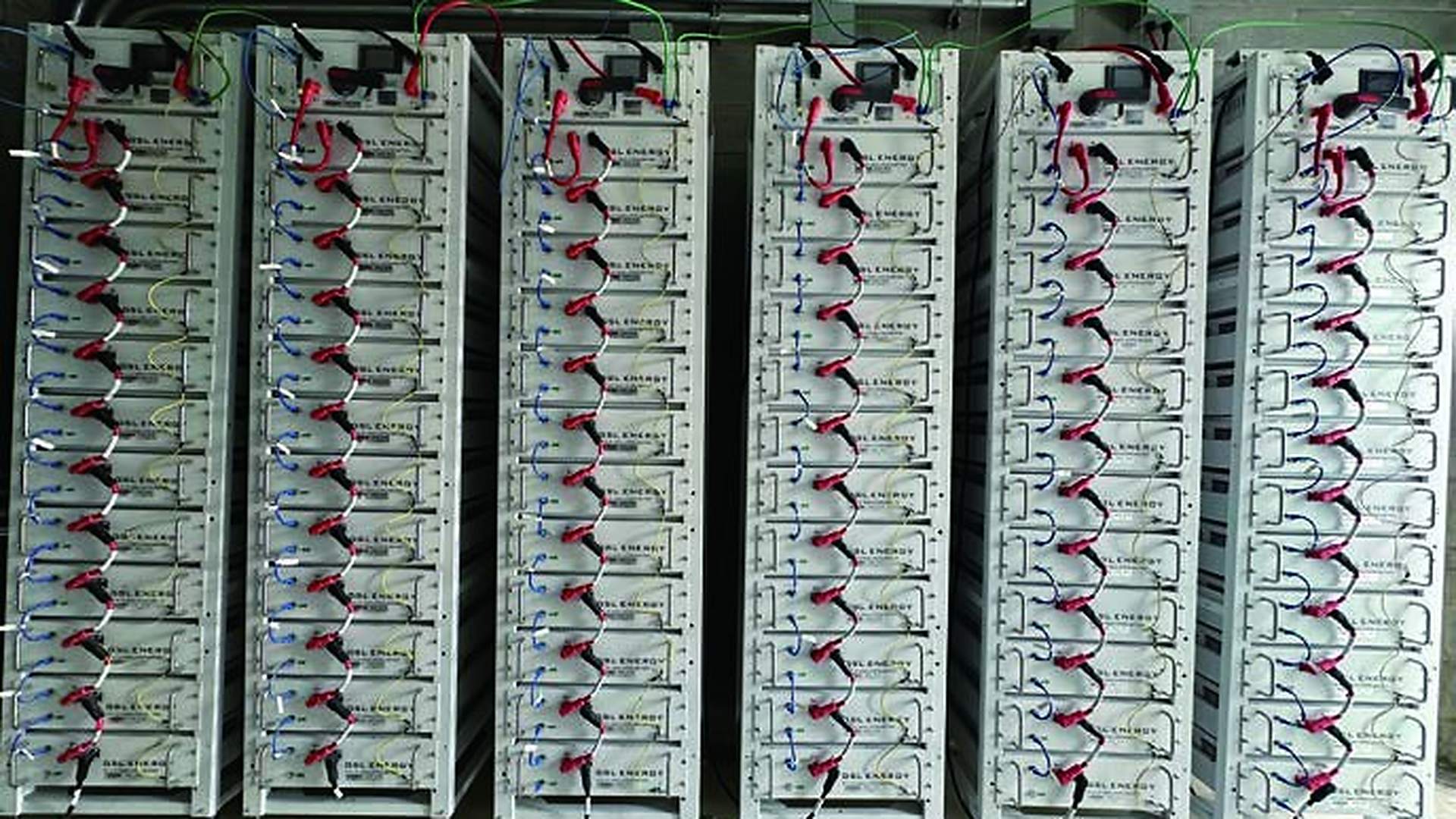
Hero photo: NEGUP Energy project archive — lithium LFP battery modules arranged in racks (enlarged and cropped to 16:9).