




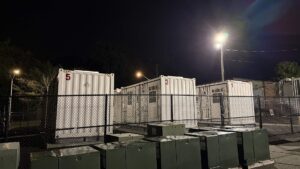
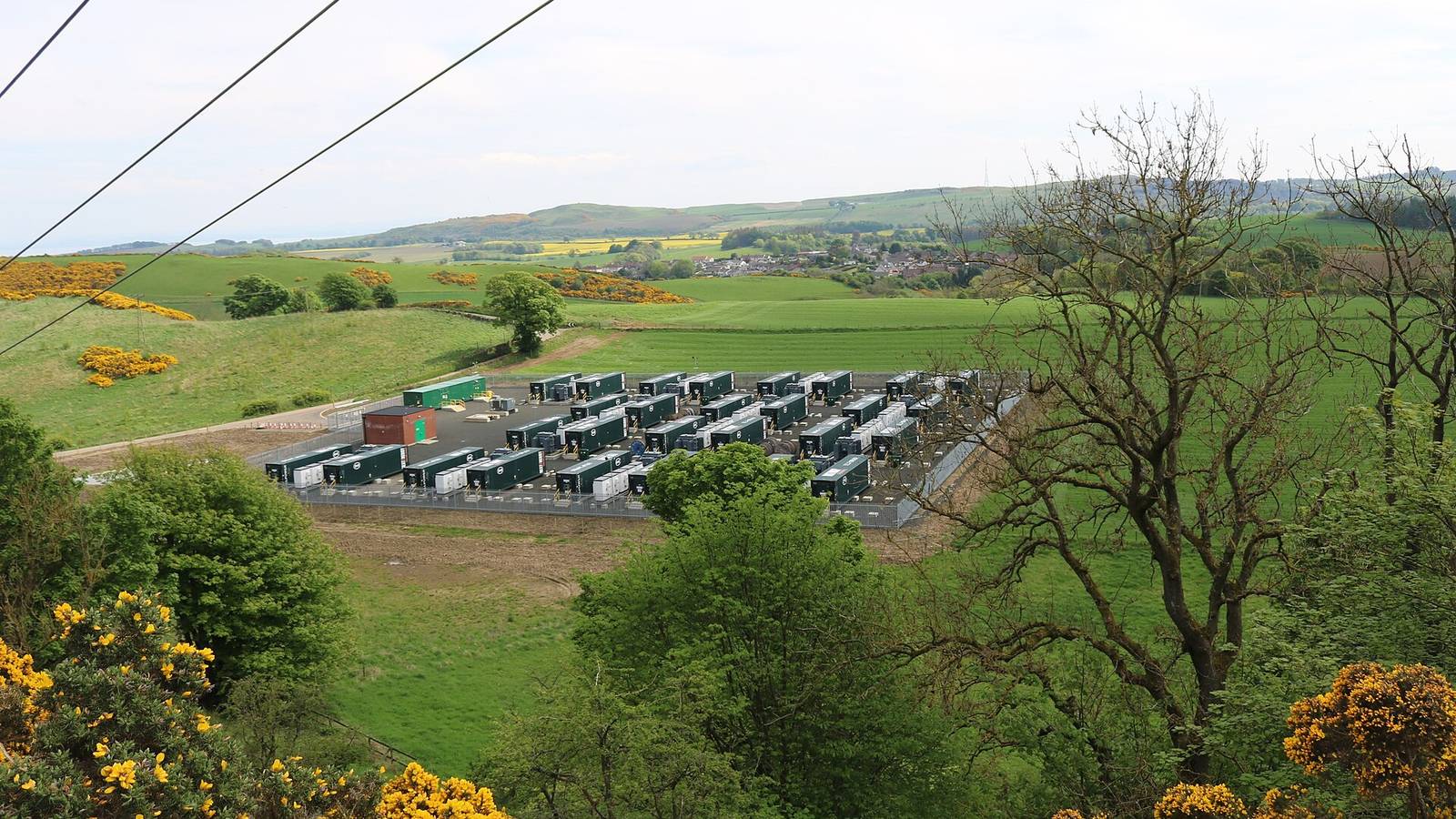
The first big wave of grid-scale batteries is now old enough to need surgery. Global BESS capacity installed before 2022 is passing through its first five-to-seven-year degradation window just as U.S. additions hit a record 20.2 GWh in Q2 2026 (SEIA/Benchmark ESMO Q3 2026), and that collision is turning BESS repowering and augmentation from a niche retrofit into a bankable service line. For buyers in emerging markets, the same logic applies to a fresh build: specify an augmentation-ready containerized LFP BESS today and you avoid a forced, expensive rewind in 2031.
Planning an augmentation, repower or new BESS bid?
Send us your site, power/energy target and duty cycle — we return a sized, documented LFP package with augmentation-ready architecture and pricing.
Why BESS Repowering Is Suddenly a 2026 Business
Global utility-scale BESS capacity is on track to exceed 500 GWh in 2026, and roughly 40–50 GWh of that fleet is already older than five years — prime repowering territory (Market Intelo, 2026). The driver is physical: grid-scale LFP fades about 2–3% of usable capacity per year, and older NMC systems under daily cycling can lose 20–30% within five to eight years, often breaching minimum contractual performance thresholds. Because most tolling and capacity-sale agreements are priced against a guaranteed deliverable over 10–20 year terms, by year five to seven many projects fall short of contracted energy or power, opening the door to liquidated damages or lost capacity payments if nothing is done (SpecForge, 2026).
The economics now point one way. Repowering costs run 35–65% of full greenfield replacement, while a greenfield rebuild can exceed US$200–300 per kWh in many markets (Market Intelo, 2026). Critically, repowering preserves the assets that took years to secure — land lease, grid interconnection rights, permits and an operating revenue history. A 2026 peer-reviewed study in Future Batteries models cell replacement as part of long-term revenue optimization, reinforcing that repowering is an economic decision, not an age-based maintenance event.
BESS Augmentation: AC Blocks vs DC Shuffling
Augmentation adds fresh battery capacity to a live site once fade erodes contracted throughput. Owners execute it two ways (SpecForge, 2026):
| Path | What it does | Wins on | Trade-off |
|---|---|---|---|
| AC block addition | Installs a self-contained new power block (batteries, BMS, PCS, transformer, MV gear) in parallel, aggregated at the point of interconnection | Schedule certainty and bankability — new block builds without touching the revenue-generating original | More switchgear, footprint and interconnection study work |
| DC shuffling | Reallocates and adds DC capacity behind the existing inverters, re-stringing inside existing containers | Interconnection cost and footprint — AC-side permitting untouched | Couples augmentation schedule to the original asset’s downtime |
| Upfront oversizing | Bolts extra cells in at commissioning | Single procurement event | Pays for capacity years before it is needed; cells degrade on the shelf |
The 2026 U.S. market makes augmentation real rather than theoretical. U.S. stationary storage added 20.2 GWh in Q2 2026 — the largest quarter on record, up 108% QoQ — after roughly 10 GWh in Q1, up 32% year-on-year (SEIA/Benchmark ESMO Q3 2026). Over 30 GW of cumulative U.S. capacity is now in its first five-to-seven-year operating window: that installed base is the augmentation addressable market.
Second-Life EV Batteries Enter the Stationary Market
Alongside repowering, a second supply channel is opening. Global cumulative EV battery retirements had exceeded 300 GWh by 2025, and a growing fraction meets the quality threshold for second-life grid integration (Market Intelo, 2026). Second-life packs typically retain 70–85% state of health — usable for lower-C-rate duty — and can appear 20–40% cheaper upfront than new LFP in India (Growthifye, 2026). The catch is real: testing and repurposing add roughly ₹1,500–4,000 per kWh, and heterogeneous packs demand more conservative fire-suppression and isolation architecture. Europe and China are building second-life traceability and certification pathways, which is what turns these systems from a discount into a bankable asset class.
Where second-life fits best (Growthifye, 2026): C&I peak shaving, rooftop solar self-consumption, short-duration backup for commercial campuses, EV-charging load management and telecom or edge-site backup. Where it fits worst: heavy-cycling arbitrage, ancillary-service response guarantees and utility-scale projects that lenders must underwrite on conservative degradation assumptions. New LFP C&I systems in India still land around ₹11,000–16,000 per kWh at system level, so the second-life discount only survives if grading, BMS redesign and warranty structure are disciplined.
What Repowering Actually Reuses — and What It Replaces
Repowering should not assume every part of the original project is scrapped. The battery usually has a shorter service life than several balance-of-system components. UK government guidance on grid-scale battery storage notes that repowering may replace or upgrade battery modules while retaining electrical equipment, provided the condition and rated lifetime of reused equipment are verified and the new battery remains technically matched to the electrical system (UK HSE guidance, cited by Polinovel, 2026). In practice, owners typically keep: land, fence, road, MV transformer, switchgear, civil works and interconnection; they replace or add: battery racks and containers, sometimes the PCS, often the EMS.
Signs an asset needs a deeper review (Polinovel, 2026): usable energy repeatedly below contract; measured degradation materially worse than the financial model; rising rack-to-rack imbalance; forced outages becoming more frequent; replacement modules hard to source; warranties expiring while failure risk rises. There is no reliable universal rule such as “repower after 10 years” — duty cycle, climate, chemistry and C-rate produce different aging paths, so the decision should track project-specific data: usable energy at the POI, state-of-health trend, round-trip efficiency, O&M cost trend and remaining site life.
2026 Signal: Record New Builds Raise Tomorrow’s Rewind Bill
The same quarter that set augmentation records also set up the next decade’s repowering demand. U.S. H1 2026 additions reached roughly 10.3 GW / 31 GWh, up 23% in GWh year-on-year, with utility-scale at 8.1 GW / 26 GWh (SEIA/Benchmark ESMO Q3 2026). Tesla alone deployed 13.7 GWh of storage in Q3 2026, up about 9.6% year-on-year (company delivery report, 2 Oct 2026). Planned U.S. capacity has meanwhile slipped from 90 GWh at the start of 2026 to around 75 GWh on delays and cancellations — meaning owners who can keep existing assets at contracted output are worth more, not less, in a tighter supply environment.
The 2026 Buyer’s Checklist for an Augmentation-Ready BESS
Whether you are augmenting an existing site or specifying a new containerized LFP BESS, five requirements separate a system that ages well from one that strands capital:
- Priced augmentation schedule. Have the mid-life capacity top-up costed in the original contract, not renegotiated in year six when your leverage is gone.
- Container and PCS headroom. Leave DC capacity headroom and rating margin in the existing power block so added modules do not force a re-permit or interconnection restudy.
- Chemistry-flexible enclosures. A container that accepts a future LFP, sodium-ion or second-life refill protects you from the 2031 chemistry landscape — sodium-ion alone is scaling fast enough to change the refill calculus.
- Mixed-age-capable BMS/EMS. If you ever blend new and existing racks, the control layer must manage heterogeneous cell arrays — software providers are investing in exactly this capability (Market Intelo, 2026).
- Safety and compliance documentation. UL 9540A / IEC 62619 / UN 38.3 records, thermal-runaway propagation results and country-of-origin data are what keep an augmented asset insurable and interconnection-eligible.
NEGUP builds utility-scale BESS and commercial and industrial ESS packages on this augmentation-ready architecture — with documented LFP cells, containerized enclosures sized for future DC refills, and BMS/EMS configurations that can manage mixed-age arrays.
The Bottom Line for 2026 Buyers
Repowering and augmentation are no longer edge cases — they are the natural second act of a 500-GWh-plus global fleet, and a preview of what every large buyer should demand in a 2026 supply contract. The winners will be the owners who treated augmentation as a bankable line item from day one, and the suppliers who engineered their containers, BMS and warranties to make that possible. If your project is at that five-year mark — or you are specifying a new build — the time to write these terms is now.
Frequently Asked Questions
Is BESS repowering cheaper than replacing the whole system?
Usually yes. Industry analysis puts repowering at roughly 35–65% of full greenfield replacement cost (Market Intelo, 2026), because land, grid connection, permits and the remaining balance-of-plant are reused. A greenfield replacement can exceed US$200–300/kWh in many markets, while augmentation adds only the battery capacity that has actually faded.
How much capacity does an older BESS really lose?
Grid-scale LFP typically fades 2–3% of usable capacity per year, and older NMC systems under daily cycling can shed 20–30% within five to eight years — enough to breach contracted performance thresholds. Most tolling and capacity contracts run 10–20 years, so by year five to seven many projects fall short of the guaranteed deliverable without an augmentation plan (SpecForge, 2026).
Should I buy second-life EV batteries for storage?
Only for the right duty. Second-life packs retain 70–85% state of health and can cut upfront capex 20–40% versus new LFP in India (Growthifye, 2026), but testing and repurposing add roughly ₹1,500–4,000 per kWh, and heterogeneous packs complicate fire safety and insurance. They suit moderate-cycling uses — peak shaving, solar self-consumption, backup — not heavy arbitrage or mission-critical response.
Should I wait for battery prices to fall before committing?
Waiting is risky. LFP cell prices in late 2026 were already about 20% above their late-2025 lows (InfoLink, Sept 2026), and US Section 301 plus IEEPA duties put combined landed duty on Chinese-origin grid batteries near 45% in 2026. If you already hold land and a grid connection, augmentation or repowering now locks in those assets while prices are still favorable relative to 2027.
What should I specify in a 2026 augmentation-ready BESS contract?
Four things: an augmentation schedule priced into the original contract; container and PCS headroom so extra DC capacity can be added without re-permitting; chemistry-flexible enclosures for a future re-power; and a BMS/EMS that can manage mixed-age cell arrays. A 2026 peer-reviewed study in Future Batteries frames repowering as a revenue-optimization decision, not an age-based maintenance event — your contract should make that optimization possible.
Related insights
- Portable Power Station Buying Guide: Stop Falling Into These Traps!
- Best LiFePO4 Batteries for Solar
- Lithium Rebound: Battery-Grade Carbonate Jumps 8,000 RMB/t in a Single Session
WhatsApp +86 15307690902 | rain@negupgroup.com