



Community battery storage has moved from pilot project to defined product category in 2026. Across Australia, Europe and North America, shared LFP (lithium iron phosphate) systems now sit inside local distribution networks, absorb rooftop solar at midday and discharge it through the evening peak, so households without their own battery still share the benefit. For developers, utilities and EPCs the question is no longer whether to build one, but how to size, finance and operate it. This guide covers what a community battery is, what it costs, which business models pay back, and how to specify a system that clears grid codes and earns revenue.
Get a 2026 Community Battery Quote
Send your feeder limit, solar catchment and target bill saving. We will size the system and show the payback line by line.
Why Are Community Batteries the Fastest-Growing Storage Segment of 2026?
The segment is small but compounding. In the United States, distributed energy storage capacity has climbed toward roughly 10 GW by the end of 2025, and commercial and industrial sites already take about 45% of the market. In China, grid-forming and hybrid systems are the fastest-growing slice at 25-30% a year. The community niche sits inside that curve: it targets the last mile of the grid, where thousands of households share one asset instead of each buying 5 kWh. BloombergNEF‘s December 2025 survey put global lithium-ion pack prices at US$108/kWh and stationary storage packs near US$70/kWh, which is what makes shared neighborhood systems economic for the first time. Falling cell cost is the wind behind every community-battery business case this year.
What Exactly Is a Community Battery Storage System?
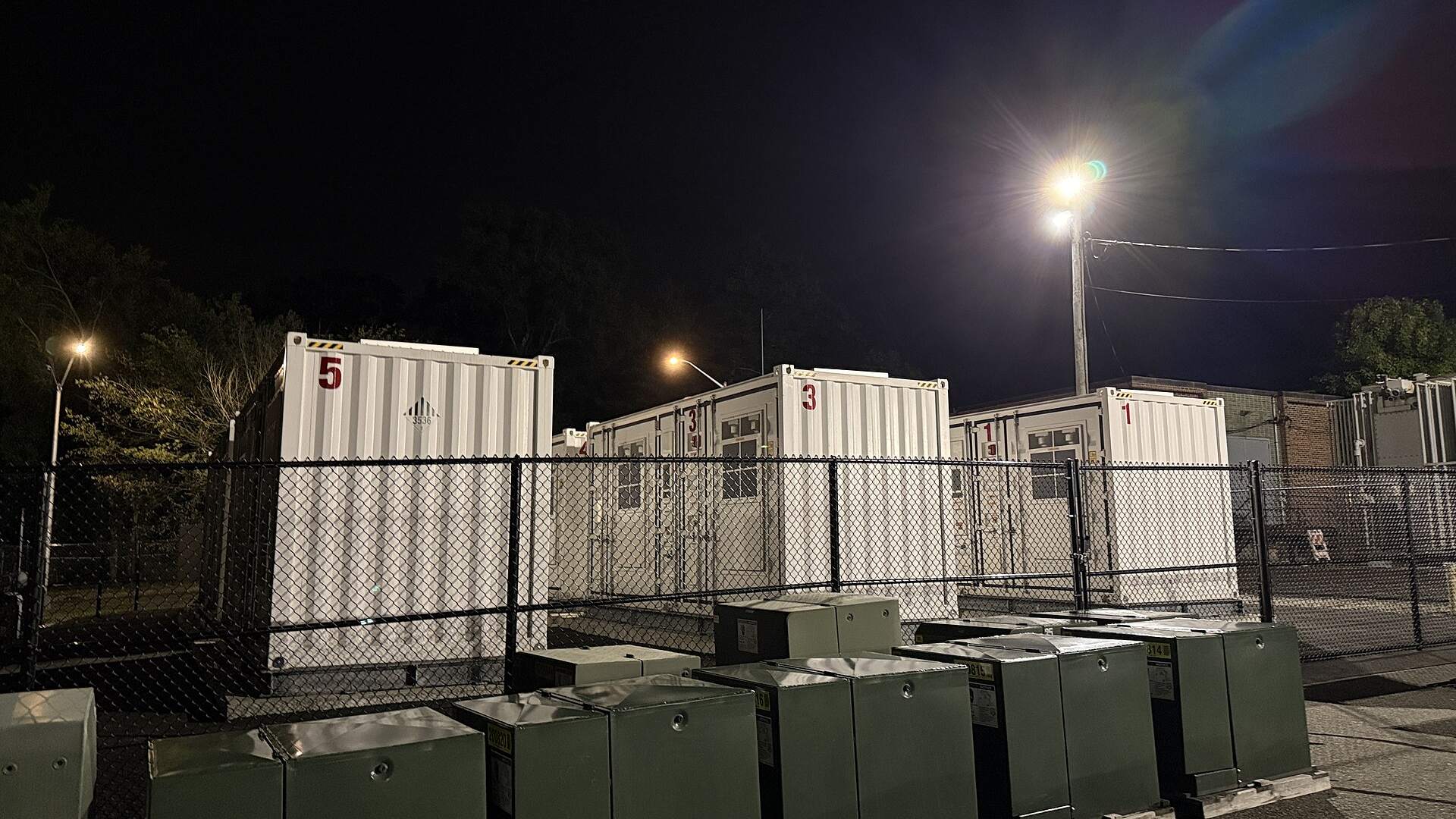
A community battery is a shared, grid-connected storage asset owned by a utility, a municipality, a cooperative or a private operator and made available to a defined group of nearby consumers. Physically it is usually one or more containerized battery enclosures with a PCS (power conversion system), an energy management system and a connection to the local feeder. Unlike a residential ESS, nobody installs hardware on a resident’s wall; the value flows through lower network charges, shared bill credits, solar self-consumption or peer-to-peer trading. In short, community energy storage is shared battery storage serving a community, and the key design choice is whether it only shaves the evening peak or also provides grid services such as frequency response and voltage support. That second job unlocks a second revenue stream.
How Much Do Community Battery Projects Cost in 2026?
Battery storage cost scales hard with size. IndexBox puts a 2-5 MWh C&I LFP system at US$350-450 per kWh installed in China, dropping to US$280-380 per kWh for 10-50 MWh plants. Smaller municipal units pay a distributed premium: a 100 kW to 1 megawatt neighborhood battery often lands at US$400-700 per kWh because civil works, protection and metering dominate. Input prices keep falling, though. InfoLink quoted 314Ah LFP cells at RMB 0.363 per Wh in October 2026, with lithium carbonate near RMB 120,000 per tonne, while Mysteel tracked storage-grade LFP cathode around RMB 49,100 per tonne. SMM publishes weekly FOB-China benchmarks for 5 MWh DC-side containers, and SNE Research counted 461.3 GWh of global storage shipments in the first half of 2026, up 71% year on year.
| Project / market | System | 2026 result |
|---|---|---|
| Bankstown, Sydney, Australia (Ausgrid) | 2 x 5 MW shared BESS | About AU$200/yr saving per household |
| YES Group, SA and NSW | 14 community batteries | 16,880 kW / 46,876 kWh total |
| Ausgrid network, NSW | 21 neighborhood batteries | A$8 million federal funding |
| Nürtingen, Germany | 5 MW / 10 MWh | Utility + vendor + citizens’ co-op, COD 2026 |
| Vienna Smart Grid Housing | 480-apartment cooperative | 40% lower bills; EUR 180,000 surplus sales |
| Australia national program | 400-battery target | More than 100 live; A$23.2M new round |
| Italy CER program | Renewable energy communities | Up to EUR 1,000/kWh storage grant |
Which Business Models Actually Pay Back in 2026?
Three models dominate. The simplest is a regulated asset: the utility owns the battery and recovers cost through network tariffs while members get lower bills, which is the Ausgrid model in Sydney. The second is Energy Storage as a Service (ESaaS), where a provider owns the asset and sells capacity to a community under a long-term contract with no upfront cost. The third is the citizen cooperative, where local residents co-invest and share both savings and surplus-market revenue. Vienna’s Smart Grid Housing cooperative of 480 apartments cut resident electricity costs about 40% and earned roughly EUR 180,000 in surplus sales over two years, while Nürtingen in Germany is commissioning a 5 MW / 10 MWh battery owned equally by the utility, the vendor and local citizens. Aggregated, these systems can also join a virtual power plant and sell frequency response, turning a cost centre into a revenue line.
How Do You Size a Neighborhood Battery for a Local Grid?
Sizing starts from peak load, not from a vendor’s standard enclosure. Storage capacity is set by how many evening-peak hours the asset must cover, while power in megawatts is set by the local feeder limit. Most neighborhood batteries today are 100 kW to 5 megawatt units that share the same LFP cells used in utility-scale plants, just packaged for a substation rather than a transmission node. Round-trip efficiency, depth of discharge and the local solar profile decide how many member households one battery can serve; a practical rule is 1 kWh of shared storage per 1-2 kWh of annual rooftop solar in the catchment. Specify IEC 62619 and UL 1973 cell certification, a documented HAZOP, and an EMS that integrates third-party PV inverters. Where the site also has PV, a grid-forming PCS is worth the 15-25% premium.
Why Does LFP Chemistry Win for Shared Storage?
For a battery installed where people live, safety and lifespan beat raw energy density. LFP battery cells have a thermal-runaway threshold above 270°C against 150-200°C for NMC, which matters for indoor or curbside enclosures in populated areas. At 80% depth of discharge, quality LFP retains 80% capacity after about 6,000 cycles, a 15-20 year life that matches the financing horizon of a community asset. LFP also avoids cobalt and nickel, aligning with the EU’s responsible-sourcing rules under Regulation (EU) 2023/1542. NEGUP supplies containerized LFP enclosures with integrated BMS, HVAC and fire suppression, so chemistry, thermal management and protection arrive as one tested package rather than a field-assembled puzzle.
How Does NEGUP Supply Community Battery Storage Systems?
NEGUP quotes containerized BESS, commercial and industrial ESS and utility-scale BESS for community duty as 20-ft and 40-ft enclosures pre-assembled with BMS, HVAC and fire suppression. We list the cell batch, PCS rating and thermal scope line by line, supply IEC 62619 and UL 1973 certification, and provide remote O&M for sites without a full-time technician. For community battery storage projects, send your feeder limit, solar catchment and target bill saving on WhatsApp and we return a sizing, a cost band and a payback curve you can take to your board or your cooperative members.
Where Are 2026 Community-Storage Deployments Happening?
Australia leads on policy. The federal Community Batteries for Household Solar program backs 400 batteries nationwide with A$200 million, and more than 100 are already live. ARENA announced A$23.2 million for 35 new community batteries on 16 September 2026, including A$8 million for 21 Ausgrid neighborhood batteries and A$10.29 million for 14 YES Group systems totalling 16,880 kW / 46,876 kWh. Europe’s energy community movement passed 6,500 operational co-ops by the end of 2025, with Italy’s CER program offering up to EUR 1,000 per kWh for shared storage. Germany’s Nürtingen 5 MW / 10 MWh citizen battery is commissioning by year-end. North America is catching up through municipal utilities such as Wellesley, where a containerized grid battery now serves the town, and through rural electric cooperatives. Every one of these is a concrete procurement opportunity for LFP enclosure suppliers.
Buyer FAQ: Community Batteries in 2026
Are community batteries the same as a home battery?
No. A home battery serves one property and sits on the owner’s wall. A community battery is a shared, grid-connected asset, usually one or more containerized enclosures, that serves a group of households or a whole feeder. Members get bill credits or lower network charges without buying hardware, which is why renters and apartment dwellers can join.
How much can a neighborhood battery save households?
Ausgrid estimates eligible households on its Sydney community batteries can save about AU$200 a year. Vienna’s 480-apartment cooperative cut resident electricity costs roughly 40% and earned about EUR 180,000 in surplus sales. Savings depend on tariff design, solar penetration and how the asset is dispatched.
Do community batteries need grid-forming inverters?
Only if the asset must island or provide voltage support. For pure peak-shaving, a grid-following PCS works. But if the business case includes frequency response, backup or future islanding, specify a grid-forming PCS and budget the 15-25% premium; retrofitting later is far more expensive.
What payback should a shared storage project expect?
It depends on the model. A regulated utility asset recovers cost through tariffs over 15-20 years; an ESaaS contract shifts capex to a monthly fee; a cooperative recovers through member savings plus market revenue. At 2026 cell prices, well-sited community projects typically target a 5-10 year payback.
Which chemistry should a community battery use?
LFP is the default: a thermal-runaway threshold above 270°C, about 6,000 cycles at 80% depth of discharge and no cobalt or nickel, which fits EU sourcing rules. Require IEC 62619 and UL 1973 cell certification, a documented HAZOP and an EMS that can integrate third-party PV inverters.