


Most storage buyers shop the headline dollar-per-kilowatt-hour and stop there. In 2026 that number hides more than it reveals. BESS LCOS – the levelized cost of storage – is the metric that actually decides whether a project pays back, because it folds in round-trip efficiency, degradation, O&M and augmentation across the system’s life. The smarter buyers instead track BESS total cost of ownership: every cost from day-one purchase to final decommissioning, not just the equipment sticker. This guide breaks the 2026 storage cost stack into blocks you can put straight into a request for quotation.
Get a 2026 BESS Cost Quotation
Tell us your capacity, power, backup window and destination market. We return a like-for-like LCOS comparison, the full cost-block breakdown and the certification pack you need before import.
What Is BESS LCOS and Why Capex Misleads Buyers?
The levelized cost of storage divides the total lifetime cost of owning storage by the total energy it delivers. Two containers quoted at the same $/kWh can land at very different LCOS if one loses five points of round-trip efficiency or fades faster. Typical AC-AC round-trip efficiency in 2026 sits at 88-93 percent, and cells lose roughly 0.3-0.5 percentage points of capacity per year, so a system sized for 100 percent on day one may deliver about 80 percent after ten years. The single biggest trap is treating storage capex – the hardware purchase – as the whole budget. BloombergNEF‘s battery price survey and the International Energy Agency both track how efficiency and lifetime, not just sticker price, drive the true BESS total cost of ownership. A 2026 buyer should therefore request the full cost-block breakdown and run the numbers over the warranty life, not the first year; O&M, augmentation and the discount rate quietly decide whether a cheap quote stays cheap.
What Does a Containerized BESS Cost in 2026?
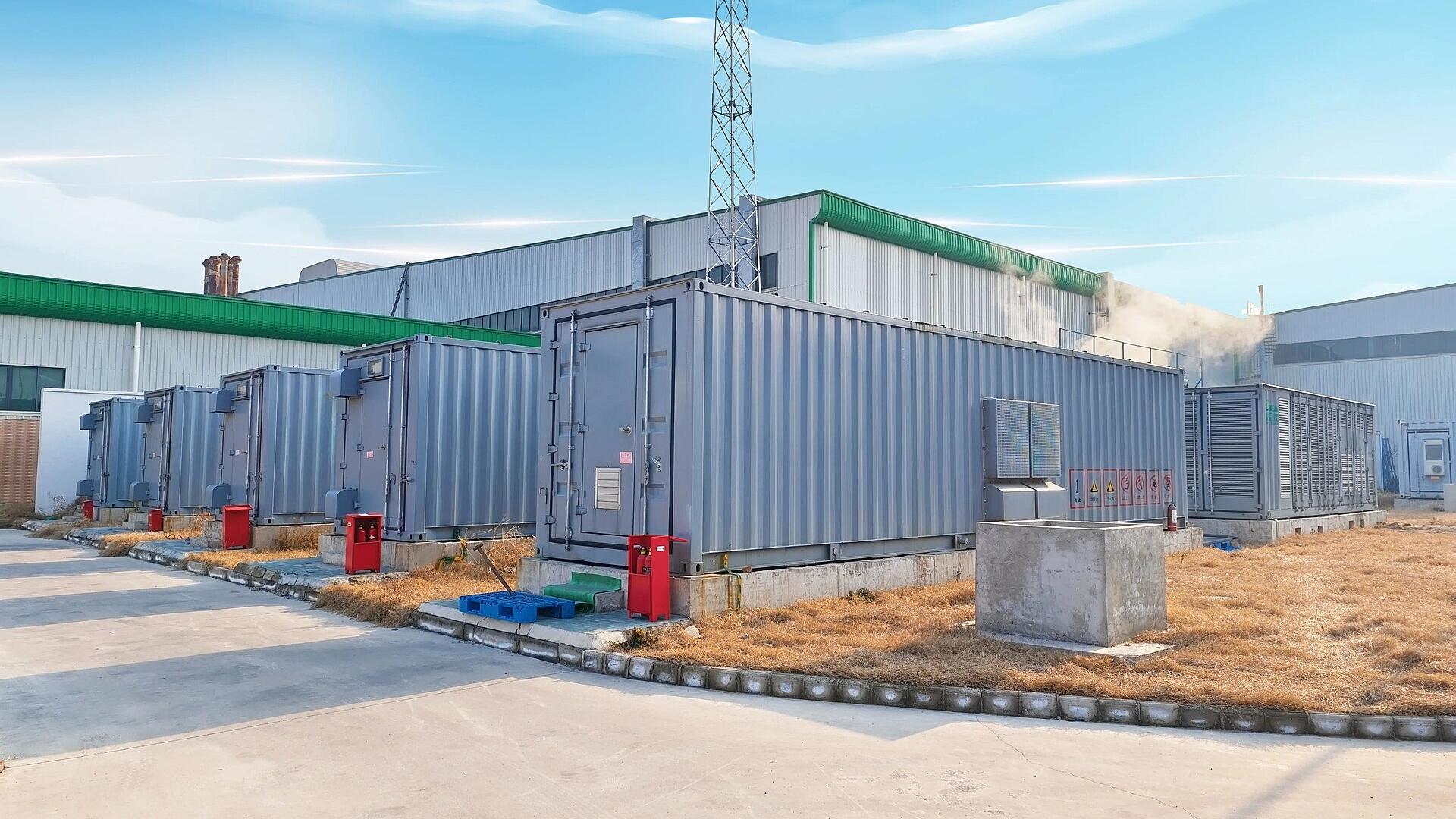
BloombergNEF’s December 2025 survey puts turnkey utility-scale BESS at about $73/kWh in China, $177/kWh in Europe and $219/kWh in the United States, with a global average near $117/kWh. A complete containerized system typically runs $110-160/kWh ex-works and $255-295/kWh installed before local soft costs and tariffs. A 20-foot, 1.5 MWh air-cooled container from a Chinese manufacturer is roughly $95,000-140,000 ex-works on the DC side, while a 40-foot, 5 MWh liquid-cooled unit runs $550,000-700,000 for the DC hardware. The all-in project cost in the US or Europe can reach $250-350 per kWh once shipping, installation and grid connection are added. The containerized BESS cost therefore spans a wide band depending on cooling, cell grade and destination market, so always compare a quoted figure against the same scope boundary.
| Cost block | Share of system | What the buyer must verify |
|---|---|---|
| Battery cells & modules | 40-48% | Chemistry, grade (A cells), cycle life at your depth-of-discharge |
| Power conversion (PCS) | 15-18% | Rated power, DC voltage range, grid-code compliance |
| BMS & controls | 8-12% | Communication protocol, string-level monitoring |
| Thermal management | 5-7% | Liquid vs air, temperature spread, ambient rating |
| Enclosure, fire, auxiliaries | 12-16% | IP rating, fire suppression, cabling, cluster boxes |
| Soft costs (installed) | 15-25% | Engineering, permit, grid tie, commissioning |
How Is BESS LCOS Calculated Across Segments?
The levelized cost of storage is the lifetime net cost divided by the delivered megawatt-hours, including efficiency losses and O&M. InfoLink Consulting and SMM track the input prices; the segment ranges below assume 85-92 percent round-trip efficiency, 10-15 year life and 1-2 percent annual O&M. The key is to compare like with like: a low $/kWh quote with poor round-trip efficiency can post a higher LCOS than a pricier but more efficient block. Most vendors quote LCOS only under ideal lab cycles, so insist on your own duty profile so the comparison reflects real depth-of-discharge and temperature rather than a brochure number. A transparent LCOS model also exposes the discount rate assumption; a 10 percent rate punishes long-life systems, while a 4 percent rate rewards them, so agree the rate before you compare.
| Segment (2026) | Typical LCOS | Key assumptions |
|---|---|---|
| Utility-scale Li-ion BESS | $0.09-0.13 / kWh | 85-92% RTE, 3,000-6,000 cycles |
| Commercial & industrial BESS | $0.12-0.16 / kWh | 10-15 yr life, 1-2% O&M/yr |
| Residential storage | $0.18-0.28 / kWh | Higher balance-of-system share |
| LFP pack (cell level) | ~$54-70 / kWh | 314Ah ~RMB0.36-0.40/Wh, Oct 2026 |
| Turnkey utility BESS (US) | ~$219 / kWh | BloombergNEF, Dec 2025 |
What Drives BESS LCOS Down in 2026?
Five levers move the number. First, round-trip efficiency: liquid cooling holds cells within about 3 degrees C and lifts RTE roughly five points over air cooling while extending life 20-30 percent. Second, cycle life – quality LFP delivers 6,000-8,000 cycles, against far fewer for cheaper chemistries; the LFP cathode’s lithium carbonate feedstock has been volatile, so cell pricing swings with the raw material. Third, scale: the enclosure, controls and fire system are largely fixed per container, so a 5 MWh block is cheaper per kWh than a 1 MWh block. Fourth, degradation rate, which sets the augmentation allowance. Fifth, the cell price itself: SMM and InfoLink put 314Ah LFP storage cells at roughly RMB 0.36-0.40/Wh in October 2026, up from the 2025 trough, so fixing the LFP cell price 2026 early protects the budget. Every point of storage capex saved at the cell grade stage compounds through the whole LCOS. Buyers who ignore augmentation usually understate LCOS by 8-15 percent, because a system that must be topped up with new cells at year eight carries a second capital event the first quote never shows.
How to Build a BESS LCOS Calculator for Your Site
A practical storage LCOS calculator is just four inputs and one division. Start with installed cost (capex plus soft costs), add discounted O&M and an augmentation reserve for capacity fade, then subtract any incentive or capacity payment. Divide that lifetime cost by usable energy delivered, adjusted for round-trip efficiency and your real duty cycle. Buyers who run the BESS LCOS calculator per use case – rather than trusting a vendor’s single $/kWh – quickly see that a 2-point efficiency gain often beats a 5 percent hardware discount. Keep the model in a spreadsheet so you can re-run it whenever cell prices or tariffs move.
What Is the BESS Payback Period by Use Case?
Payback is set by tariff structure and duty cycle more than by hardware price. Well-sited commercial and industrial systems commonly show 3-6 year simple payback when incentives apply, and demand charges can be 30-50 percent of a factory’s electricity bill, so peak control often dominates the C&I battery storage ROI. A worked example: a 400 kW / 860 kWh system installed for $160,000 that shaves 300 kW of demand at $12/kW saves about $43,200 a year, plus roughly $18,700 from time-of-use arbitrage, for a payback near 2.8 years before incentives. The BESS payback period ranges from under three years for off-grid diesel displacement to over six for pure arbitrage. Where a demand-charge tariff exists, even a partial peak shave can flip the C&I battery storage ROI positive, which is why many factories size for the bill spike first and energy shift second.
| Use case | Simple payback | Main value stream |
|---|---|---|
| Microgrid / off-grid diesel cut | 2.5-4 years | Fuel + outage avoidance |
| Peak shaving / demand charge | 3-5 years | 15-30% lower billed demand |
| Virtual power plant | 3-5 years | Capacity + response payments |
| TOU energy arbitrage | 4-6 years | Valley-peak spread capture |
| Backup + peak hybrid | 4-6 years | Stacked savings |
Which Hidden Costs Break the Payback Model?
The headline $/kWh almost never includes everything. Soft costs – engineering, permitting, grid connection and commissioning – add 15-25 percent and vary more between sites than any other block. Transport needs UN 38.3 / UN 3536 classification, and destination markets add duties: US tariffs on Chinese BESS have reached about 38.4 percent. China restored a 2 percent consumption tax on lithium-ion batteries on 1 September 2026, stepping to 4 percent in 2027, and cut its export rebate from 9 percent to 6 percent in April 2026 toward zero in January 2027. Under the EU Battery Regulation 2023/1542, a digital battery passport becomes mandatory on 18 February 2027 for batteries above 2 kWh. None of these show up in a bare equipment quote. Build these into the model up front; a quote that excludes them simply moves the cost to a change-order after the container has shipped.
How Should Buyers Read a Storage Quote Before Signing?
Before issuing the purchase order, require the cost blocks as line items, not a single number, and confirm the efficiency, cycle-life and augmentation terms are contractually tied to the warranty. The checklist below is the same one our engineering team uses when screening supplier bids, and it keeps the BESS total cost of ownership honest rather than letting a low sticker hide later charges.
Confirm These Five Points Before You Sign the BESS Purchase Order
- Scope boundary – confirm whether the quote is equipment-only or delivered, installed and commissioned; the two are not comparable.
- Cost blocks – require the cell grade, PCS rating, BMS protocol, thermal design and fire strategy as line items, not a single $/kWh number.
- Round-trip efficiency and cycle life – specify AC-AC RTE (88-93%) and capacity retention (90/80/70 at years 5/10/15) tied to an augmentation plan.
- Destination compliance – UL 9540A and NFPA 855 (North America), IEC 62619 (Europe), UN 38.3 transport, plus the local grid code.
- Tariffs and taxes – price in Chinese export-rebate changes, the new lithium battery consumption tax, and destination duties before you lock the budget.
Compare the cost blocks, LCOS ranges and certifications on our containerized BESS, utility-scale BESS and commercial and industrial ESS pages, and read our 2026 BESS certification guide before you shortlist suppliers. Message us with your capacity, power and destination market for a side-by-side LCOS quotation.
Containerized BESS cost
C&I storage ROI model
Storage TCO breakdown
BESS payback by use case
What is BESS LCOS and how is it different from the system price?
The system price is the capital cost per kilowatt-hour you pay on day one. The levelized cost of storage divides the full lifetime cost, including round-trip efficiency losses, degradation, O&M and augmentation, by the total energy the system actually delivers. Two quotes at the same $/kWh can land at very different LCOS over ten years.
What does a containerized BESS cost per kWh in 2026?
BloombergNEF puts turnkey utility-scale BESS at about $73/kWh in China, $177/kWh in Europe and $219/kWh in the United States, with a global average near $117/kWh. A complete containerized system typically runs $110-160/kWh ex-works and $255-295/kWh installed, before local soft costs and tariffs.
Which use case pays back fastest for C&I battery storage?
Microgrid and off-grid diesel displacement usually recover in 2.5-4 years, peak-shaving and demand-charge cuts in 3-5 years, and time-of-use arbitrage in 4-6 years. The spread is set by your tariff structure and duty cycle, not by the hardware price alone.
What hidden costs should I budget beyond the battery hardware?
Plan for soft costs of 15-25 percent – engineering, permitting, grid connection, commissioning – plus transport classification (UN 38.3 / UN 3536), destination tariffs, consumption or export taxes, and an augmentation allowance for capacity fade. A thin quote usually moves these into change-orders later.
How do I start a storage cost quote with NEGUP?
Send us your usable capacity, discharge power, backup window, duty cycle and destination market. We return a like-for-like LCOS comparison, the cost-block breakdown and the certification pack, then a firm quotation. Reach us on WhatsApp +86 15307690902 or email rain@negupgroup.com.
Hero photo: Ellen Whisk / CC BY-SA 4.0 (cropped).
WhatsApp +86 15307690902 | rain@negupgroup.com