




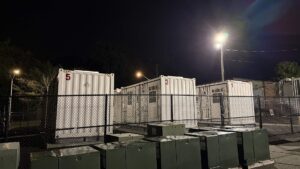
Cheap storage has a new source, and it is not another factory. Second-life battery storage — grid and commercial systems assembled from electric-vehicle packs that can no longer hold an automotive duty cycle — crossed into commercial service at utility scale in 2026: B2U Storage Solutions brought its 28 MWh Bexar Martinez project into operation in ERCOT on 9 September 2026, pushing its Texas fleet past 50 MWh from more than 5,000 reused packs. With BloombergNEF forecasting 158 GW / 459 GWh of new storage in 2026 — a 41% jump on 2025’s record — repurposed packs are now a real second supply line.
Second-life, new LFP, or both? Size it properly.
Send us your duty cycle, site temperature, required duration and warranty horizon — we return a sized new-LFP quote plus an honest comparison against repurposed packs, so the number you take to your board survives diligence.
Why Second-Life Battery Storage Broke Through in 2026
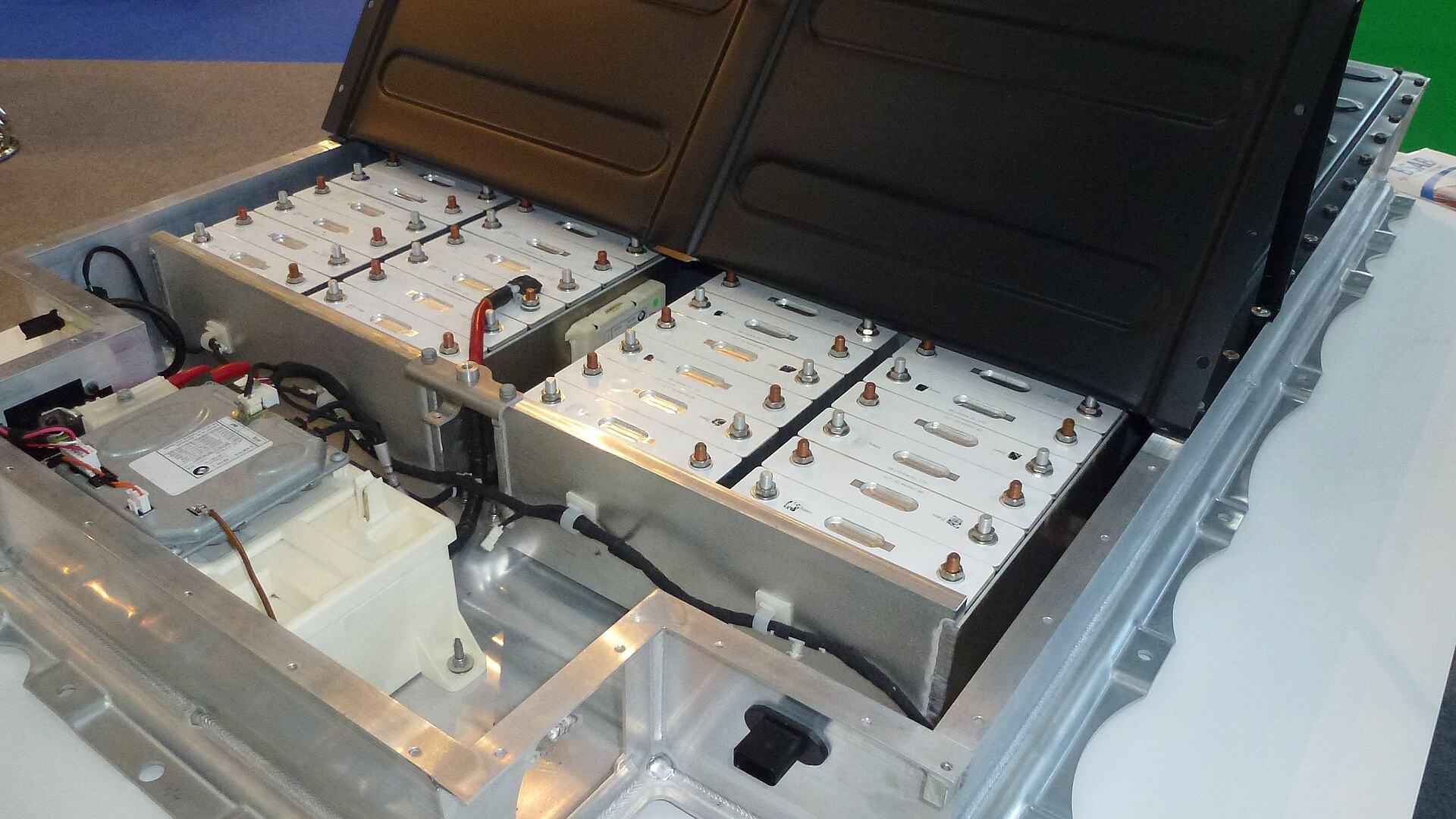
A battery does not die when a car stops using it. Capacity fades by roughly 1–3% a year, so a pack retired after 15 years of vehicle service still holds 70–80% of its original capacity — far more than a stationary system needs. Second life captures that gap: the pack is tested module by module, then re-racked with a dedicated BMS and enclosure.
What changed in 2026 is that second-life battery storage stopped being a demonstration. B2U’s Bexar Martinez system, near San Antonio inside CPS Energy’s territory, delivers 28 MWh of grid services to ERCOT using repurposed packs only (B2U Storage Solutions). That one site took B2U’s Texas portfolio past 50 MWh and its combined Texas and California fleet to about 100 MWh from more than 5,000 reused packs, with at least 50 MWh more planned in ERCOT within six months.
The commercial signals matter more than the megawatt-hours. B2U’s sites qualify for the domestic content bonus under the US investment tax credit, carry third-party financing and have been acquired by B2U Infrastructure Partners — a repurposed asset has now been priced, financed and sold like conventional infrastructure. In a global battery energy storage system market that BloombergNEF sizes at 158 GW for 2026, that is a supply line buyers can no longer ignore.
Second-Life Versus New LFP: The 2026 Numbers
| 2026 cost line | Repurposed EV packs | New LFP benchmark | Who reports it |
|---|---|---|---|
| Upfront capex per kWh | 30–50% below new-build storage | US$70/kWh average pack price after a 45% fall in 2025 | B2U Storage Solutions / BloombergNEF |
| Cells in commercial service | About 100 MWh operating in Texas and California from 5,000+ reused packs | Utility-scale projects sized on RMB 0.363/Wh cells | B2U, 9 Sept 2026 / InfoLink |
| China cell assessment | Repurposed LFP packs quoted around RMB 0.42–0.58/Wh | 314 Ah storage cells RMB 0.363/Wh; prismatic LFP cell RMB 0.420/Wh | InfoLink, 8 Oct 2026 / SMM, mid-Oct 2026 |
| Raw-material input | Depends on recovered black-mass content | Battery-grade lithium carbonate RMB 120,000/t; industrial grade RMB 118,500/t | Mysteel, 8–12 Oct 2026 |
| Cathode cost | Not applicable to reused cells | Energy-storage-type LFP cathode RMB 49,100/t | Mysteel, 10 Oct 2026 |
| Cell price direction | Gets more attractive as new cells firm | CATL 280 Ah / 314 Ah quotes up 1.1% and 2.0% versus early September | SMM data, broker summary 12 Oct 2026 |
| EU market access for reused packs | New digital battery passport linked to the original from 18 Feb 2027 | Recycled content floors from 18 Aug 2031: Co 16%, Li 6%, Ni 6%, Pb 85% | Regulation (EU) 2023/1542 |
| US commercial incentive | Not the target of most rebate programmes | Up to US$300 per kWh upfront rebate on qualifying storage in Illinois | ComEd, 12 Oct 2026 |
The trade-off is blunt. New cells are historically cheap: BloombergNEF put the average battery pack at US$70/kWh after a 45% fall in 2025, and InfoLink’s 8 October 2026 assessment put 314 Ah storage cells at RMB 0.363/Wh with battery-grade lithium carbonate at RMB 120,000 a tonne, down 9.1% week on week. Mysteel put energy-storage-grade LFP cathode at RMB 49,100 a tonne on 10 October. A 30–50% discount on reused hardware no longer competes against an expensive alternative.
The direction of travel favours reuse. Cell prices turned up in September: SMM data shows CATL’s 280 Ah and 314 Ah storage-cell quotes at RMB 0.470 and RMB 0.403 per Wh, up 1.1% and 2.0% versus early September, and more than 20 Chinese suppliers issued price-increase letters between July and October. China also restored a 2% consumption tax on lithium-ion batteries on 1 September 2026 and will raise it to 4% a year later. As new cells firm, reused packs get scarcer.
What the EU Battery Passport Does to Repurposed Packs
Europe has written the rule that decides whether reused packs are sellable. Under Regulation (EU) 2023/1542, a digital battery passport becomes mandatory on 18 February 2027 for every EV battery, light-means-of-transport battery and industrial battery above 2 kWh placed on the EU market. The record must carry carbon footprint, recycled cobalt, lithium, nickel and lead shares, state of health and due-diligence information.
The clause that changes the economics is Article 77(7): a repurposed battery’s operator becomes the responsible economic operator, and the battery gets a new passport linked to the original. Recycled-content floors arrive later: from 18 August 2031, new batteries must contain at least 16% cobalt, 6% lithium, 6% nickel and 85% lead. Black mass is now hazardous waste, barred from export outside the OECD.
Where Repurposed Packs Win — and Where New LFP Wins
Reuse wins where duty cycles are shallow and the site is forgiving. Buffering an EV-charging hub, shaving a warehouse peak or firming a solar array are low-cycle jobs where 70–80% of original capacity is plenty and a 30–50% lower capital cost dominates the business case. Solar pairing is the clearest case: a reused block absorbs curtailment that would otherwise force a bigger new-build purchase.
New LFP wins where the contract sets the risk. Utility-scale power purchase agreements routinely demand 15-year fixed pricing — Maryland’s first bulk storage procurement required four-hour of duration on 15-year terms — and no repurposing operation can underwrite a 15-year guarantee on packs whose history it cannot audit. Add the EU passport, an insurer’s fire review and a place in the transmission interconnection queue, and bondable projects still start from new cells.
How B2U Made Repurposed Packs Bankable in Texas
B2U’s route is worth copying because it is unglamorous. The company builds its own cabinets around a patented platform so reused packs drop into a standardised enclosure, keeps the BMS under its own software, and sells grid services into ERCOT. Chief executive Freeman Hall put it simply: second-life batteries can now deliver reliable, cost-effective grid services at scale.
Note the sequencing. B2U commissioned a first Texas site, then a second, crossed 50 MWh in service, and only then sold the portfolio to an infrastructure vehicle. Ask any repurposed-packs supplier for the same ladder: operating sites, audited state-of-health data and a completed financing.
The Compliance Wall: History, Sourcing and Warranty
Three documents decide whether a repurposed project survives diligence. The first is pack history: passport data is tiered, so a repurposer that cannot extract the original state-of-health record is guessing. The second is sourcing — EU due-diligence obligations apply from August 2027, and the producer carries the cost of recycling waste batteries. The third is warranty: an enclosure and power conversion system can be insured, but a performance guarantee on cells never sold for stationary duty cannot.
That argues for specifying reuse properly, not against it. The honest answer for most buyers is a hybrid: repurposed modules take the low-cycle, low-capital work, while a smaller new-LFP block carries the warranty and the long-duration obligation, so the site keeps one guarantee a lender will accept.
How to Specify a Second-Life Project
Five questions separate a real offer from a resale. Demand cell-level test data rather than module claims: capacity and internal resistance per module, at a stated temperature and C-rate. Ask who owns the BMS, because packs from different vehicle programmes speak different protocols. Price the balance of system honestly — enclosure, thermal management, PCS and interconnection are not cheaper because the cells are. Then benchmark against a real new-LFP quotation on total cost of ownership, including round-trip efficiency and augmentation.
For most industrial and campus loads the answer lands in the middle. A containerized BESS built on new LFP inside a certified enclosure usually connects faster and carries the warranty a lender wants, while a spur utility-scale BESS remains the default where a tender demands 15-year performance. Where the load is a factory or a data hall, an integrated commercial and industrial ESS pairs new cells with reused modules without mixing warranty scopes, and behind the meter a residential ESS is where repurposed cells have quietly been winning for years.
The Buyer’s Questions, Answered
Buyer objections — answered
Is second-life battery storage reliable enough for a 20-year project?
Only if you separate the battery from the contract. Retired packs typically still hold 70–80% of their original capacity and perform well in shallow-cycle duty, but they cannot underwrite a 20-year performance guarantee. The structure that works is a reused block for low-cycle work plus a new-LFP block carrying the long-duration, warranted obligation.
How do I verify the state of health of reused packs before I buy?
Ask for cell-level data, not module claims: capacity and internal resistance per module at a stated temperature and C-rate, plus the discharge logs if they exist. Under the EU battery passport rules, state-of-health and expected-lifetime data sits behind legitimate-interest access, so a supplier that cannot pull the original pack record is estimating rather than measuring.
Why are repurposed packs 30–50% cheaper if they need a new BMS and enclosure?
Because most of the cost sits in the cells. Reuse removes cell manufacturing, the largest single cost line, and leaves testing, recomposition and balance-of-system work — which is why operators such as B2U build standardised cabinets instead of bespoke racks. The discount is real, but enclosure, thermal management and PCS are not discounted with it.
Can a reused system pass an insurer’s fire-risk review?
It can, but documentation decides it. Insurers look for enclosure design, thermal management, off-gas detection, spacing and a traceable test record. New LFP in a certified container with a fire-safety dossier is simply the easier file to place, which is why hybrid projects put the reused modules in low-cycle duty and keep the certified new block for the critical load.
Which is better for my site: repurposed packs or new LFP?
Count cycles and years. Under roughly one cycle a day, with a five-to-ten-year horizon and no tender requirement, reused packs usually win on capital cost. Above that — firm capacity, 15-year pricing, grid-forming duty, or a bank that wants one warranty — new LFP wins on financeability. Tell us the site and we will price both sides.
WhatsApp +86 15307690902 | rain@negupgroup.com