

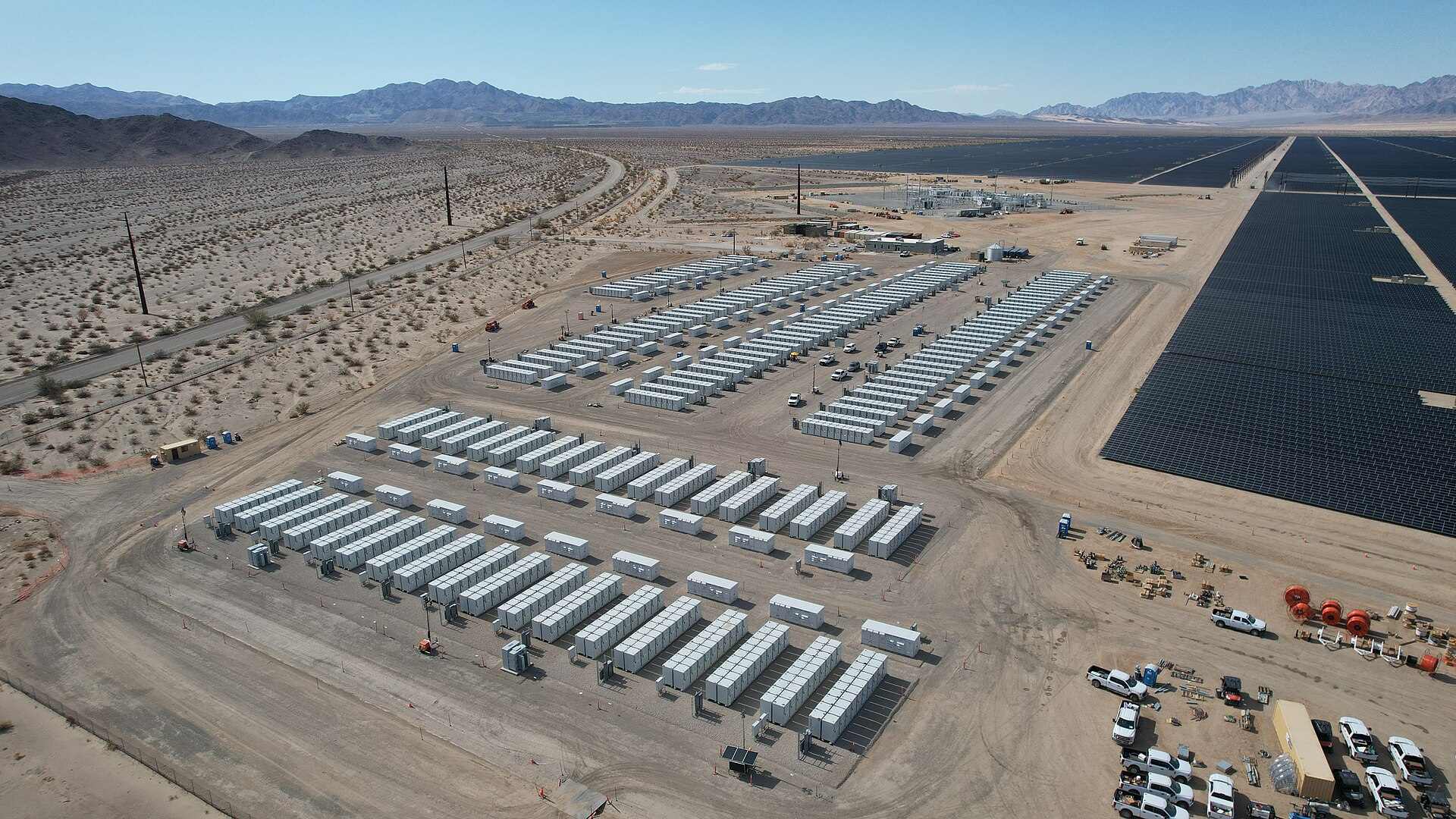
Industrial Battery Storage is no longer a premium add-on for factories on weak grids — it is becoming the default hedge against diesel dependence. In Nigeria, Pakistan and Southeast Asian industrial zones, managers have spent years sizing generators around the hours the grid is absent. In 2026 the math has shifted: lithium iron phosphate (LFP) packs, containerized inverters and remote monitoring now let a site replace the bulk of genset runtime with silent, dispatchable battery capacity. This article compares real diesel costs, live project data and the specification choices buyers should make before signing a 2026 quote.
Get a 2026 Weak-Grid Storage Quote
Get your 2026 weak-grid industrial battery storage quote on WhatsApp or request a written spec by email.
Why Are Factories on Weak Grids Turning to Industrial Battery Storage?
On 5 October 2026 Nigeria’s national grid output collapsed to 2,034 MW from a peak of 5,403 MW ten days earlier, leaving several states below three hours of daily supply, according to African Meridian. The World Bank Enterprise Survey consistently ranks Nigeria among the weakest grids globally, with many commercial feeders delivering six to fourteen hours a day, as tracked by NextMigrate. When the grid fails, factories run diesel. Business A.M. reports all-in diesel generation in Nigeria at roughly ₦550–650 per kWh, more than twice the Band A tariff. Battery storage cuts the fuel-only charge and eliminates the genset’s lubrication, overhaul and operator burden in one procurement.
What Does a Weak-Grid Battery Storage System Include?
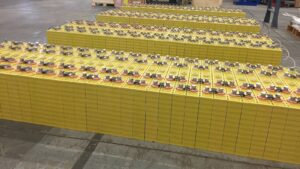
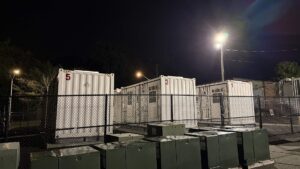
A bankable weak-grid system has four parts. A lithium iron phosphate (LFP) battery rack gives cycle life beyond 8,000 cycles and thermal stability better than nickel-cobalt chemistries. A hybrid power conversion system (PCS) and inverter connect to the grid, solar arrays and the genset bus. An energy management system (EMS) arbitrates charging: solar first, grid second, genset only as a last resort. Finally, a climate-controlled container or skid houses the cells, fire suppression and HVAC. NEGUP’s containerized BESS platforms ship as 500 kWh to multi-megawatt blocks and scale by adding identical units in parallel.
How Fast Does Battery Storage Pay Back Versus Diesel?
Payback depends on how many hours a site currently burns diesel. For heavy Nigerian users, commercial solar plus storage systems recover capital in roughly sixteen to twenty-four months, per Mindseye Solar. The crossover comes because every kilowatt-hour shifted from a genset to a battery saves roughly ₦300–500. The table below compares the two architectures for a 12 kW average load running ten generator hours per day.
| Metric | Diesel generator | Battery + solar storage |
|---|---|---|
| Energy cost (fuel only) | ~₦429 / kWh at ₦1,500/L diesel | ~₦0 when solar-charged; grid recharge at tariff |
| Full cost of ownership | ₦550–650 / kWh including maintenance | ₦120–180 / kWh levelized over 10 years |
| Startup response | 5–30 seconds | <20 milliseconds |
| Daily maintenance | Oil, filters, operator labour | Remote monitoring and annual inspection |
| CO₂ per kWh | ~0.8–1.0 kg | Near zero when solar-charged |
| Payback period | Not applicable | 1.5–3 years for heavy diesel users |
| 24-hour autonomy | Requires refuelling and fuel logistics | Battery + solar sized to load profile |
Which Weak-Grid Projects Already Run on Battery Storage?
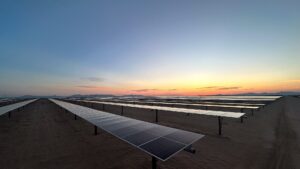
Live projects prove the model at scale. CrossBoundary Energy’s solar-plus-storage plant at the Kamoa-Kakula copper complex in the Democratic Republic of Congo began commercial operation on 12 August 2026 with 233 MWp of PV and a 123 MVA / 526 MWh battery, supplying 30 MW of firm baseload, reported Apex News. In Ghana, CTECHi Ghana supplied a 108 kWh battery to Ghana Textile Industries in Kumasi, which reported a 95% cut in production downtime and a 30% energy-cost reduction. The International Finance Corporation is financing a 150 MW solar project in the Tema and Dawa special industrial zones that will serve more than 100 businesses. These deployments sit inside the World Bank and African Development Bank Mission 300 pledge to connect 300 million Africans by 2030, roughly half through renewable mini-grids and standalone solar systems, per Africa Solar Hub.
For buyers evaluating a commercial and industrial ESS, the lesson is clear: anchor the business case on avoided outage cost and diesel displacement, not on grid-tariff arbitrage.
What Should Buyers Specify in a 2026 Battery Storage Quote?
Request a written Bill of Materials that names the cell chemistry, cycle-life test depth and usable capacity. Insist on IEC 62619 and UN38.3 reports, not logos. Ask how the warranty handles capacity fade: a ten-year throughput guarantee is standard for quality LFP. Clarify whether the price includes the PCS, EMS, container, fire suppression, installation and commissioning. Lead times vary with cell allocation; containerized BESS from Chinese supply chains currently dominate more than 75% of Africa’s solar-plus-storage hardware market, per Africa Solar Hub. For Nigerian buyers, a dollar-indexed tariff adjustment clause and onshore service coverage within 24 hours matter as much as the hardware specification.
How Do You Size Battery Storage for a Factory?
Sizing starts with a load audit, not a catalogue. Record real consumption at 15-minute granularity for at least one month, capturing peak kW and daily kWh. Size the battery for the longest outage you must ride through, then add the solar array needed to recharge it before the next outage. A site that loses grid power for eight hours and uses 1 MWh during that window needs at least 1.2 MWh of usable LFP capacity at 90% depth of discharge. Pairing it with a 400 kWp solar array recharges the pack during the day and displaces grid imports at the same time. NEGUP’s utility-scale BESS engineering team uses the same sizing logic for containerized plants up to tens of megawatts.
What Do LFP Cell Prices Mean for Your 2026 Budget?
Cell prices support the case. InfoLink data from 8 October 2026 put 314 Ah LFP cells at RMB 0.363 per Wh, while SMM and Mysteel peg storage-grade LFP cathode around RMB 49,100 per tonne. SNE Research reported global energy-storage battery shipments of 461.3 GWh in the first half of 2026, up 71% year-on-year. The Central Electricity Authority of India has meanwhile mandated at least 10% co-located storage for new solar and wind projects from July 2027, a signal that weak-grid economies are formalizing storage as grid infrastructure. The lithium carbonate floor and rising GWh volumes mean containerized BESS is no longer a custom-built boutique product; it is a volume commodity delivered in standard blocks.
Buyer FAQ: Battery Storage on Weak Grids
Can battery storage fully replace my diesel generator?
For sites with 4–16 hours of daily outages and available roof or ground space for solar, a properly sized LFP system can replace 80–95% of genset runtime. Most buyers keep a small diesel unit as emergency backup for multi-day cloudy spells.
How long does the battery last in hot climates?
Quality LFP cells rated at 25 °C lose roughly 0.5–1% capacity per year when kept below 35 °C by active HVAC. Specifying a climate-controlled container extends calendar life beyond ten years in Nigeria, Ghana or Southeast Asian conditions.
Do I need grid power to charge the battery?
No. A hybrid system can charge from solar, grid or a genset. In weak-grid zones the design goal is to minimize grid and genset charging so the site runs on solar during the day and stored solar at night.
What certifications should I demand?
At minimum: IEC 62619 for industrial lithium cells, UN38.3 for transport, IEC 62477 for the PCS, and UL 9540 or IEC 63056 for the complete system. Ask for test reports, not stickers.
Can the system scale if my factory grows?
Yes. Containerized BESS is modular: add parallel battery racks and inverters to increase capacity. The EMS and container footprint are designed for incremental expansion without replacing the original block.