

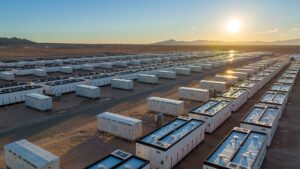
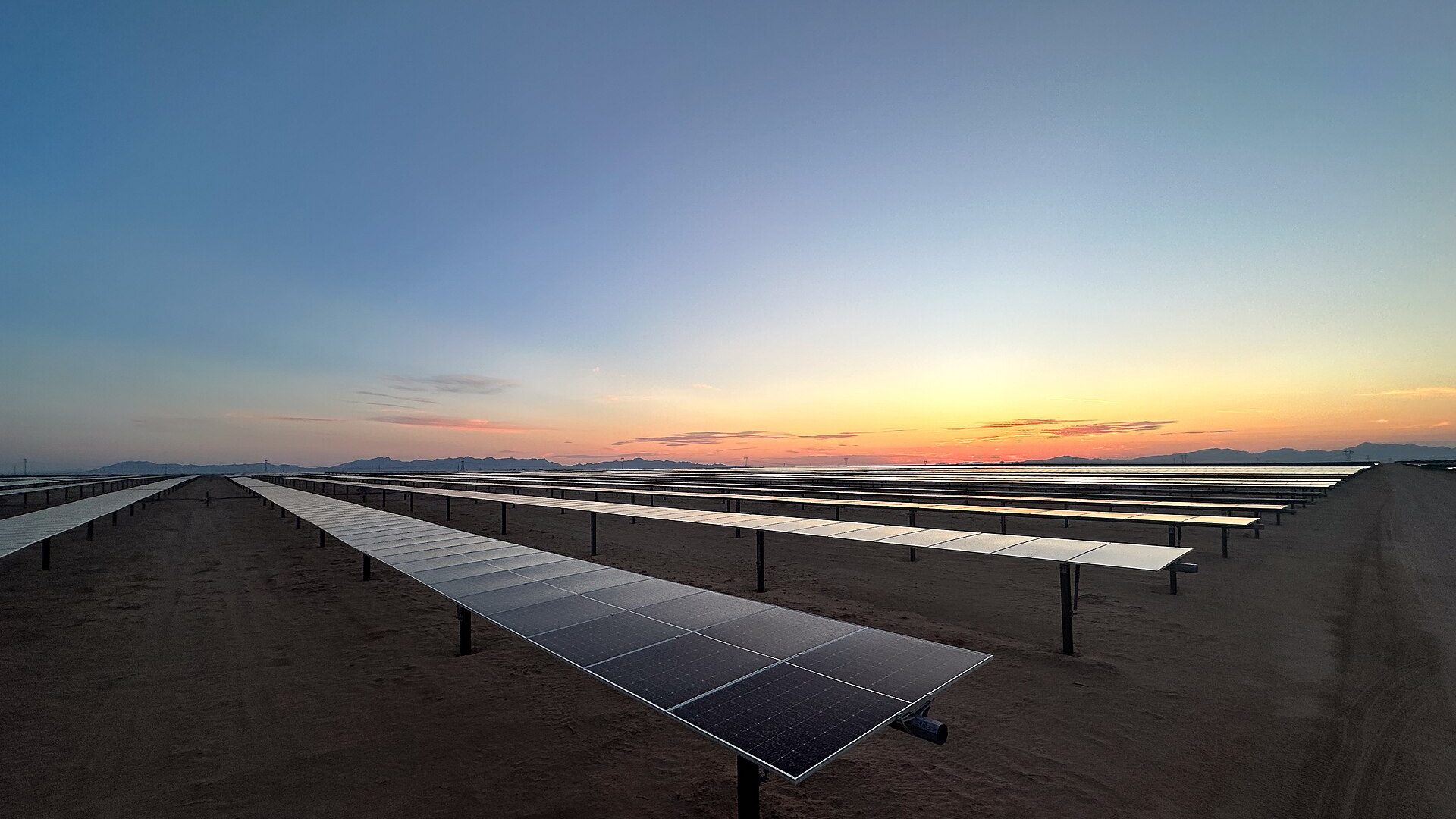
Solar curtailment has become the binding constraint on renewable growth in 2026, and the clearest business case for battery storage. Grid operators switch off solar farms at midday not because demand is low, but because transmission cannot carry the power and storage cannot hold it. India curtailed 8,133 GWh of solar between April and June 2026, about 18% of average monthly solar generation, while California curtailed roughly 4.5 TWh in the first half of the year. Every curtailed megawatt-hour is capacity a developer financed but cannot sell, and the cheapest fix is a battery at a utility-scale BESS site that shifts that energy to the evening peak.
Size a Battery Against Your Curtailment Data
Send one year of curtailment or generation data. We model capture rate, duration and payback, then return a containerized layout within 48 hours.
What Is Solar Curtailment and Why Is It Rising in 2026?
Solar curtailment is a deliberate reduction in solar output ordered by a grid operator. It is either physical, when a transmission line is already at its limit, or economic, when midday supply pushes prices to zero or below and generators cut output rather than pay to export. The Central Electricity Authority and Grid-India now treat curtailment as a structural feature of the Indian grid: about 12 GW of renewable capacity faces evacuation constraints during peak solar hours, and roughly 21 GW is being moved through Temporary General Network Access while new lines are built. India lost about 6,900 GWh of renewable output to curtailment in FY2025-26, and the northern and western corridors account for most of it. The pattern repeats in California, Chile and Spain: solar is built faster than the wires and the batteries that would absorb it.
How Much Solar Was Curtailed in India and California in 2026?
The 2026 numbers are large enough to change project economics. India curtailed 2,417 GWh in April, 3,235 GWh in May and 2,481 GWh in June, a cumulative 8,133 GWh equal to about 18% of the roughly 13 TWh of solar generated in an average month. California’s grid operator recorded 4.50 TWh of wind and solar output switched off in the first six months of 2026, already above the 3.77 TWh lost in all of 2025; April alone lost 1.46 TWh, close to 18% of utility-scale renewable output that month. April and May together produced 63.6% of the half-year total, because mild weather, low air-conditioning load and strong spring sun coincide.
| Market | Period | Curtailed volume | Context |
|---|---|---|---|
| India, national | April 2026 | 2,417 GWh | About 18% of monthly solar |
| India, national | May 2026 | 3,235 GWh | Peak month of the quarter |
| India, national | June 2026 | 2,481 GWh | Still elevated after May |
| India, national | Apr to Jun 2026 | 8,133 GWh | About 18% of generation |
| India, national | FY2025-26 | About 6,900 GWh | All renewable sources |
| California, CAISO | Jan to Jun 2026 | 4.50 TWh | Above all of 2025 |
| California, CAISO | Q1 2026 | 637 GWh | Down 27% year on year |
Why Are Batteries Already Reducing Curtailment?
Storage is not a theoretical fix; it is already bending the curve. California added roughly 10 GW of grid-scale battery capacity between 2022 and 2025, and its first-quarter curtailment fell 27% year on year, from 877 GWh to 637 GWh, with January down 80%. Batteries charge into the midday surplus and discharge into the evening peak, which is exactly the behaviour that removes the need to switch solar off. About 41% of existing CAISO utility-scale solar now has a battery on site, and 93% of planned projects through 2030 include storage. India is earlier in the same cycle: it operates only 8.6 GWh of battery storage against a Central Electricity Authority projection of 236 GWh by 2032, though 42.5 GWh is under construction and a further 38.4 GWh has been awarded. The CEA has also proposed that new solar and onshore wind commissioned after 1 July 2027 carry two hours of storage equal to at least 10% of capacity.
How Do You Size Storage to Capture Curtailed Solar?
Sizing starts with the curtailment profile, not with a standard container. A 100 MW solar plant curtailed for four hours at 20% of its rating is losing about 80 MWh a day; a 25 MW / 100 MWh lithium iron phosphate (LFP) system can absorb most of that and return it during the evening peak, provided the point of interconnection has headroom for both charge and discharge. Capture rate, not nameplate capacity, is the number to model: it depends on the DC/AC ratio, inverter clipping, the local curtailment pattern and round-trip efficiency, which for modern LFP containerized BESS units is typically 88% to 92%. A two-hour system captures shallow, frequent curtailment cheaply; a four-hour system is better where spring curtailment lasts all afternoon. Specify an EMS that reads the curtailment or dispatch signal directly, because a controller that only follows price will miss operator-ordered cuts.
What Does Curtailment Capture Cost and What Is the Payback?
Cell prices keep falling, which improves the case every quarter. InfoLink put 314 Ah storage cells near RMB 0.363/Wh in October 2026, SMM tracked prismatic LFP cells around RMB 0.420/Wh, and BloombergNEF estimates pack prices near US$108/kWh with stationary systems around US$70/kWh, helped by softer lithium carbonate pricing. Set against that, the cost of doing nothing is explicit: India paid roughly Rs 5,750 million to Rs 6,900 million, about US$63 million to US$76 million, in compensation for 2.3 TWh curtailed between late May and December 2025. The arbitrage is widening too, with India’s average peak-to-trough spread rising from Rs 5.27/kWh in 2023 to Rs 8.60/kWh in 2026, a 63% increase. Eurelectric sees the same midday-to-evening gradient across European markets, and FERC and PJM reforms now let aggregated storage earn in wholesale markets, so a capture project can stack recovery revenue with capacity payments. For a developer losing 15% of generation, a grid-scale battery often pays back in four to six years before subsidies.
What Should Buyers Specify for a Curtailment-Capture Project?
Procurement should be written around captured megawatt-hours, not installed capacity. Ask for a round-trip efficiency guarantee at the point of connection, a throughput warranty stated in MWh rather than years, and an augmentation schedule that keeps usable energy inside the warranty for at least 15 years. Require IEC 62619 and UL 1973 cell certification, UL 9540A fire testing at container level, and a documented HAZOP. The PCS should support reactive power and, where the grid code demands it, grid-forming operation, but do not pay a 15% to 25% premium for grid-forming unless the site needs islanding or frequency support. For sites that also serve a factory or warehouse, a commercial and industrial ESS can share the same block and stack demand-charge savings on top of curtailment recovery. Finally, insist the EMS logs every curtailment event and every charge window, because that data is the evidence base for the next augmentation and for any compensation claim.
What is solar curtailment?
Solar curtailment is an instruction from a grid operator to reduce solar output, usually because transmission is congested or midday supply exceeds demand. It can be physical, when lines are full, or economic, when prices fall to zero or below. In 2026 it removed 8,133 GWh of Indian solar in a single quarter.
How much solar did India curtail in 2026?
India curtailed 8,133 GWh between April and June 2026: 2,417 GWh in April, 3,235 GWh in May and 2,481 GWh in June, about 18% of average monthly solar generation. For FY2025-26 the all-renewable total was about 6,900 GWh, according to the Ministry of New and Renewable Energy.
Can batteries really reduce curtailment?
Yes. California added about 10 GW of grid batteries between 2022 and 2025 and cut first-quarter curtailment 27% year on year, from 877 GWh to 637 GWh. Storage charges into the midday surplus and discharges in the evening, so less solar has to be switched off.
How do I size a battery for curtailed solar?
Start from the curtailment profile. A 100 MW plant curtailed four hours a day at 20% of rating loses about 80 MWh; a 25 MW / 100 MWh LFP system can capture most of it. Model capture rate, DC/AC ratio, clipping and 88% to 92% round-trip efficiency before choosing two-hour or four-hour duration.
What does a curtailment-capture BESS cost in 2026?
Complete LFP systems are landing near US$200 to 260/kWh of capacity, with cells at roughly RMB 0.363 to 0.420/Wh and BloombergNEF pack prices near US$108/kWh. Most capture projects pay back in four to six years from recovered generation and peak arbitrage.