

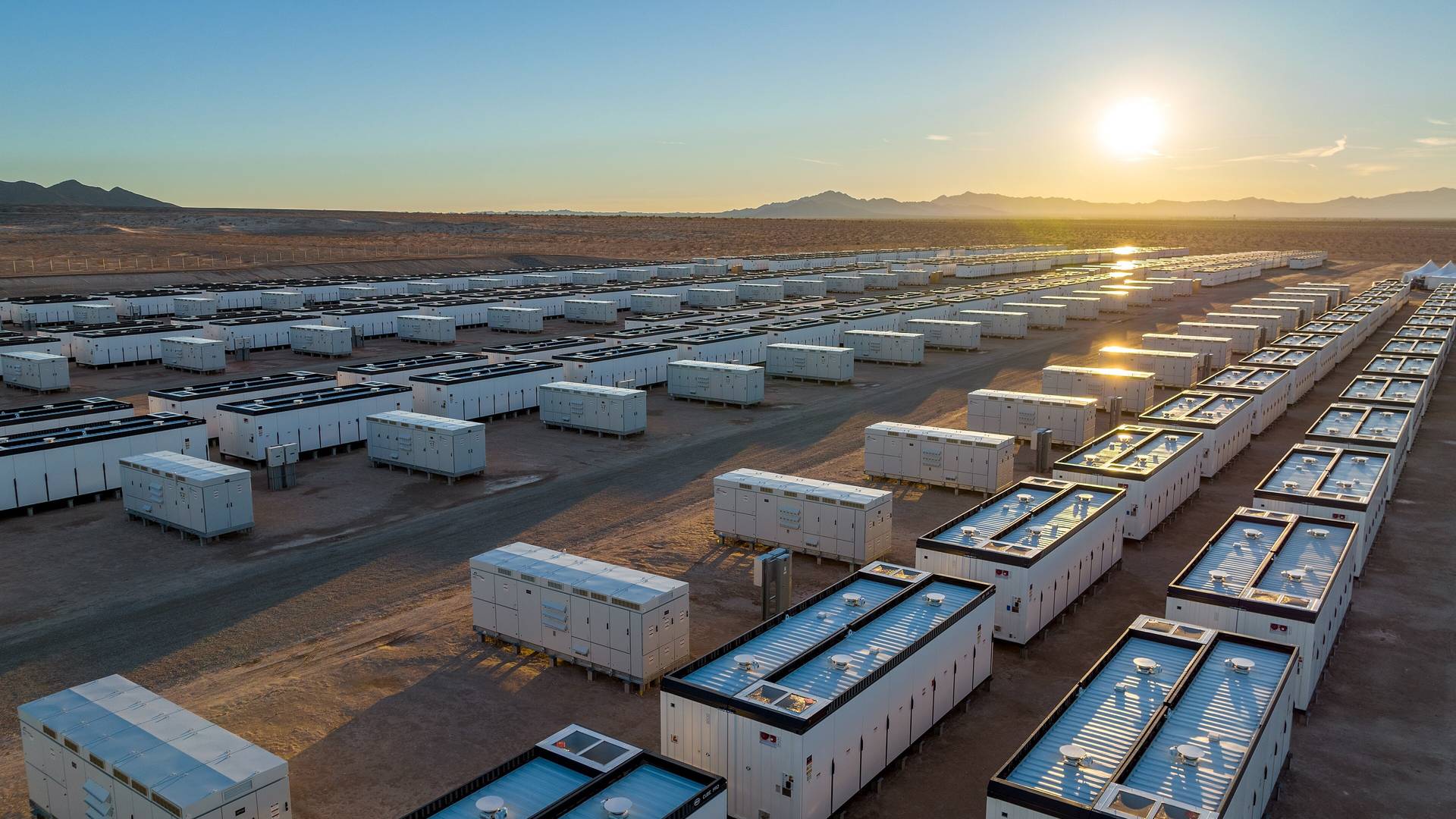
Battery microgrid projects have moved from pilot to default in 2026. On islands, at remote mines and across off-grid industrial parks, solar PV plus LFP storage running a grid-forming inverter now carries the daily load while diesel generators wait in hot standby. The economics flipped: battery packs sit near $70/kWh, delivered diesel runs above $0.85 a litre in many remote regions, and an outage at an industrial plant can cost up to $200,000 an hour in lost production. Every design in this guide is solar-led: PV supplies the daytime megawatt-hours and the battery shifts the midday surplus into the evening peak. Here is what a microgrid battery actually does, how much diesel it displaces, what it costs, and which sites should buy one.
Plan a 2026 Remote-Site Microgrid
Send your load profile and annual diesel spend. We will size the microgrid and show the payback line by line.
Why Microgrid Batteries Scaled in 2026
The segment is small but compounding fast. Mordor Intelligence values the energy-storage-battery-for-microgrids market at roughly US$398 million in 2025, rising to about US$784 million by 2030 at 14.5% a year, while the full microgrid package is pegged near US$43 billion in 2025. In the United States, microgrid capacity has climbed from 4.4 GW in 2022 toward roughly 10 GW by the end of 2025, supported by US$7.6 billion in federal grid funding and California’s US$200 million Microgrid Incentive Program. Commercial and industrial facilities already take about 45% of the market. In China, IndexBox reports that grid-forming and hybrid systems are the fastest-growing segment at 25-30% CAGR, with C&I resilience accounting for 45-50% of 2026 market value.
What Makes a Microgrid Different from a Backup Battery?
A backup battery rides on a healthy grid; a microgrid replaces it. The dividing line is the inverter. A grid-following inverter is a current source that needs an existing voltage and frequency to synchronise to, so it is useless alone in an island. A grid-forming inverter is a voltage source that creates its own stable reference, which lets it run an islanded power system with no other generation present and black-start a dead network. A real microgrid battery must do four jobs: island seamlessly, ride through grid loss without dropping sensitive load, start large motors without sagging the bus, and energise the system from cold. Specify grid-forming for anything that must island, and treat the supplier’s grid-forming track record as a hard selection criterion rather than a checkbox.
How Much Diesel Can a Battery Microgrid Displace?
The proof is in operating data. Flinders Island in Tasmania cut diesel roughly 55% with a grid-forming solar-battery system and held availability above 99.5% (ARENA). A Pilbara reference design pairs 12 MWp of tracking PV with 24 MWh of LFP storage behind an 8 MW grid-forming PCS, running diesel-off about 9 hours a day and saving an estimated 6.4 million litres of diesel a year (TPC Solar). Australia’s Bellevue Gold mine reached about 90% renewable with 155 hours of continuous pure-renewable operation, and Zenith Energy’s off-grid fleet ran 82-95.7% renewable across sites (solarstoragediesel). A 2 MW/4 MWh Caribbean island system cut diesel 72% at 99.3% availability (IMAX Power). In every case the pattern is the same: PV covers the daylight load, the battery carries the evening peak, and the genset only wakes up in bad weather. Typical diesel displacement lands between 60% and 80%.
| Site / type | System | 2026 result |
|---|---|---|
| Flinders Island, Australia (island) | Solar PV + grid-forming BESS | Diesel down ~55%; availability >99.5% |
| Pilbara mine, Western Australia | 12 MWp PV + 24 MWh LFP, 8 MW grid-forming PCS | Diesel-off ~9 h/day; ~6.4 ML diesel saved/yr |
| Bellevue Gold, Western Australia | 90 MW hybrid mine power, solar-led | ~90% renewable; 155 h continuous pure-renewable |
| Mt Weld rare earths, Western Australia | Solar + battery hybrid, Zenith Energy | 870,000 L diesel saved per year |
| Zenith fleet, off-grid mines | Multiple hybrid sites | 82-95.7% renewable share |
| Caribbean island microgrid | 2 MW / 4 MWh BESS + PV | Diesel cut 72%; 99.3% availability |
How Do You Size a Battery Microgrid for a Mine or an Island?
Two questions decide the spec, and buyers constantly conflate them. Power in megawatts is set by the largest instantaneous load the battery must carry alone, plus the transients: a comminution mill or a crusher starting across the bus demands far more current than steady load, so reserve 10% spinning headroom and assume 90% usable depth of discharge on LFP chemistry. Energy in megawatt-hours is set by how long the site must run islanded and how deep the solar trough goes; designs targeting 80% renewable share typically size for a 12-hour overnight supply. Then sequence the black start: auxiliary and protection loads first, transformer inrush managed by ramping voltage, large motors staged. Size from twelve months of measured load data, never from a round number.
What Does a Remote-Site Microgrid Cost in 2026?
Installed cost depends on scale. IndexBox puts a 2-5 MWh C&I LFP system at US$350-450 per kWh installed in China, dropping to US$280-380 per kWh for 10-50 MWh plants; grid-forming capability or advanced cybersecurity certification adds 15-25%. Against that, payback runs 3 to 5.5 years wherever delivered diesel costs more than US$0.85 a litre, and about 4.2 years at US$1.20 (IMAX Power’s 15-project fleet data). The comparison should also price what diesel hides: fuel logistics to remote sites, generator replacement every 15,000-25,000 running hours, technician travel, spill liability and carbon exposure. Where the site is grid-tied, remember that factory outages cost US$50,000-200,000 an hour, which is why C&I resilience anchors the market.
Cell input costs keep improving the math. BloombergNEF‘s December 2025 survey put global lithium-ion pack prices at $108/kWh and stationary storage packs near $70/kWh. InfoLink quoted 314Ah LFP cells at RMB 0.363/Wh in October 2026, with lithium carbonate near RMB 120,000/t, and Mysteel tracked storage-grade LFP cathode around RMB 49,100/t. SMM publishes weekly FOB-China benchmarks for 5 MWh DC-side containers, while SNE Research counted 461.3 GWh of global storage shipments in the first half of 2026, up 71% year on year. Falling input costs are exactly why the remote-site payback window keeps shrinking.
Which Sites Should Buy a Microgrid Instead of a Standalone BESS?
The rule is blunt: islanding is only worth paying for when an outage actually hurts. Buy a battery microgrid when the grid is weak or absent, the diesel bill is enormous, the load is critical, or corporate carbon accounting counts every tonne of Scope 1 fuel on site. Buy a standalone BESS when the grid is firm and cheap and short interruptions are tolerable. In between, hospitals and campuses specify 4-8 hours of critical-load autonomy, while data centres demand island transitions in under 20 milliseconds. If your outage cost, diesel spend and emissions targets do not all point the same way, start with a standalone battery and design the microgrid upgrade path later.
How NEGUP Delivers Turnkey Battery Microgrids
Supplier qualification decides whether these numbers survive contact with your site. Insist on grid-forming PCS references at similar load mix, IEC 62619 and UL 1973 cell certification, a documented HAZOP, and an EMS that integrates third-party PV inverters over Modbus or CAN so the system is not locked to one vendor. NEGUP quotes containerized BESS, commercial and industrial ESS and utility-scale BESS for microgrid duty as 20-ft and 40-ft containers pre-assembled with BMS, HVAC and fire suppression, with the cell batch, PCS and thermal scope listed line by line, plus remote O&M for sites that cannot fly a technician in every month. Send the load profile on WhatsApp and we will return a sizing, a cost band and a payback curve you can take to your board.
Buyer FAQ: Remote-Site Microgrids in 2026
Can a battery microgrid really replace diesel generators?
It replaces 60-80% of diesel energy, not the generator. Well-designed systems keep the gensets as hot-standby backup for extended cloud, cyclone weather or maintenance, which is exactly how the Flinders Island, Pilbara and Caribbean island systems operate.
How long can the site run islanded?
As long as the energy rating allows. Power is set by the largest load plus motor-start transients; energy is set by the overnight solar trough. Designs commonly hold 3 hours of ride-through to 12 hours of overnight supply, with gensets extending autonomy further.
Is grid-forming worth the extra 15-25% cost?
Yes, if the site must island. Grid-forming is what creates the voltage reference, rides through grid loss and black-starts a dead system. Without it, you own a backup battery, not a microgrid. Treat the supplier’s grid-forming track record as a hard criterion.
What payback should we expect?
Fleet data across 15 remote projects shows 3 to 5.5 years wherever delivered diesel exceeds US$0.85 per litre, and about 4.2 years at US$1.20. Fuel logistics, genset overhauls and carbon costs shorten it further.
Which chemistry and certifications should we require?
LFP remains the default for remote duty: 90% usable depth of discharge, long cycle life and stable thermal behaviour. Require IEC 62619 and UL 1973 cell certification, a documented HAZOP, and an EMS that integrates third-party PV inverters so you are not locked to one vendor.