



September 2026 is shaping up to be a landmark month for utility-scale battery energy storage. Within a single week, planners in Scotland approved a 500 MW system, Malaysia reached financial close on its first competitive-storage plant, and Australia switched on a 300 MW facility outside Melbourne. The momentum is global — and it is reshaping how developers, EPCs and commercial buyers size and finance storage.
Three Continents, One Trend
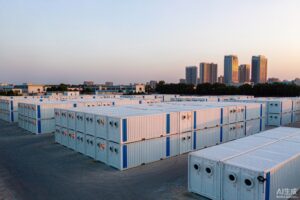
The pipeline is no longer concentrated in one region. In Aberdeenshire, Scotland, Scottish Ministers granted consent for the Abbotshaugh Energy Storage project — a 500 MW / 2,000 MWh BESS developed by Island Green Power, with a 40-year operational life and a grid connection scheduled for 2033. In Peninsular Malaysia, the Blueleaf Energy & Universal Peak consortium reached financial close on a 100 MW / 400 MWh plant under the national MyBeST program, structured as build-own-operate (BOO) with a BESSA agreement signed with the grid single buyer in June 2026. And in Victoria, Australia, Origin Energy commissioned its Mortlake Battery — 300 MW / 650 MWh, approximately A$400 million, with grid-forming inverters supplied by SMA and battery units from Fluence.
The United States and continental Europe are moving in step: Equinor’s East Point Energy brought the 100 MW / 200 MWh Citrus Flatts facility online in Harlingen, Texas, while BW ESS acquired two standalone Spanish projects totalling 126 MW. The common thread: storage is now a default line item in grid and renewable plans, not a pilot.
| Project | Region | Power / Energy | Status (Sep 2026) |
|---|---|---|---|
| Abbotshaugh (Island Green Power) | Scotland, UK | 500 MW / 2,000 MWh | Consent granted; connect 2033 |
| MyBeST (Blueleaf / Universal Peak) | Peninsular Malaysia | 100 MW / 400 MWh | Financial close; BOO model |
| Mortlake (Origin Energy) | Victoria, Australia | 300 MW / 650 MWh | Commissioned 7 Sep 2026 |
| Citrus Flatts (East Point / Equinor) | Texas, USA | 100 MW / 200 MWh | Online 3 Sep 2026 |
The Economics: Sub-$50/kWh Packs, but Climbing Cells
Behind the buildout is a split-screen cost story. BloombergNEF’s 2026 survey puts volume-weighted LFP battery pack prices below $45/kWh in H1 2026 — a 93% drop from 2013 and roughly 30% under prior forecasts. At that level, the incremental cost of adding one hour of duration to a utility solar project has fallen to about $28–35/kW per hour, pushing the economic sweet spot from 4-hour toward 6–8-hour systems in high-solar markets.
Yet China’s cell quotes tell the opposite tale. The mainstream 314 Ah LFP storage cell averaged about ¥0.37/Wh in August 2026 — up more than 30% from end-2025 — as lithium carbonate and iron-phosphate feedstocks rebounded and leading makers pushed order books out to mid-2027. Translation for buyers: system-level prices keep falling on overcapacity, but the cell underneath is getting dearer, and procurement lead times are lengthening.
Why Grid-Forming Inverters Matter
Modern plants are not just batteries — they are grid infrastructure. The Mortlake project’s SMA grid-forming inverters provide synthetic inertia and system-strength services once supplied only by spinning generators, letting high-renewable grids stay stable as coal retires. For EPCs and asset owners, that means storage is increasingly procured against availability and performance obligations (as in Malaysia’s BESSA framework) rather than simple energy shifting.
What This Means for NEGUP Buyers
For commercial & industrial operators and ESS integrators, three takeaways stand out:
- Lock pricing early. With 314 Ah lead times stretching into 2027, securing cells or containerized systems now cushions against further cell inflation.
- Think in duration, not just power. Falling per-kWh costs make 4–8 h C&I and microgrid configurations increasingly bankable.
- Specify grid-forming capability where the system will support weak or islanded grids — a different requirement from behind-the-meter peak shaving.
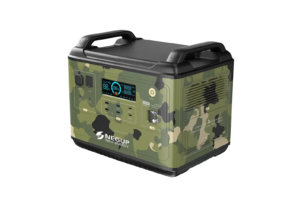
NEGUP ENERGY supplies LFP-based energy storage batteries, commercial & industrial ESS and residential ESS built around these same market realities — long-duration LFP chemistry, grid-forming-ready architecture, and delivery windows sized for today’s constrained cell supply.
Outlook
The September 2026 wave shows BESS moving from subsidy-dependent pilot to core grid asset across Europe, Asia and Oceania. Buyers who pair early procurement with longer-duration, grid-forming designs will capture the most value as the $45/kWh era matures.
Contact NEGUP ENERGY: WhatsApp +86 15307690902 | [email protected]