


As the global energy transition enters its deepest phase, the energy storage industry in 2026 has crossed a pivotal threshold. The once-dominant 280–314 Ah prismatic cell has been joined—and in many procurement bids surpassed—by a new generation of 500 Ah+ LFP storage cells. According to industry data, cumulative domestic shipments of 500 Ah+ storage cells in China exceeded 5 GWh in 2025, with more than 90 percent of that volume flowing to overseas markets. Disclosed orders for the same class topped 20 GWh. These numbers are not pilot runs; they are proof that the industry has moved from prototype validation to repeatable, volume-oriented production.
Leading tier-one manufacturers have built a full product matrix. CATL is shipping its 587 Ah cell out of a 60 GWh annual capacity base in Jining. EVE Energy has its 628 Ah “Mr. Big” cell in mass production at its Hubei facility, with a 2.2 GWh long-term order secured in Australia. Hithium has mass-produced both 587 Ah and 1,175 Ah formats for 8-hour-plus long-duration projects, locking in over 6.5 GWh of supply agreements with European and Israeli customers. Sunwoda reached its one-millionth 684 Ah unit only three months after starting volume production, and BYD has begun batch delivery of its 2,710 Ah Blade-based “Ocean System.” Even second-tier players—Envision AESC, CALB, REPT—have published clear roadmaps for 530–588 Ah cells with mass production timelines in early 2026.
Why the Industry Moved Past 314 Ah
For roughly three years, the EVE LF314 (314 Ah, 71 × 174 × 207 mm, two M6 stud terminals) served as the de facto standard for containerized energy storage. But as grid-scale renewable integration accelerates and 4-hour-plus duration storage becomes the default requirement, the 314 Ah format has become a bottleneck. The new 500 Ah+ class does not merely offer more capacity; it restructures the economics of the entire system.
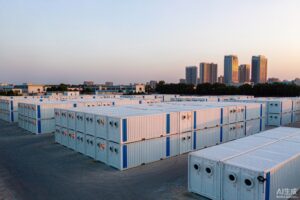
Consider the cell count inside a standard 20-foot container. A 5 MWh system using 314 Ah cells requires roughly 5,000 individual cells. A 6 MWh+ system using 628 Ah cells needs only about 3,000 units—a reduction of more than 60 percent. That single change cascades through every cost line: fewer serial-parallel weld points, fewer sensing harnesses, reduced structural components, and lower assembly labor hours. CATL reports that upgrading from its earlier system to a 587 Ah platform slashes the total number of components inside a container from 30,000 to 18,000, a 40 percent reduction that lowers system-level BOM costs by an estimated 10–15 percent.
The efficiency gains do not stop at BOM. Assembly throughput rises by roughly 30 percent because the same pack line processes fewer cells per kWh. System volumetric energy density climbs by over 25 percent, pushing the 20-foot container from the old 5 MWh ceiling to a new mainstream of 6–6.5 MWh, with EVE’s “Mr. Giant” system reaching 6.9 MWh after more than 20 months of real-world validation. Fewer cells also mean simpler BMS management and fewer potential points of failure, which improves long-term reliability. The transition from 314 Ah to 500 Ah+ is therefore not a capacity race; it is a structural cost restructuring.
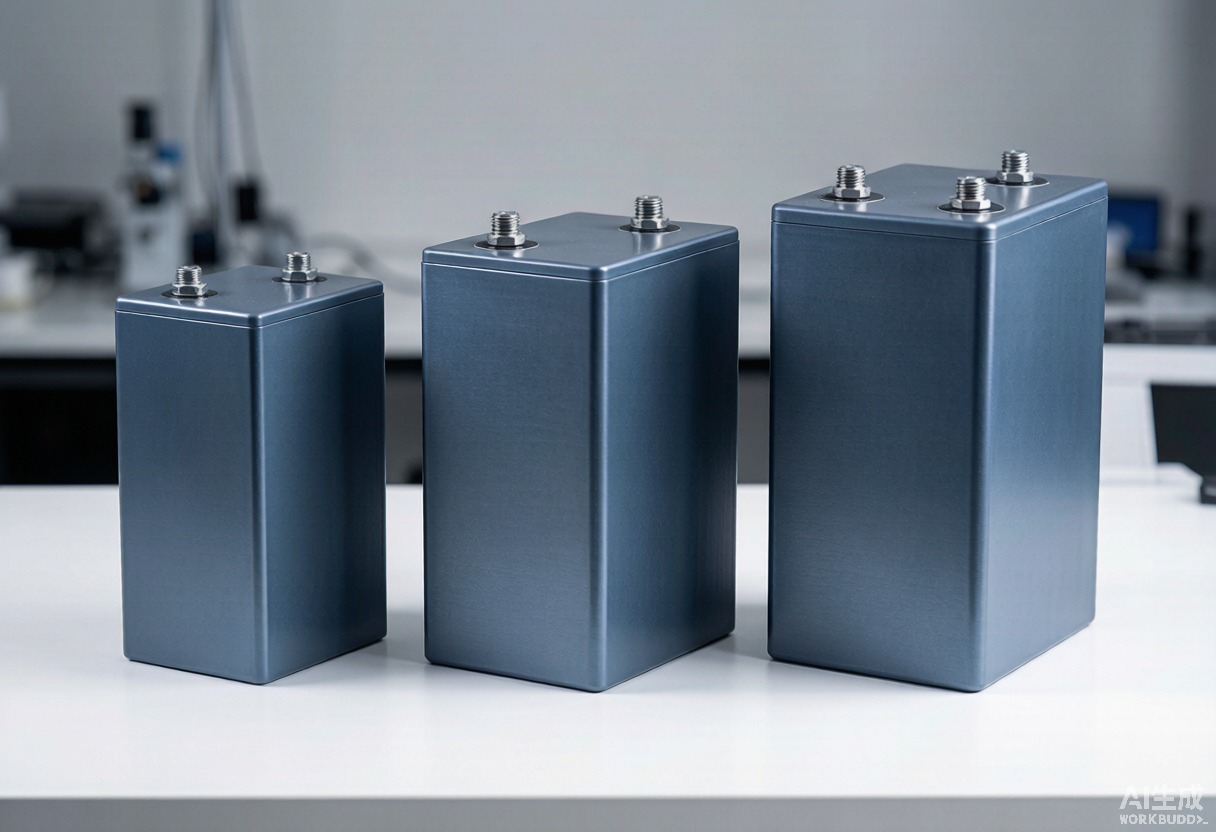
Who Is Shipping 500Ah+ Cells in 2026
The competitive landscape is no longer about who can announce the biggest cell first. In 2026, the battleground has shifted to who can deliver stable yield at mass production. Tier-one lines dedicated to large-format storage cells are running at over 95 percent utilization, while legacy lines for smaller consumer or niche EV cells sit at 50–60 percent, according to March 2026 data from the Evvink Think Tank. This divergence is reshaping the supply base.
| Manufacturer | Model | Capacity | Energy Density | Cycle Life | Production Status | Notable Project |
|---|---|---|---|---|---|---|
| CATL | 587 Ah | 587 Ah | 434 Wh/L | >10,000 | Mass production | 60 GWh Jining base; 2 GWh cumulative shipped |
| EVE Energy | 628 Ah “Mr. Big” | 628 Ah | ~380 Wh/L | >10,000 | Mass production | 2.2 GWh Australia order; 6.9 MWh container system |
| HiTHIUM | 587 Ah ∞Cell | 587 Ah | ~380 Wh/L | >10,000 | Mass production | 6.5 GWh Europe / Israel supply |
| HiTHIUM | 1,175 Ah | 1,175 Ah | ~360 Wh/L | >10,000 | Mass production | 8+ hour duration LDES projects |
| Sunwoda Energy | 684 Ah | 684 Ah | 440 Wh/L | >10,000 | Mass production | 1 million units in 3 months |
| BYD | 2,710 Ah Blade | 2,710 Ah | ~250 Wh/L | >8,000 | Volume delivery | Ocean System, grid-side deployment |
| Envision AESC | 530 Ah | 530 Ah | ~370 Wh/L | >10,000 | Pre-production | 6 MWh+ container target |
| CALB | 588 Ah | 588 Ah | ~380 Wh/L | >10,000 | Early 2026 | Long-duration utility |
| REPT | 587 Ah Wending | 587 Ah | ~380 Wh/L | >10,000 | 2026 plan | Utility-scale storage |
Cost & Market Signals: Prices Keep Falling
The large-cell revolution is happening against a backdrop of falling prices. According to BloombergNEF’s 2025 cost survey, global average lithium-ion pack costs fell to roughly $108 per kWh, down 8 percent year-over-year. LFP packs—the chemistry that dominates stationary storage—hit $81 per kWh at the pack level, with stationary storage packs specifically averaging around $70 per kWh, a 45 percent drop from 2024. On the cell side, a large 7 GWh procurement in China during 2026 saw 314 Ah LFP cells quoted as low as $47 per kWh.
At the cell level, the trajectory is equally steep. LFP cell pricing dropped from $115 per kWh in Q1 2023 to $84 per kWh in Q1 2026, with the best-in-class Chinese suppliers transacting bulk orders at $75–78 per kWh. BNEF now forecasts a further decline to $70 per kWh by the end of 2027, roughly two years ahead of the 2024 trajectory. The cost of lithium carbonate—the single biggest raw-material driver—has fallen from a peak of over $70,000 per tonne in 2022 to roughly $13,000–17,000 per tonne in 2025–2026, passing those savings directly into cell costs.
On the demand side, BNEF projects global battery energy storage deployments will reach 123 GW and 360 GWh in 2026 alone, a 33 percent increase over 2025. By early 2026 the global installed base of BESS surpassed 250 GW, overtaking pumped-hydro storage for the first time in history. The United States is expected to double its utility-scale installed base to 65 GW by year-end. Even with duties on Chinese battery components adding 56–69 percent to imported system costs, the underlying deflation trend has not reversed. The $70 per kWh pack price was the threshold analysts identified for standalone storage to compete with natural-gas peakers without subsidies; the industry reached that number roughly three years ahead of consensus forecasts.
| Period | LFP Cell Price ($/kWh) | Key Context |
|---|---|---|
| Q1 2023 | $115 | Post-pandemic peak supply tightness |
| Q1 2024 | $102 | Capacity overhang begins to form |
| Q1 2025 | $93 | Lithium carbonate collapses to ~$20,000/t |
| Q1 2026 | $84 | Bulk best-in-class: $75–78 |
| 2026 large tender | $47 | 7 GWh China procurement, 314 Ah class |
| BNEF 2027 forecast | $70 | Two years ahead of 2024 trajectory |
Full manufacturer comparison, price trajectory and equipment implications — 4 pages.
What Large Cells Demand from Your Assembly Line
Doubling cell capacity does not scale linearly in manufacturing. The physical size and weight of 500 Ah+ cells—a 628 Ah unit weighs roughly 11–12 kg—place exponentially harsher demands on electrode coating uniformity, winding and stacking alignment accuracy, electrolyte wetting consistency, and temperature control during formation and aging. Any minor lithium plating, electrode creasing, or uneven electrolyte distribution will be compounded over thousands of cycles, making manufacturing yield the single most important competitive moat in this era.
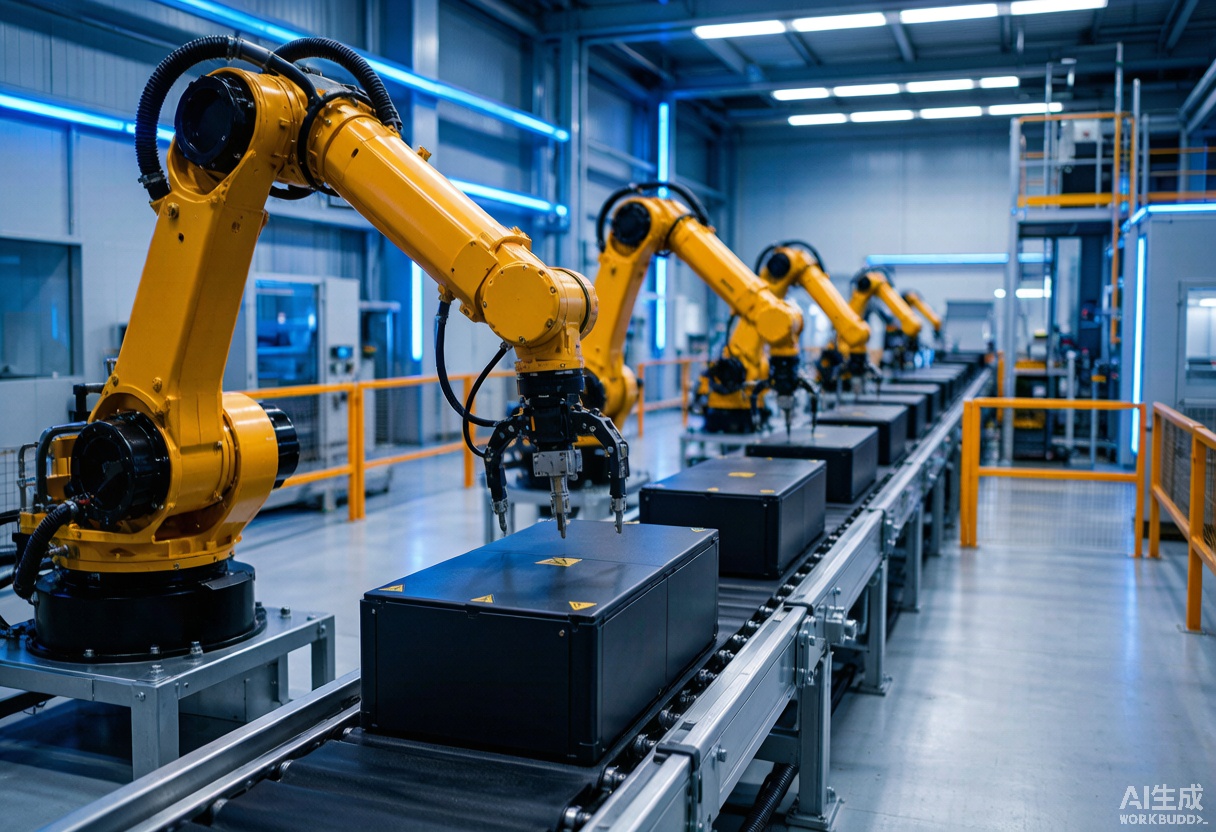
For pack assemblers, the implications are immediate. A cell that is 40 percent larger and heavier requires stronger robotic grippers, more rigid stacking fixtures, and higher-precision alignment guides. The terminal tabs are thicker, which means welding current and energy must rise proportionally. Laser welding of busbars and servo spot welding of nickel strips both need upgraded power supplies to maintain joint quality without excessive heat-affect zones. On the testing side, formation and grading cabinets must support higher per-channel current—600 A to 1,200 A class is becoming the new baseline for 500 Ah+ cells, compared with the 200–400 A range that served 314 Ah systems. Aging cabinets must also accommodate larger modules and more aggressive thermal profiles.
NEGUP MACHINE’s NG-002 Prismatic Assembly Line already supports stacking, laser welding, and formation for VDA PHEV2 and NMC prismatic formats. The line can be retooled for larger cell envelopes up to 628 Ah class, with servo-driven stacking heads, upgraded welding power, and adjustable fixture pitch. Our NG-010 Formation & Grading Cabinet offers 5 V / 10 V / 20 V per-channel options and is compatible with high-current configurations. The NG-011 Battery Aging Test System handles low, medium, and high-voltage series up to 1,800 V, and the NG-012 Internal Resistance Tester covers 10 mΩ to 1 kΩ across six ranges with built-in comparators for 30-grade sorting—exactly the precision needed to catch the PPB-level defects that become fatal in 10,000-cycle cells.
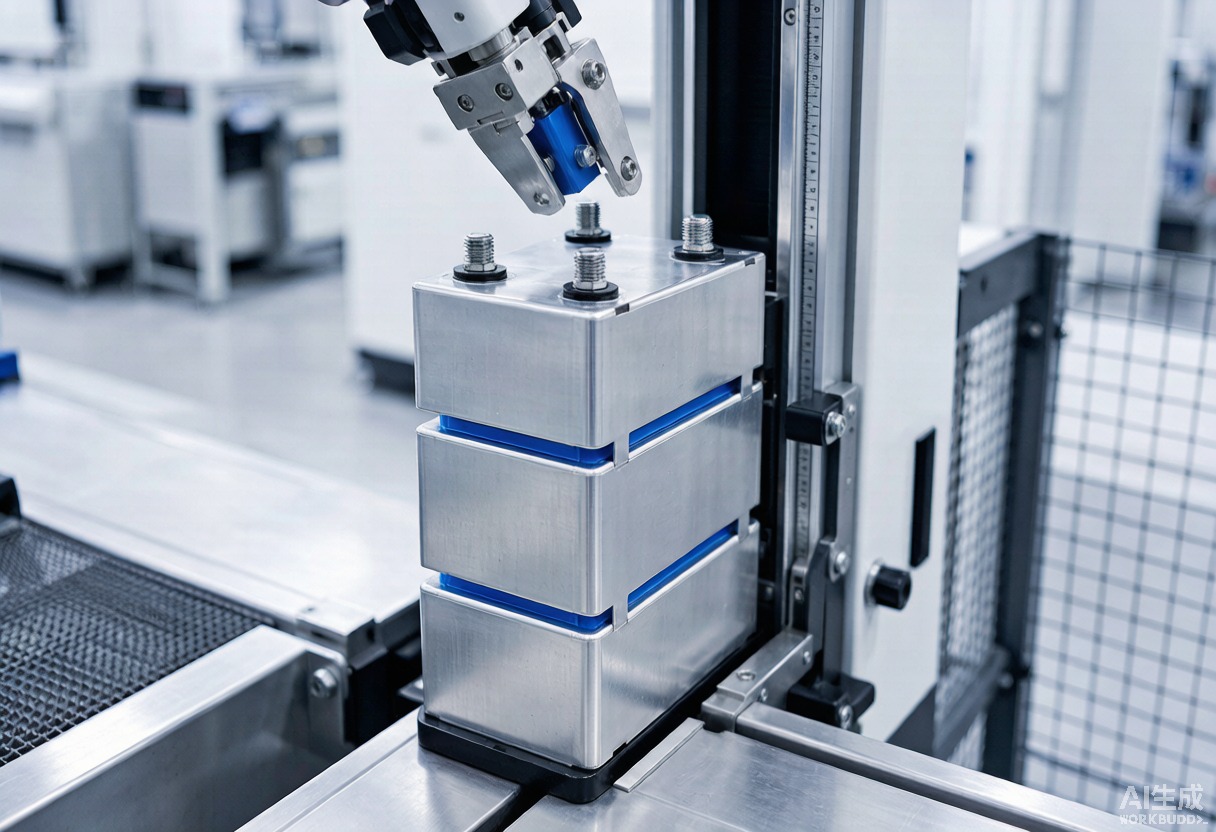
The data from March 2026 makes the business case clear: dedicated large-cell lines are running above 95 percent utilization, while legacy small-capacity lines are stranded at 50–60 percent. For cell and pack makers, upgrading to 500 Ah+ is not a future option; it is a present survival requirement.
NEGUP MACHINE — battery assembly & testing equipment. WhatsApp +86 153 0769 0902 | [email protected] | www.negupmachine.com
Need a production line that can handle large-format prismatic cells up to 628 Ah and beyond? Talk to NEGUP on WhatsApp or email us at [email protected]. We design custom stacking, welding, and testing lines for your exact cell format and daily output.
Tags: 500Ah Energy Storage Cell · Battery Assembly Line · Prismatic Cell Production · Energy Storage Equipment · Large Format LFP Cell