


Global BESS Surge: 18 GWh Online in July as Europe Goes Continental
July 2026 delivered 18 GWh of new large-scale battery energy storage capacity worldwide, pushing the year-to-date total up 27%. China planned 304 GWh of battery output for August, with stationary storage claiming 41%. Meanwhile, a wave of BESS project financings from Poland to Romania signals that Europe’s storage buildout has gone continental. Here is what the data says and what it means for cell and pack manufacturers.
18 GWh in a Single Month
According to industry tracking data published on 27 August 2026, a total of 18 GWh of large-scale battery energy storage system (BESS) capacity came online globally in July 2026. China accounted for roughly 70% of that volume, continuing its dominance as the world’s largest storage deployer. The year-to-date installed base now sits 27% above the same point in 2025, putting the full-year trajectory on track to exceed 360 GWh of new BESS deployments — the figure BloombergNEF projected in its 2026 outlook.
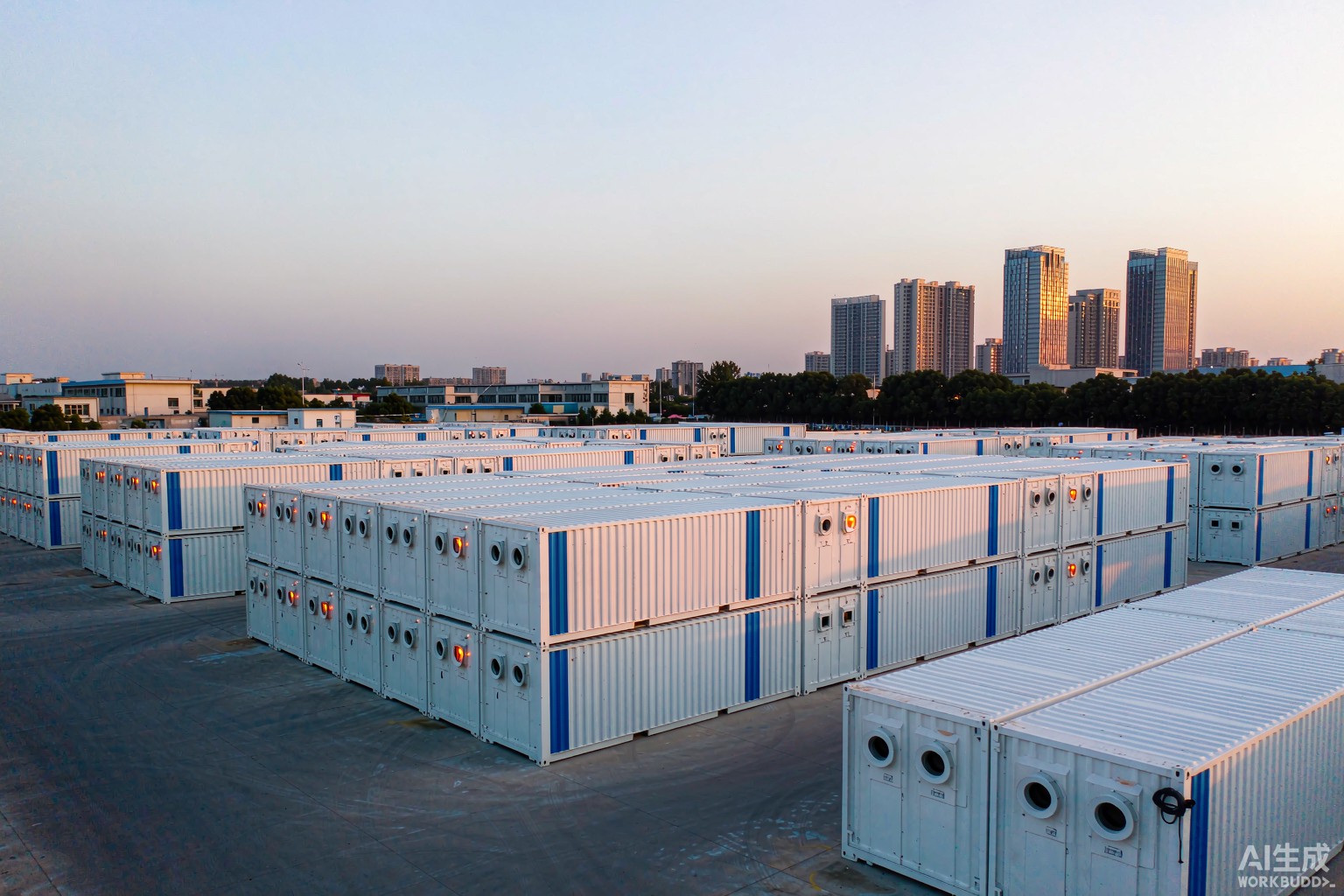
The 18 GWh monthly print is not a single mega-project coming online. It is the aggregate of dozens of 50–300 MW systems across China’s western provinces, the US Southwest, and an accelerating pipeline of European projects. That breadth matters. When deployment is concentrated in one or two landmark projects, the monthly numbers swing violently and tell you little about underlying demand. When 18 GWh arrives across dozens of sites, it signals that the procurement, permitting, and construction pipelines have reached industrial scale — the cells are flowing and the projects are completing on schedule.
China’s August Output: 304 GWh, Storage at 41%
On the supply side, a survey of 37 battery manufacturers and supply-chain companies estimated China’s planned battery production at approximately 304 GWh for August 2026, a 7.4% increase from July. Of that total, stationary energy storage cells accounted for roughly 125 GWh — 41% of all planned battery output. That share has climbed steadily through 2026 as stationary storage overtakes electric vehicles as the primary growth driver for Chinese cell manufacturers.
The top five manufacturers alone scheduled 193 GWh for August, an 8% month-on-month increase and a 67% jump from August 2025. Lithium iron phosphate (LFP) cells led the expansion, reinforcing the chemistry’s grip on stationary storage. The supply chain moved in lockstep: August forecasts pointed to monthly gains in cathode, anode, electrolyte, and lithium-material output, with electrolyte production showing the largest expected increase. That synchronized movement signals manufacturers communicated stronger demand expectations across their entire supplier networks.
First-half data corroborates the trend. Combined power and energy storage battery production reached 1,068.9 GWh in H1 2026, up 53.3% year-on-year, according to the China Automotive Battery Innovation Alliance. The second-half schedule extends an established production trend rather than predicting a sudden acceleration.
Central & Eastern Europe: The New Frontier
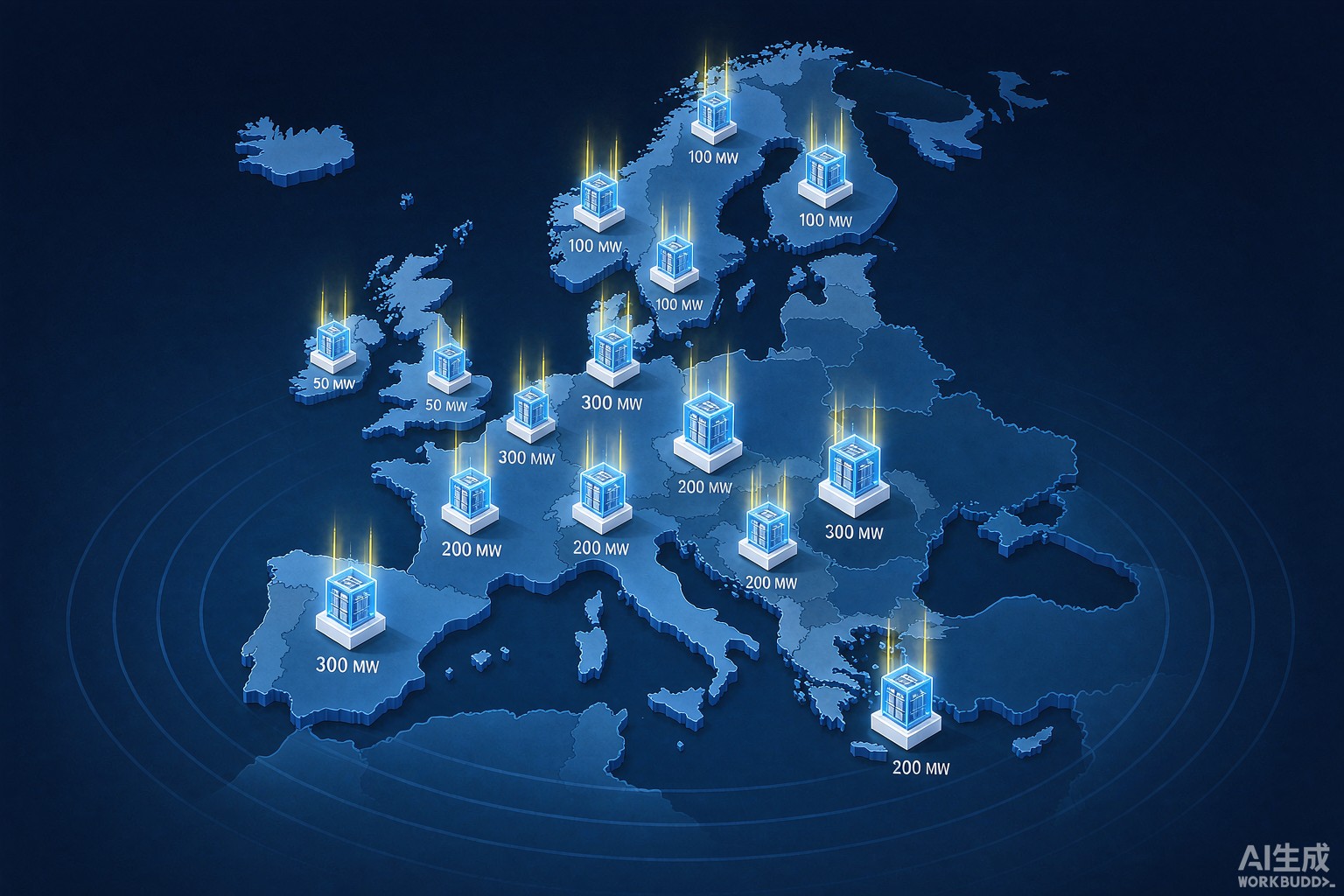
The most striking development of late August 2026 is the concentration of BESS deals across Central and Eastern Europe (CEE). Ahead of the Energy Storage Summit CEE scheduled for October in Warsaw, a series of project announcements surfaced on 27 August that collectively represent a break-through moment for the region.
In Poland, Greenvolt secured a €218 million financing package from UniCredit for two 200 MW/800 MWh BESS projects — Elk and Turosn. BYD is supplying the battery systems, and Entrix will handle optimisation. These projects are part of a 1.2 GW portfolio that won capacity market contracts in 2023, with obligations starting in 2028. Greenvolt is also active in Hungary, where it inaugurated the country’s largest BESS in June, and in Italy, where it won a MACSE contract for a 75 MW/600 MWh system.
In Finland, developer Korkia sold a 125 MW ready-to-build BESS project to IPP Enlight, with grid connection expected by H1 2028. In Lithuania, UAB Elesela reached financial close on a 20 MWh BESS project in Klaipeda, appointing China-based ZEO Energy Storage as integrator. European Energy enlisted a Finland-based optimiser for two solar-plus-storage projects in Lithuania and Latvia totalling 71 MW/170 MWh of BESS. In Romania, GEN-I Sonce enlisted EPC firm Waldevar Energy to build a 55 MW/220 MWh system in Gheorgheni.
| Project / Developer | Country | Capacity | Status (Aug 2026) | Key Supplier |
|---|---|---|---|---|
| Greenvolt (Elk + Turosn) | Poland | 400 MW / 1,600 MWh | Financing closed (€218M) | BYD (cells) |
| Korkia / Enlight (Kukonkyla) | Finland | 125 MW | Sold, ready-to-build | TBD |
| Elesela (Klaipeda) | Lithuania | 20 MWh | Financial close | ZEO Energy Storage |
| European Energy (Anyksciai + Saldus) | Lithuania / Latvia | 71 MW / 170 MWh | Under construction | Capalo (optimiser) |
| GEN-I Sonce (Gheorgheni) | Romania | 55 MW / 220 MWh | EPC contracted | Waldevar Energy |
| COMAX France | France | 57 MW / 114 MWh | Operational (10 sites) | TBD |
| Alpiq / ECO STOR | Germany | ~260 MW (portfolio) | Acquired | CATL-backed CNTE |
| Masdar (2nd UK BESS) | United Kingdom | Commercial operation | Operational | TBD |
| HMC Capital (Victoria) | Australia | 300 MW / 1,200 MWh | Equity committed | TBD |
Western Europe Keeps Pace
While the CEE deals captured headlines, Western Europe continued its own acceleration. METLEN announced agreements for BESS projects in the UK, Italy, and Greece on 26 August. COMAX France completed a 57 MW/114 MWh portfolio across 10 sites, quadrupling its BESS holdings. Alpiq acquired one of Germany’s largest operational battery storage systems from ECO STOR, adding approximately 260 MW of operational capacity alongside a CATL-backed CNTE supply agreement and a Vattenfall virtual tolling contract. Masdar started commercial operations at its second UK BESS.
Austria, meanwhile, announced plans to overhaul its solar subsidy framework from 2027, shifting support from standard PV systems toward battery storage, energy management systems, and specialised solar applications. The government aims for up to 8 GW of market-oriented storage capacity by 2030. A €20 million subsidy budget was exhausted in 33 seconds under the current first-come-first-served mechanism, exposing the depth of unmet demand and forcing the policy revision.
In Australia, HMC Capital committed equity to develop its first new-build battery storage project — a 300 MW/1,200 MWh facility in Victoria, with KKR partnership funding covering 90% of site equity. The AEMO’s 2026 Electricity Statement of Opportunities confirmed a clearer pathway to reliability but flagged ongoing need for system security investment.
| Metric | Value | Source / Period |
|---|---|---|
| Large-scale BESS online (July 2026) | 18 GWh | Industry tracking, 27 Aug 2026 |
| China share of July deployments | ~70% | Industry tracking |
| YTD deployment growth vs 2025 | +27% | Industry tracking |
| China August battery output (planned) | ~304 GWh | 37-company survey, Aug 2026 |
| China August storage cell share | ~125 GWh (41%) | 37-company survey |
| Top-5 August output (planned) | 193 GWh (+8% MoM) | Survey estimate |
| H1 2026 combined battery output | 1,068.9 GWh (+53.3% YoY) | China Automotive Battery Innovation Alliance |
| BNEF 2026 global BESS forecast | 123 GW / 360 GWh | BloombergNEF |
| Austria 2030 storage target | Up to 8 GW | Austrian government, Aug 2026 |
What This Means for Cell & Pack Manufacturers
The convergence of three signals — 18 GWh of monthly deployments, 125 GWh of monthly storage-cell production, and a multi-billion-euro European project pipeline — creates a clear set of implications for anyone assembling battery cells or packs.
First, the demand floor has shifted. The 27% year-to-date growth in deployed BESS capacity means that cell production lines running at 95% utilization in March are now running even harder. The 125 GWh of August storage-cell output is not inventory building; it is flowing into projects that are completing within the same quarter. For cell makers, this means the pricing power that began shifting in late Q2 is now firmly on the supply side. For pack assemblers, it means lead times for cells from tier-one suppliers are extending, and the window for locking in Q4 and Q1 2027 cell supply is narrowing.
Second, the European project pipeline is diversifying the customer base. When BESS demand was concentrated in China and the US, cell makers could serve it from a handful of large integrators. The CEE deals involve a different set of EPC contractors, integrators, and optimisers — ZEO Energy Storage in Lithuania, Waldevar Energy in Romania, Entrix in Poland. Each of these represents a new pack-assembly customer or a new integration partner for existing cell suppliers. Pack makers who can offer flexible containerised solutions in the 50–300 MW range are well positioned to capture this demand.
Third, the technology mix is converging on LFP. The fact that LFP led China’s August production expansion, that BYD is supplying the Polish projects, and that CATL-backed CNTE is supplying the German portfolio, all point in the same direction. For assembly-line operators, this reinforces the case for lines configured around large-format LFP prismatic cells — the 314 Ah to 628 Ah class that now dominates stationary storage procurement.
NEGUP MACHINE’s NG-002 Prismatic Assembly Line supports stacking, laser welding, and formation for large-format LFP prismatic cells up to the 628 Ah class. The NG-010 Formation & Grading Cabinet offers 5 V / 10 V / 20 V per-channel options with high-current configurations up to 1,200 A, matching the formation requirements of 500 Ah+ cells. The NG-011 Battery Aging Test System handles series strings up to 1,800 V for full-pack reliability cycling, and the NG-012 Internal Resistance Tester covers 10 mΩ–1 kΩ across six ranges for 30-grade sorting. In a market where 125 GWh of storage cells are produced in a single month, that throughput and precision is what separates the manufacturers who capture demand from those who lose it to yield.