

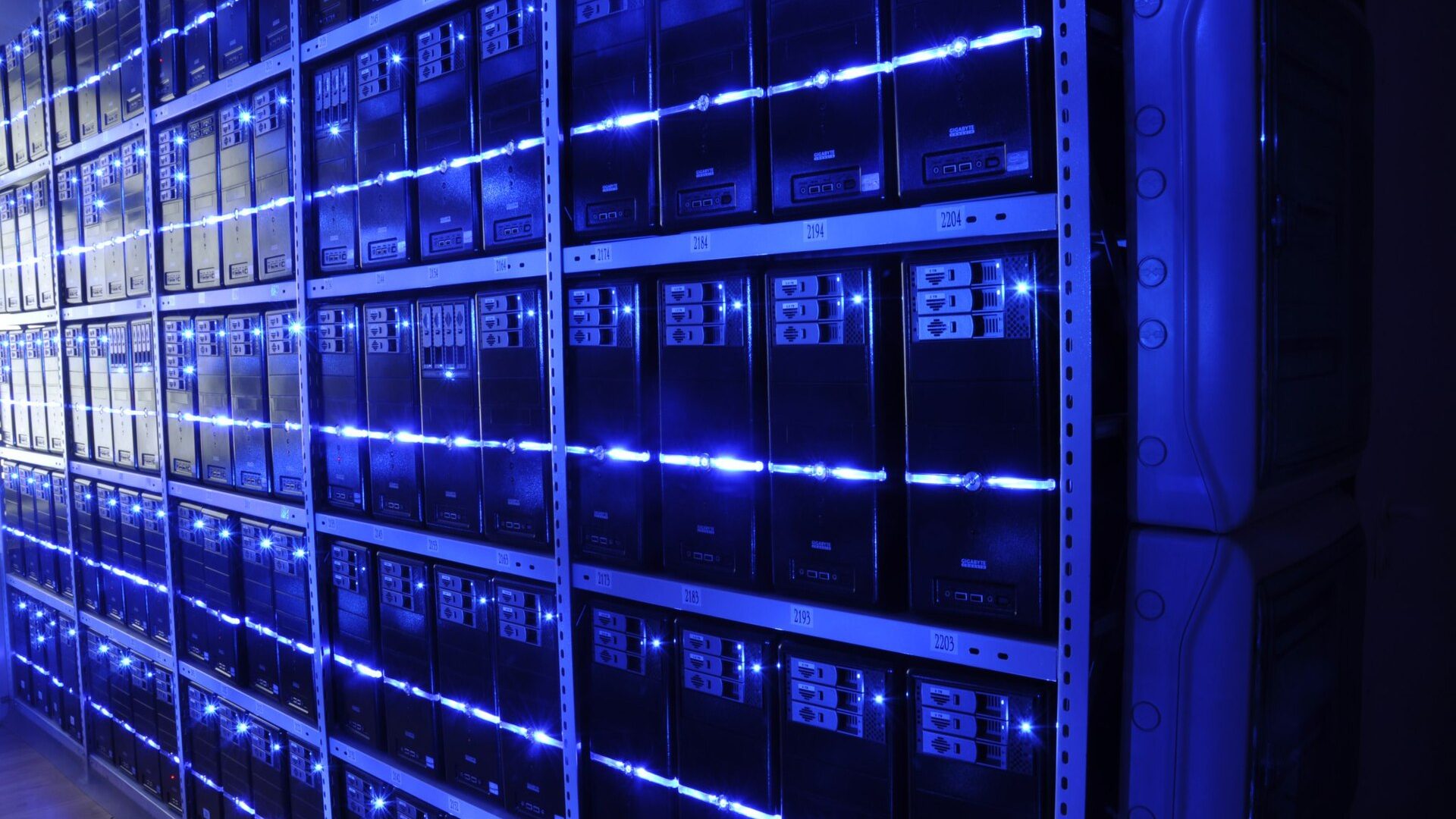
AI’s real bottleneck in 2026 is no longer chips — it is electrons, and data center battery storage has become the fastest-growing answer. Data halls built for GPU clusters that draw more than 100 kW per rack and swing from idle to full load in milliseconds have pushed batteries from a backup line item to core infrastructure. The sharpest proof arrived on 8 October 2026, when Taiwan’s Apollo Power signed a roughly 1 GWh Tesla Megapack procurement — 260 units, 501 MW, NT$13 billion (about US$407 million) — and at the same ceremony launched an AIDC grid-resilience programme with Phison, Gigabyte and Shihlin Electric (knews.com.tw; BigGo Finance).
Sizing storage for a data center or a high-load industrial site?
Send us your IT load profile, grid connection and outage requirement — we return a sized, certified LFP storage package with grid-forming PCS, fire-safety documentation and a clear reserve-versus-market capacity split.
Why AI Data Centers Broke the Old Power Plan
The traditional data center power chain — a utility feed backed by diesel generators and a small UPS battery — was designed for a steady load. AI has replaced steady with violent. Training and inference racks now pulse by tens of megawatts on sub-second timescales, and diesel generators, which take seconds to start, cannot follow that curve. Storage can, which is why the industry’s own qualification machinery has moved. NVIDIA’s DSX Ready programme, launched in September 2026, put battery energy storage into its first wave of qualifying technologies, with Tesla listed among the first qualified BESS solutions. At Phison’s Taiwan facility, Tesla reported that switching on grid-forming control cut high-frequency grid oscillation by roughly 70% under a real AI GPU load profile — a result first demonstrated in June 2026.
That is a structural change, not a product cycle. AI data centers need storage for four jobs at once: riding through utility faults, smoothing GPU transients, shifting cheap renewable energy into expensive hours, and holding a grid connection that utilities will actually approve. Each one is a specification requirement, and each one is now being written into tenders.
Data Center Battery Storage in 2026: The Demand in Numbers
| Signal | 2026 figure | Source |
|---|---|---|
| Global AIDC storage build | ~29 GWh added in 2026; ~80 GWh cumulative; 522 GWh by 2030 | China battery industry association white paper (via ne21.com) |
| Global ESS cell shipments | 461 GWh in H1 2026, +71% YoY; North America 76 GWh, +83% | SNE Research, Oct 2026 |
| Largest single-day order | Apollo Power × Tesla: ~1 GWh Megapack, 260 units, 501 MW, NT$13bn (~US$407m) | knews.com.tw, 8 Oct 2026 |
| Cell-maker earnings | LGES Q3 2026 revenue KRW 9.64tn (~US$7.2bn), +59% YoY, a record | LG Energy Solution, 8 Oct 2026 |
| Hyperscaler pipeline | Fluence: 12 GW potential AIDC storage framework with two US cloud firms | Fluence FY2026 Q2 call |
| Utility-scale anchor | Google × DTE Michigan: 1 GW data center; DTE to add 480 MW storage, 20-yr term, approved 1 Oct 2026 | Michigan PSC, Case U-22058 |
The pattern across these numbers is that storage demand is no longer led by utilities building standalone farms. It is led by electricity buyers — cloud operators, industrial parks and hospitals — who need firm, clean power at the point of use.
What Hyperscalers Are Actually Ordering
The order book shows how fast this segment scaled. Fluence has disclosed frameworks with two major US cloud providers covering up to 12 GW of potential AI data center storage. Envision will supply North American integrator Prevalon with more than 10 GWh of cells and modules over three years. EVE Energy and Fluence signed a five-year, 206 GWh supply framework — though only 16 GWh is a firm 2027 commitment, with 190 GWh held as reserved capacity, a reminder of how much of this pipeline still has to be earned. Sungrow reports roughly 2 GWh of AIDC storage orders on hand with more than 10 GWh in pursuit, and CATL has paired a 300+ Ah sodium battery rated above 15,000 cycles with a 2 GW/4 GWh win at a Guizhou intelligent-computing center worth more than RMB 1.5 billion.
The demand is also pulling in long-duration technologies alongside lithium. Google’s Minnesota agreement with Xcel Energy pairs 1,400 MW of wind and 200 MW of solar with a 300 MW/30 GWh Form Energy iron-air system designed for 100-hour discharge. The lesson for buyers is not that every site needs 100-hour storage — it is that compute customers are now willing to sign long-term supply structures, and whoever supplies the storage wins a decade of revenue.
How the Spec Sheet Changes for GPU Loads
Three requirements separate data center battery storage from a conventional grid-scale system. First, power density and rate: racks that step by tens of megawatts in milliseconds demand high-C-rate cells and oversized power conversion. Chinese suppliers have responded with high-rate products — Shuangdeng’s DP60 system claims 10C discharge and 630 kW per cabinet, built after it won a 120 MW/240 MWh AIDC project at a Jiangtian data park in April 2026. Second, availability: an asset that protects compute cannot be cycled into exhaustion, so state-of-charge floors, reserve allocation and dispatch priority have to be specified explicitly, the same discipline NVIDIA’s AI-factory storage guidance calls for. Third, safety and lifetime: semi-solid-state and other low-flammability architectures are entering commercial supply, with Shuangdeng also building a 12 GWh semi-solid AIDC cell plant, while cell-level safety and cycle-life warranties become the decisive procurement criteria.
For most sites, LFP remains the right chemistry on cost and cycle life, deployed either as an integrated containerized LFP BESS for campus-scale demand or as a commercial and industrial ESS where the load is smaller and the building footprint is tight.
Where the Demand Is Landing Beyond the US
The US remains the deepest pool, anchored by deals like LG Energy Solution Vertech’s eight-project, 1.5 GW/6 GWh agreement with DTE Energy that includes Oracle’s Saline Township AI data center, and Google’s Michigan arrangement under which DTE will develop up to 1,600 MW of renewables plus 480 MW of battery storage and demand response on a 20-year contract approved on 1 October 2026. But the pattern is globalising. Taiwan’s 1 GWh order targets steel, semiconductor, industrial and healthcare loads along the western industrial corridor. In Asia, Chuneng has partnered with TECO on 2 GWh of DC-side products aimed at Southeast Asian AIDC projects, and on 8 October 2026 India’s AmpereHour Energy tied up with US power-conversion firm Ampt to serve DC-coupled storage across India, South Asia, the Middle East and Africa. Even grid-side tenders now carry the theme: Pace Digitek’s 57.5 MW/115 MWh BSES Rajdhani contract in Delhi — a 12-year BOOT at a fixed tariff of INR 47.05 lakh per MW per year — is being marketed on reliability for the same high-value loads (pv magazine India, 8 Oct 2026).
For buyers in emerging markets, that matters because the equipment is being qualified for high-availability duty first, then descaling into ordinary commercial use. A utility-scale BESS specified today inherits much of that reliability engineering.
How to Specify Data Center Battery Storage Without Overpaying
Cost is not the constraint it was. Ember’s indicative benchmark for turnkey utility-scale storage sits near US$125/kWh, and in late September 2026 Chinese 314 Ah energy-storage cells quoted around RMB 0.367/Wh with 100 Ah cells near RMB 0.420/Wh. The risk is not paying too much for energy; it is buying the wrong shape of energy. A practical checklist: size for the transient, not the average load; require grid-forming PCS where the connection is weak; fix the reserve-versus-market capacity split in writing; insist on cell-level fire test data and a cycle-life warranty at realistic depth of discharge; and confirm the supplier has reference sites at comparable power densities rather than catalogue numbers. Sites that also want a smaller distributed layer, including edge rooms, can pair the campus system with a residential and small-commercial ESS architecture for resilience at the point of load.
The Buyer’s Questions, Answered
Buyer objections — answered
Why do AI data centers need batteries when they already have diesel generators?
Because the load changed. Diesel generators take seconds to start and are built for long outages; GPU clusters swing by tens of megawatts in milliseconds, and that is the range batteries cover. NVIDIA’s DSX Ready qualification programme, launched in September 2026, put battery storage into its first wave of qualifying technologies, with Tesla among the first qualified BESS solutions. At Phison’s Taiwan facility, Tesla reported that enabling grid-forming control cut high-frequency grid oscillation by roughly 70% under an AI GPU load profile.
Is data center battery storage a real market or just hype?
The order book says real. China’s battery industry association projects about 29 GWh of new AIDC storage in 2026, roughly 80 GWh cumulative, rising to 522 GWh by 2030. Global ESS cell shipments reached 461 GWh in the first half of 2026, up 71% year on year, with North America up 83% to 76 GWh (SNE Research). Apollo Power’s 8 October 2026 contract alone covers 260 Megapack units and about 1 GWh, with 33 units under firm contract and another 150 in negotiation.
Should I wait for cheaper cells before ordering?
Waiting has not been the winning trade in 2026. Policy changes in China reversed the cell price curve, and cell prices rose about 32% between January and July 2026, which pushed several aggressive Indian BESS bids below viability. In late September 2026, 314 Ah energy-storage cells quoted near RMB 0.367/Wh and 100 Ah cells near RMB 0.420/Wh. On the supply side, LG Energy Solution targets more than 50 GWh of North American ESS capacity by year-end 2026, and Apollo Power’s chairman described large-scale storage equipment as globally tight.
What duration and chemistry should I specify for an AI data center?
LFP remains the default for cost and cycle life, with 2-hour systems a common starting point for high-power bridging and 4-hour systems where the battery also shifts energy or serves the grid. Grid-forming (GFM) capability is becoming a requirement rather than an option for GPU loads, and higher-rate cells are entering supply — CATL has launched a 300+ Ah sodium battery rated above 15,000 cycles specifically for AIDC duty. Where fire risk is sensitive, semi-solid-state cabinets (Shuangdeng’s PowerWarden 4.0 is an 8 MWh example) are now offered commercially.
How do I stop the battery sitting idle as pure insurance?
By designing it for two jobs from day one: reserve capacity for the data hall, and surplus capacity for grid or market services. Microsoft disclosed as early as 2022 that Dublin data centers used grid-interactive UPS systems that protect servers and provide ancillary services at the same time, and LG Energy Solution’s ESS planning chief, Kim Hyun-tae, argues the competition has shifted from hardware cost to cutting customer OPEX. The discipline is to fix the capacity split and dispatch priority in the specification, so market revenue never eats the emergency reserve.
Related insights
- Lithium Rebound: Battery-Grade Carbonate Jumps 8,000 RMB/t in a Single Session
- How Smart Businesses Are Slashing Energy Costs with ESS!
- Lithium-Ion vs. Lead-Acid Batteries: A Comprehensive Comparison
WhatsApp +86 15307690902 | rain@negupgroup.com