

Need a storage supplier who answers with numbers?
We ship LiFePO4 storage batteries and BESS for utility-scale, C&I and residential
projects worldwide — with cell-level specs, cycle-life data and landed-cost
transparency on BESS Project Sizing in 2026. Send us your capacity, duration and delivery window,
and we will reply with a real quotation, not a brochure.
September 2026: A Global BESS Commissioning Wave
Grid-scale battery energy storage is moving from pipeline to power. Three announcements in the first half of September 2026 show how fast utility-scale storage is reaching commercial operation or binding approval across three continents.
Australia led with a headline commissioning. Origin Energy’s Mortlake Battery Energy Storage System — a 300 MW / 650 MWh facility co-located at the Mortlake Power Station in south-west Victoria — reached commercial operation on 7 September 2026. Built with Fluence battery enclosures and SMA grid-forming inverters, the A$400 million project adds firming capacity as Victoria plans the retirement of coal plant Yallourn by 2028. (Source: Origin Energy / Daily Energy News, 7 Sep 2026)
In Southeast Asia, Malaysia’s MyBeST programme reached financial close on 1 September 2026. A 100 MW / 400 MWh BESS developed by Blueleaf Energy and Universal Peak under a Build-Own-Operate model secured grid agreements in June and lender backing from a Singapore-based bank. It is the country’s first competitive procurement for grid-connected storage. (Source: energynews.pro, 1 Sep 2026)
In the UK, Scottish Ministers granted consent on 9 September 2026 for the Abbotshaugh Energy Storage project — a 500 MW / 2,000 MWh (4-hour) BESS in Aberdeenshire developed by Island Green Power, with a grid connection scheduled for 2033. (Source: Solar Power Portal / Envirotec, 9–10 Sep 2026)
| Project | Market | Capacity | Status (Sep 2026) | Key note |
|---|---|---|---|---|
| Mortlake BESS | Australia (VIC) | 300 MW / 650 MWh | Commissioned 7 Sep | Fluence cells + SMA grid-forming |
| MyBeST (Blueleaf / Universal Peak) | Malaysia | 100 MW / 400 MWh | Financial close 1 Sep | First competitive BESS tender |
| Abbotshaugh | Scotland, UK | 500 MW / 2,000 MWh | Consent granted 9 Sep | 4-hour duration, 2033 link |
Why This Matters for C&I and Residential Buyers
Grid-scale momentum is the clearest signal yet that behind-the-meter storage is bankable. Every gigawatt-hour of utility BESS proves inverter, BMS and fire-safety standards at scale — standards that flow down to commercial & industrial ESS and residential storage buyers as lower risk and faster payback.
For factories and commercial sites, the case is peak-shaving and demand-charge management. Tongwei’s 10 MW / 20 MWh user-side system at its Nantong solar-module base — the third Singularity Energy cooperation, totalling 25 MW / 50 MWh — shows Chinese manufacturers using storage to cut electricity cost and lift self-consumption of on-site PV. (Source: industry report via Sina, 7 Sep 2026) In Thailand, Huawei Digital Energy signed an MOU on 7 September 2026 with Siam Global House, AESCON and Integra R.E. to roll out BESS across retail sites — a template for C&I energy management in emerging Asia. (Source: Thai media via Sina, 7 Sep 2026)
The Supply Chain Is Diversifying Beyond LFP
Nearly every new BESS today runs on lithium iron phosphate (LFP), a chain still concentrated in China. India’s largest utility, NTPC, issued a global expression of interest on 9 September 2026 for a grid-connected sodium-ion pilot (100 kWh standard, or applicant-proposed), with bids open until 15 October. NTPC wants to test a chemistry built on abundant sodium to cut reliance on imported lithium. (Source: NTPC / Energy-Storage.news, 9 Sep 2026)
Domestic cellmaking is also scaling: Premier Energies and RCT India announced a 12 GWh BESS manufacturing JV in Telangana on 11 September 2026. (Source: energy-storage.news, 11 Sep 2026) Sodium-ion is not a drop-in replacement everywhere, but for stationary, cost-sensitive and low-temperature applications it is a credible second string — and CATL’s move to mass production has pushed it from lab to line.
LFP Pricing Has Stabilised — But the 30% Drops Are Over
Procurement teams should plan around a floor, not a falling knife. TrendForce’s 7 September 2026 survey puts the LFP energy-storage cell at RMB 0.38/Wh (flat week-on-week), while square LFP EV cells edged up 2.56% to RMB 0.40/Wh and battery-grade lithium carbonate eased 2.15% to RMB 14.99 per tonne-equivalent. (Source: TrendForce, 7 Sep 2026)
At pack level, regional gaps stay wide because of tariffs and logistics:
| Region | Cell cost (US$/kWh) | Complete pack (US$/kWh) | Driver |
|---|---|---|---|
| China (FOB) | $65–$80 | $85–$110 | Oversupply, domestic competition |
| Europe (local) | $110–$140 | $150–$200 | Tariffs, labour, regulation |
| USA (imported) | $90–$115 | $130–$180 | Section 301 tariffs, freight |
(Source: Insum Energy, 2026) The takeaway for buyers in Africa, the Middle East and Latin America: sourcing directly from certified LFP battery manufacturers still removes the 10–20% middleman markup, and September (“Golden September”) is historically the best month to negotiate volume pricing.
What It Means for NEGUP ENERGY Customers
The September 2026 wave confirms a single direction: storage is becoming standard infrastructure from grid to rooftop. For EPCs, distributors and project developers in emerging markets, the opening is in turnkey BESS solutions that pair proven LFP cells with grade-A BMS, PCS and certified enclosures — exactly the stack that wins bankability.
NEGUP ENERGY supplies LiFePO4 cells, residential and C&I ESS, and containerised BESS packages with unified quality control for integrators building the next wave of projects across Asia, Africa, the Middle East and Latin America.
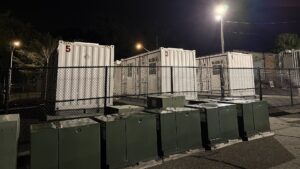
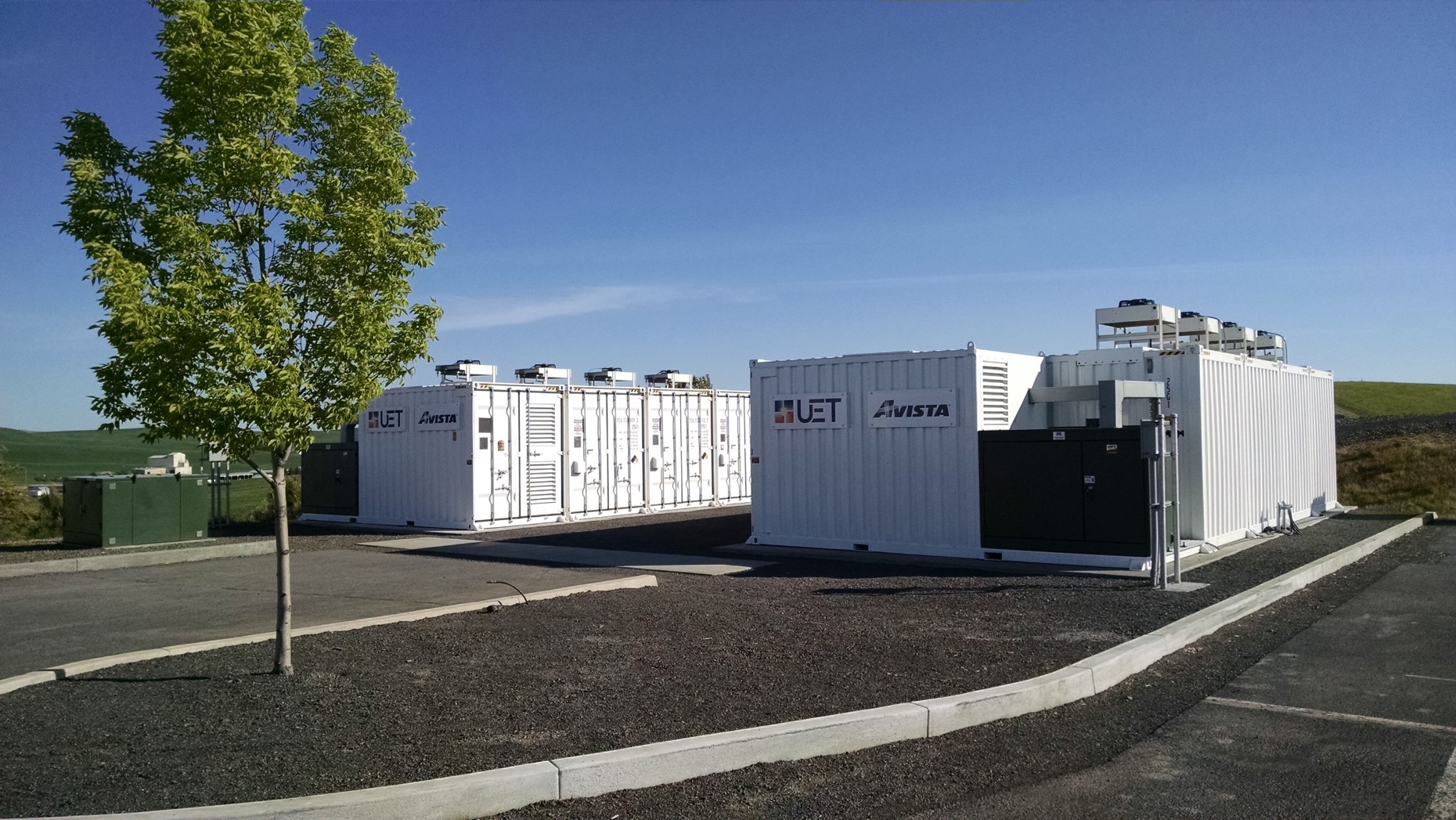
Hero image: 1 MW / 4 MWh Turner Energy Storage Project, Pullman, WA — courtesy Wikimedia Commons (CC BY-SA 4.0).
500MW / 2,000MWh Aberdeenshire
C&I 10MW / 20MWh
12GWh India cell JV
RMB 0.38/Wh LFP cell
BESS Project Sizing in 2026: Questions Buyers Ask Before Ordering
1. Are 4-hour systems now the default for utility BESS, and does 8-hour still pay?
Four hours is the volume default: an Australian 500MW/2,000MWh 4-hour project in Aberdeenshire and a 100MW/400MWh plant financed in September 2026 both landed on that ratio. Eight-hour is still viable where capacity or reliability payments dominate energy revenue. The commercial test is the revenue stack, not the duration trend.
\n
2. What does a C&I battery actually save, in real numbers?
For factories and commercial sites the case is peak shaving and demand-charge reduction rather than arbitrage. A 10MW/20MWh user-side system is already operating at a solar-module manufacturing base in Nantong. Model your savings off your own 15-minute peak demand charge, not off a generic payback figure — that is where C&I returns concentrate.
\n
3. Cell prices are flat at RMB 0.38/Wh. Should we wait for them to fall again?
Probably not. The 10-20% drops of 2024-25 are gone; the mainstream storage cell was flat week-on-week at RMB 0.38/Wh in September 2026 while square LFP cells actually rose 2.56% to RMB 0.40/Wh. Going direct to a manufacturer also removes the 10-20% middleman markup. September is historically the best month to negotiate volume pricing, so this is the window to contract.
\n
4. Is new local cell capacity a real supply option or just announcements?
Announcements are ahead of output. A 12GWh BESS manufacturing JV in Telangana was announced in September 2026, with a first 6GWh phase targeted for FY2027-28. For a 2026-27 delivery you should still plan around incumbent tier-one capacity and treat local supply as a 2028 option. Tell us your delivery window and we will be straight about which platform can actually meet it.
Still weighing options? Send your project detail on WhatsApp
and we will reply with a written answer,
or email rain@negupgroup.com.