

Need a storage supplier who answers with numbers?
We ship LiFePO4 storage batteries and BESS for utility-scale, C&I and residential
projects worldwide — with cell-level specs, cycle-life data and landed-cost
transparency on BESS Capacity Auctions. Send us your capacity, duration and delivery window,
and we will reply with a real quotation, not a brochure.
Contracted Capacity Is Now the Market’s Biggest BESS Buyer
Battery storage grew for three years on merchant economics: arbitrage spreads, ancillary service prices and optimism about future volatility. That is changing in 2026. Government agencies and transmission operators are running competitive BESS capacity auctions that award long-term operating contracts, and those contracts — not merchant revenue forecasts — are what lenders now finance.
South Korea: A Third Centralised ESS Tender, Potentially 1 GW
Korea Power Exchange (KPX) is expected to publish the tender notice for the third round of its ESS Central Contract Market around the Chuseok holiday, industry sources reported on 22 September 2026. Winners build grid-scale storage and operate it as a power system resource for 15 years. The first two rounds awarded 563 MW and 565 MW — 1.128 GW, roughly 6.8 GWh — and round three could reach about 1 GW, driven by the government’s 11th Basic Plan (530 MW in 2028, 600 MW in 2029), semiconductor clusters and AI data centres. (ChosunBiz, 22 Sep 2026; Edaily, 6 Sep 2026)
Two details matter more than the volume. Price and non-price criteria were weighted 50/50 in round one, but non-price factors — supply chains, fire and facility safety, domestic industry contribution — rose to 60% in round two. Meanwhile price is losing power as a differentiator: average winning bids fell from the KRW 30/kWh range to the KRW 20/kWh range. Suppliers are pivoting to LFP: LG Energy Solution plans 1 GWh of ESS-grade LFP at Ochang next year, and SK On is converting Seosan EV lines to 3 GWh of ESS LFP. (Aju Press, 19 Sep 2026)
| Korea ESS Central Contract Market | Volume | Leading supplier | Non-price weighting |
|---|---|---|---|
| Round 1 | 563 MW | Samsung SDI ~76% | 50% |
| Round 2 | 565 MW | SK On 50.3% | 60% |
| Round 3 (expected) | up to ~1 GW (unconfirmed) | pending tender | non-price expected to dominate |
| Cumulative, rounds 1–2 | 1.128 GW (~6.8 GWh) | Samsung SDI 55.8% / SK On 25.2% / LGES 19.1% | 15-year operating term |
Italy: A 58% Installation Drop Meets a 50 GWh Gap
Italy shows what happens when subsidy-led growth stalls before auction-led growth arrives. Anie Rinnovabili’s Storage Systems Observatory, using Terna’s Gaudì database, found newly installed storage capacity fell 58% year on year in the 12 months to June 2026, with power down 42%; second-quarter additions fell 82%. Residential — the historic engine — posted an 11th consecutive quarterly decline, down 36% in Q2. H1 2026 added just 1.3 GWh, taking the fleet to 941,911 systems and about 8 GW / 19.3 GWh. Against PNIEC targets, Anie puts the shortfall at roughly 2 GWh distributed and 50 GWh centralised. (ESS News, 11 Sep 2026)
The answer is MACSE, a storage-specific capacity mechanism. Terna has awarded 10 GWh in the first auction for delivery by 2027; further MACSE and Capacity Market procedures should add 16 GWh by 2029, with the next MACSE round on 24 November 2026. Even then, Anie calculates about 24 GWh more will be needed by 2030. Arera data cited by Anie shows around 0.8 TWh of Italian renewable generation was curtailed in 2025.
Latin America: Argentina Closes 700 MW, Brazil Sets First Auction Dates
Argentina built a standalone storage market from a standing start in just over a year. Under AlmaSADI, the Energy Secretariat awarded 20 BESS projects totalling 700.5 MW and about US$700 million across seven regions, from Buenos Aires (185 MW) and Chaco–Formosa (161.5 MW) to Santa Fe (36 MW) and the Pampa region (68 MW). Winners were Genneia (7), DQD Energy (8), 360 Energy Solar (3), Aluar (1) and Intermepro (1). The tender drew 235 offers totalling 8,338 MW — over eleven times the target — after AlmaGBA awarded 713 MW for Greater Buenos Aires. (EFE; Wood Mackenzie)
Brazil is next: its first capacity reserve auctions dedicated to large-scale batteries are set for 2 December 2026 (reserved for domestic-manufacturing projects) and 4 December 2026 (open). Contracts run 15 years, supply starts 1 August 2028, and projects need at least 30 MW with four-hour duration. Wood Mackenzie nonetheless flags the absence of clearly defined, predictable remuneration as the region’s main financing barrier.
India: Fifteen-Year BESS Contracts Move From Policy to Paper
Maharashtra’s MSEDCL awarded GK Energy a 150 MW / 300 MWh BESS project with viability gap funding, commissioning within 18 months and revenue structured as a fixed monthly fee over 15 years (SolarQuarter, 21 Sep 2026). On the equipment side, Pace Digitek disclosed a ₹488 crore order from NTPC GE Power Services for 5.015 MWh BESS containers with BMS and EMS plus a 12-year comprehensive maintenance contract. Small in energy terms, but the shape is the signal: state-linked buyers procuring containerised BESS with controls and a decade-plus maintenance obligation in one package.
Germany: 60 GW of Storage That Needs No New Grid Connection
Germany is pursuing a cheaper route to scale. A Fraunhofer IEE study for the German Solar Association (BSW-Solar) finds that at 1,313 rural substations with high renewable penetration, intelligently controlled BESS could lift combined renewable and PV capacity to 200% of transformer rating while holding curtailment near 1% — a modelled potential of 150 GW of extra PV and around 60 GW / 240 GWh of storage, extrapolated from real operating data for 20 transformers at 13 substations. It is a technical potential, not confirmed interconnection capacity, but the service described — charging when local generation pushes a transformer to its limit, discharging later — is exactly what auctioned storage is paid to provide. (ESS News, 21 Sep 2026)
The Cost Side: ESS Cell Prices Are Rising Again
Auction-led demand is arriving alongside a cost reversal. On 21 September 2026 CATL updated list prices on its online store: 280Ah (1P) ESS cells at RMB 0.470/Wh, up 1.1% on early September; 314Ah at RMB 0.403/Wh, up 2.0%; and the first public listing of its 587Ah cell at RMB 0.415/Wh. CATL called the move routine. The direction is clearer: average 314Ah LFP ESS cell prices have climbed from a late-2025 low to about RMB 0.365/Wh in September 2026, a cumulative rise above 20%, with lithium carbonate rebounding from below RMB 60,000/tonne in mid-2025 to above RMB 210,000/tonne in June 2026. Each RMB 10,000/tonne of lithium carbonate adds roughly RMB 0.006–0.007/Wh to cell cost, and electrolyte and copper foil have risen too. (China Securities Journal, 21 Sep 2026)
For bidders this is uncomfortable: clearing prices have fallen in Korea while input costs rise. Non-price scoring — safety documentation, local content, warranty structure, supply-chain transparency — now matters more than a marginal saving per watt-hour, because it is the dimension that still separates one bid from another.
| Market | Next milestone | Contract structure | Volume in play |
|---|---|---|---|
| South Korea | Tender notice around Chuseok, Sep–Oct 2026 | 15-year grid-resource operation | expected up to ~1 GW |
| Italy (MACSE) | Auction on 24 Nov 2026 | Capacity-based remuneration | 16 GWh planned via MACSE + Capacity Market |
| Brazil | Auctions on 2 and 4 Dec 2026 | 15-year capacity reserve | min. 30 MW / 4 hours per project |
| Argentina | AlmaSADI awarded, delivery ongoing | Capacity and reliability at critical nodes | 700.5 MW awarded |
| Germany | Bundestag grid package debate | Section 11a EnWG tenders proposed | modelled 60 GW / 240 GWh potential |
What It Means for BESS Buyers and Integrators
Contract first, equipment second. When revenue comes from a 15-year state contract, the binding constraint is qualification, not price. Bids hinge on certified safety (UL 9540A and NFPA 855 in North America, GB 44240-2024 in China), documented supply chains and bankable warranties. Buyers specifying utility-scale BESS should expect to be asked for the same evidence a TSO auction demands.
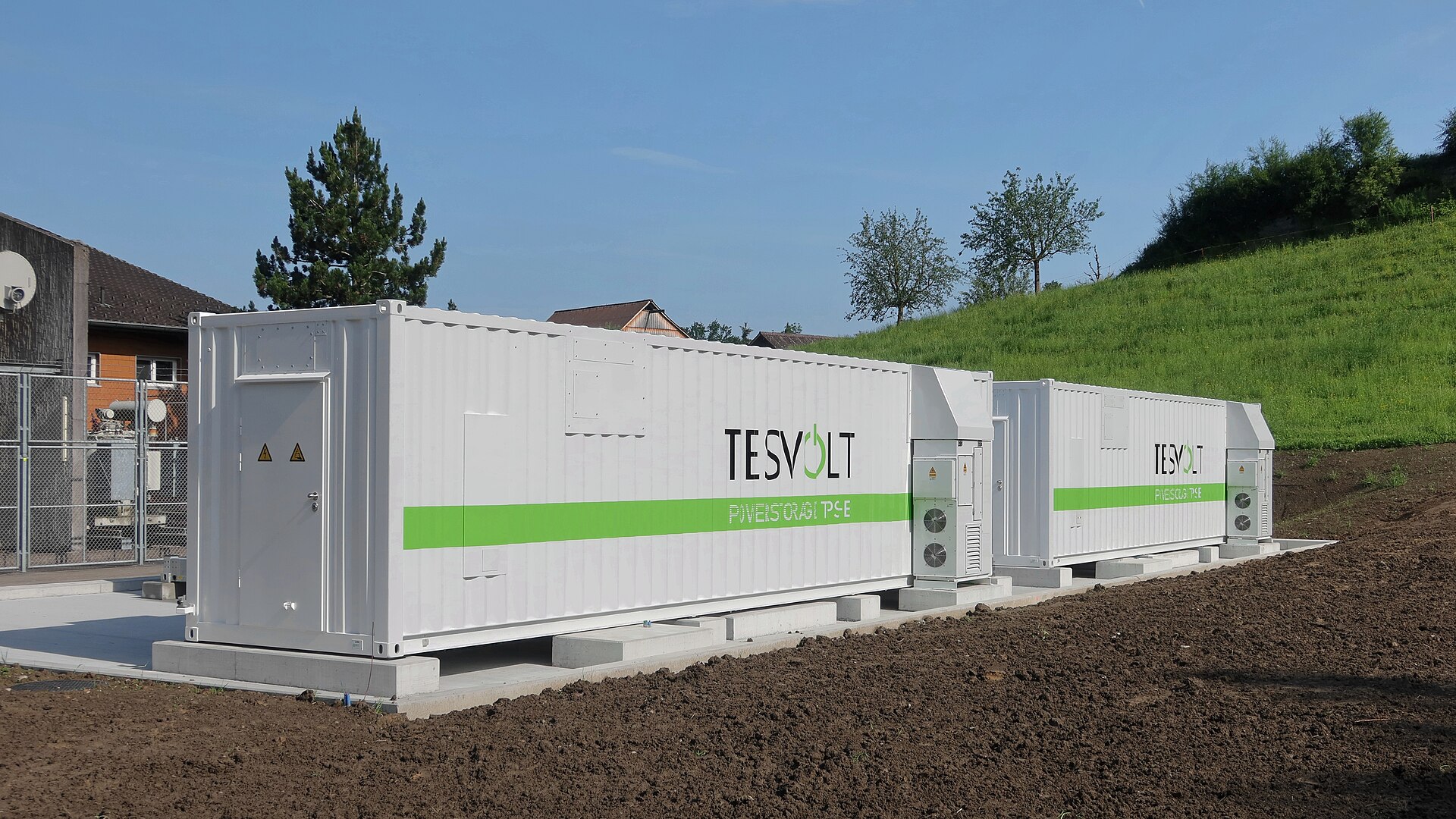
Containerised, maintenance-inclusive scope is the default. The NTPC GE Power Services award mirrors what the Korean and Italian auctions effectively buy. Our containerised BESS configurations are specified for that scope: battery block, PCS, thermal management, fire suppression and controls as one qualified unit.
Behind the meter still has to justify itself on tariffs. With Italian residential installations down 11 straight quarters, growth sits in commercial and industrial ESS, where demand charges, peak shaving and resilience carry the payback. Where sites are paid for flexibility instead, residential batteries increasingly operate inside aggregation programmes.
What to Watch
Three dates set the tone for Q4: the KPX tender notice for Korea’s third round, Italy’s MACSE auction on 24 November and Brazil’s twin auctions on 2 and 4 December. Rising cell prices and tighter qualification rules will decide who can deliver what they win.
WhatsApp +86 15307690902 | info@negupgroup.com
Italy MACSE 10 GWh
50/50 price weighting
Argentina 700 MW close
Samsung SDI 55.8%
BESS Capacity Auctions: Questions Buyers Ask Before Ordering
1. Capacity auctions are displacing merchant revenue — is the merchant model dying?
It is becoming one layer rather than the whole stack. Italy is the clearest case: subsidy-led growth stalled, new installations fell sharply, and the response was a storage-specific capacity mechanism (MACSE) with 10GWh awarded in the first auction for 2027 delivery, with further rounds expected. Blended revenue is the norm now, and contracted capacity is what makes a project bankable.
\n
2. Why are non-price criteria weighted so heavily in ESS tenders?
Because supply chain and fire safety have become the disqualifiers. Korea’s first round weighted price and non-price criteria 50/50, with the second round tilting further toward supply chain, fire and facility safety, and domestic industry content. Tender scoring is now a supplier-qualification exercise before it is a price exercise, which is why documentation quality directly affects your win rate.
\n
3. How concentrated is the cell supply behind these auctions?
Highly. Korean ESS cell supply is roughly Samsung SDI 55.8%, SK On 25.2% and LGES 19.1%. Similar concentration in tier-one supply is why buyers are willing to pay a local-cell scarcity premium. If a tender scores domestic content, expect a corresponding price premium in the winning bid, and build that into your total-cost model rather than comparing quoted cell prices alone.
\n
4. What should an exporter prepare before a capacity auction opens?
Three things, in this order: documented fire-safety test reports, evidence of bankable supply chain (framework agreements or delivered volumes), and a clear country-of-origin position. These are the scored criteria, and they are compileable in weeks if you start now. Send us the tender notice and we will tell you which of the three you already satisfy.
Still weighing options? Send your project detail on WhatsApp
and we will reply with a written answer,
or email rain@negupgroup.com.