

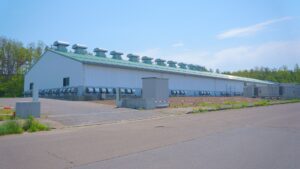
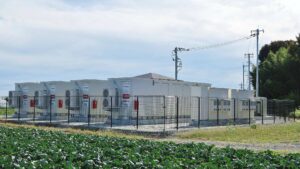
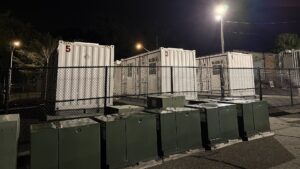
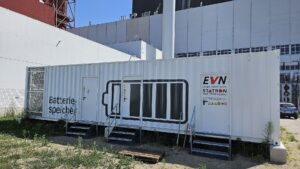
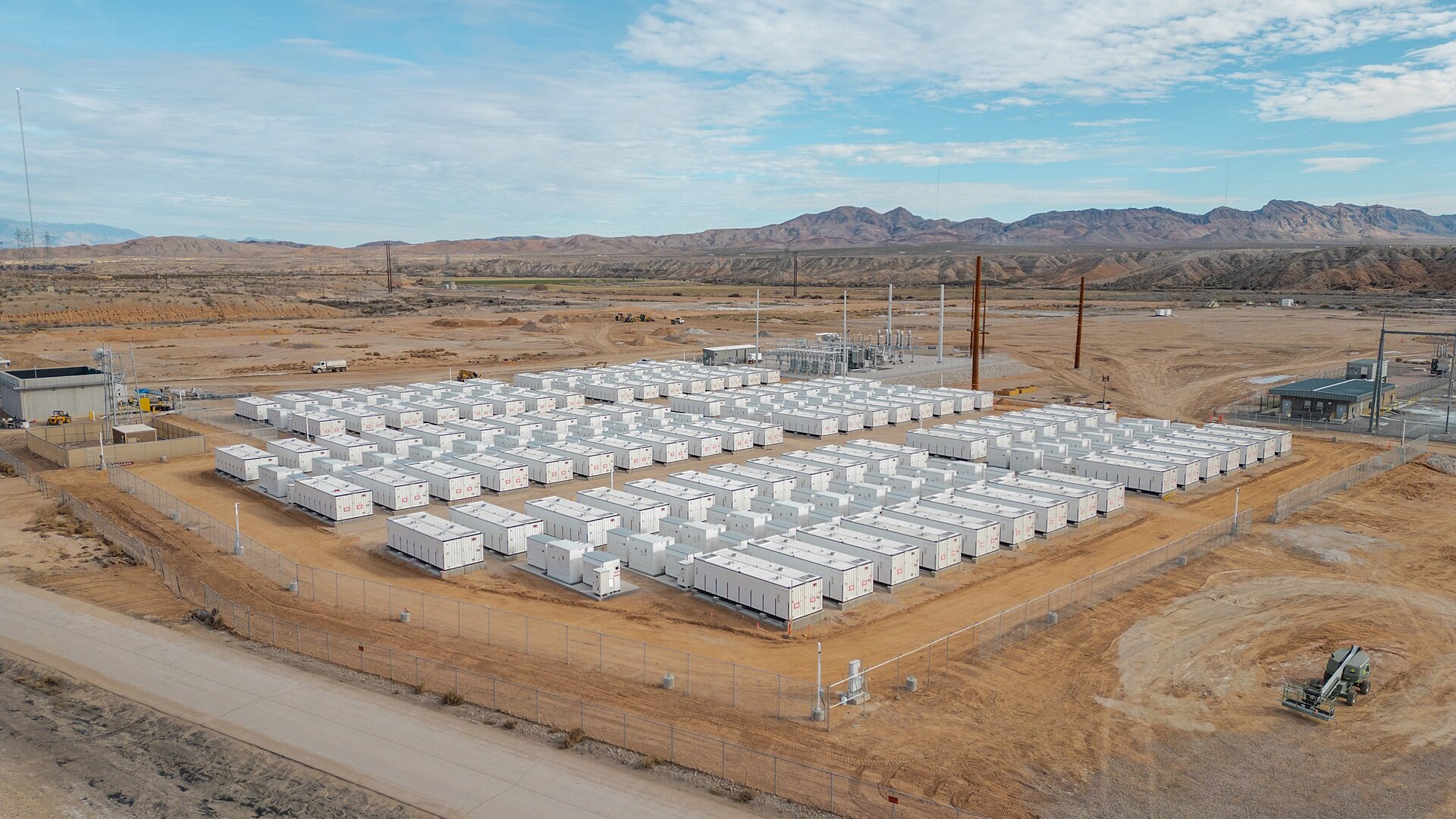
Sodium-ion energy storage stopped being a laboratory story in September 2026. CATL began delivering its first commercial sodium-ion storage systems in China, HiTHIUM launched a 4 MWh sodium container with a 30-year design life, and Peak Energy began assembling US-made sodium containers in Sacramento. Yet BloombergNEF still expects LFP to hold over 90% of a 459 GWh storage year, and the IEA puts sodium-ion cell capacity near 1% of lithium-ion. Both facts frame the question for 2027 procurement: when does the second chemistry earn a place in the bill of materials?
Need a storage supplier who answers with numbers?
We ship LiFePO4 storage batteries and BESS for utility-scale, C&I and residential
projects worldwide — with cell-level specs, cycle-life data and landed-cost
transparency on Sodium-Ion vs LFP Storage. Send us your capacity, duration and delivery window,
and we will reply with a real quotation, not a brochure.
Why Sodium-Ion Energy Storage Moved From Pilot to Procurement
Three switches flipped at once, and none of them was a chemistry breakthrough.
The price gap closed from the lithium side. InfoLink Consulting’s 23 September 2026 spot assessment puts prismatic LFP storage cells (280Ah and 314Ah) at RMB 0.365/Wh, with battery-grade lithium carbonate back at RMB 132,000/t after trading below RMB 60,000/t in 2025. CATL’s own store lifted 314Ah to RMB 0.403/Wh and 280Ah to RMB 0.470/Wh. When lithium gets dearer, the chemistry that avoids it stops looking exotic.
China’s tax code drew a line between chemistries. From 1 September 2026 Chinese lithium-ion cells, packs and clusters carry a 2% consumption tax, rising to 4% on 1 September 2027, after eleven years of exemption. Sodium-ion, solid-state and fuel cells stay exempt to the end of 2028 — a structural cost wedge unrelated to cell performance.
Product finally exists at container scale. Sodium-ion had been a pilot story; in 2026 it arrived in 30 MWh-class cabinets with defined cycle life, cooling architecture and shipping dates.
Volume has not moved: BloombergNEF forecasts 158 GW / 459 GWh of global storage additions in 2026, up 41%, with LFP above 90%. The IEA puts sodium-ion capacity just over 1% of lithium-ion, and Bernstein counted about 9 GWh of shipments in 2025 against roughly 25 GWh expected in 2026.
The First Public Price Anchor for Sodium-Ion Energy Storage
Until this quarter, sodium-ion pricing was a trade rumour. In Hebei’s Cangzhou Renqiu Zhihong pilot, the sodium-ion section went to CATL at RMB 1.035/Wh while the LFP section in the same round went to Envision at RMB 0.518/Wh — the first fully disclosed head-to-head in a Chinese provincial pilot, and roughly a two-times premium on a delivered-system basis (Shanghai Metals Market).
Set against September 2026 LFP benchmarks, the gap is unambiguous.
| Cost / performance anchor (Sept 2026) | Sodium-ion | LFP (lithium) | Source |
|---|---|---|---|
| Tendered storage bid, same provincial pilot | RMB 1.035/Wh (CATL) | RMB 0.518/Wh (Envision) | SMM, Hebei Cangzhou Renqiu Zhihong |
| Prismatic storage cell, market average | No published spot series yet; awards are mostly lithium-sodium hybrid | RMB 0.365/Wh (280Ah & 314Ah); RMB 0.438/Wh (100Ah) | InfoLink spot, 23 Sep 2026 |
| DC-side liquid-cooled container (2h) | Not yet at scale | RMB 0.49/Wh | InfoLink spot, 23 Sep 2026 |
| AC-side liquid-cooled container (4h) | Not yet at scale | RMB 0.53/Wh | InfoLink spot, 23 Sep 2026 |
| Global pack benchmark | No independent series yet | US$70/kWh average pack; lowest cell US$36/kWh | BloombergNEF price survey, Dec 2025 |
| Rated capacity announced per unit | >30 MWh (CATL TENER Sodium); 4 MWh (HiTHIUM ∞Power N4.0MWh) | 5–6 MWh class containers in common supply | Company announcements, Jun–Sep 2026 |
At twice the tender price, sodium-ion does not win a straight $/kWh comparison, and any supplier claiming otherwise in 2026 is selling something. HiTHIUM’s published target is parity with lithium at a lithium carbonate price of RMB 150,000/t — a target, not a quote.
What CATL’s First Deliveries Actually Change
CATL unveiled TENER Sodium in Munich on 22 June 2026, calling it the first field-validated sodium-ion storage system. The numbers matter more than the launch: above 30 MWh per unit at under 42 tonnes, 34 units to a 1 GWh station; 15,000 cycles at 25°C, which CATL translates into a 25–30 year service life at 70% state of health; over 92% capacity retention at −20°C; more than 10,000 cycles at 45°C without forced cooling; and 1% self-consumption.
The detail that will actually move procurement is physical: TENER Sodium uses the same enclosure and footprint as CATL’s LFP system, so chemistry can be switched in the same slot without redesigning the site or repeating certification. What is being sold is optionality — sodium when lithium runs hot, LFP when it does not.
Deliveries are early but concrete: first Chinese shipments from September 2026, 1 GWh cumulative by year-end, international from June 2027. The order book outruns output — 60 GWh with HyperStrong, 5 GWh with Alfen, and a five-year 10 GWh HiNa–VOLTA agreement signed on 2 September 2026 — and CNESA counts over 100 GWh of first-half 2026 sodium orders against 293.7 GWh of planned capacity, mostly as framework agreements.
Two Other Routes: HiTHIUM’s Long-Life Container and Peak Energy’s US Line
HiTHIUM launched ∞Power N4.0MWh on 16 September 2026 — a 4 MWh sodium system on its ∞Cell N785Ah cell, with a 30-year design service life and mass production scheduled for 2027. Peak Energy is the non-Chinese route: after shipping what it called the first US grid-scale sodium-ion system in July 2025, it chose Sacramento for a US$71 million plant rated up to 4 GWh a year, backed by a Californian tax credit and a General Motors partnership in which GM holds cell manufacturing rights; commercialisation is targeted at 2028, and its Jupiter Power agreement covers up to 4.75 GWh.
The cautionary tale sits beside it: Natron Energy ceased operations on 3 September 2025 after a failed raise, cancelling a US$1.4 billion plant — killed by manufacturing capital and sales channels, not chemistry.
Where Sodium-Ion Wins, and Where LFP Still Wins
| Application | Better choice today | Why |
|---|---|---|
| Utility-scale storage, daily cycling, 2–4h | LFP | Lowest installed RMB/Wh, terawatt-hour supply chain, 6,000–8,000 cycles proven at scale |
| Hot desert and high-ambient sites (45°C+) | Sodium-ion | 10,000+ cycles at 45°C without forced cooling; 1% self-consumption cuts parasitic load |
| Cold and high-altitude microgrids, telecom backup | Sodium-ion | >92% capacity retention at −20°C; safer transport and storage at zero volts |
| Buyers hedging lithium price or tax exposure | Sodium-ion or lithium-sodium hybrid | Same enclosure footprint swaps chemistry without site redesign; Chinese sodium stays tax-exempt to end-2028 |
| Space-constrained residential and C&I retrofit | LFP | Higher energy density per m², mature certification and warranty networks |
| First-wave 2027 delivery schedule | LFP | Sodium capacity and certification are still ramping through 2027–2028 |
The pattern is consistent: sodium-ion’s advantage is thermal, not financial. It wins where cooling load or raw-material risk dominates ten-year cost of ownership, and loses wherever the answer is simply RMB per watt-hour delivered this year.
What a 2027 Storage Specification Should Say
Write slot compatibility into the enclosure requirement. If the battery slot must accept either chemistry at the same footprint, chemistry can be switched at re-power without a new site design or a second certification cycle — CATL’s own pitch.
Specify hot- and cold-climate cycle data separately. A 25°C lab cycle count says nothing about a site at 45°C ambient. Ask for cycle life at site temperature, and for the self-consumption figure that decides how much stored energy reaches the grid.
Require one safety path for both chemistries. UL 9540A, IEC 62619 and China’s GB 44240-2024 apply regardless of the working ion; China published its first standardised nail-penetration results on 22 September 2026.
Model the tax wedge into landed cost. A 2% Chinese consumption tax on lithium-ion (4% from 1 September 2027) against a sodium exemption to end-2028 reorders some sites — and again when the exemption lapses.
Then buy what ships. For 2027 that is still LFP, alongside mixed provincial signals: Yunnan’s 2026 shared-storage list has no LFP at all, pairing 1.5 GW / 6 GWh of vanadium flow with 400 MW / 1.6 GWh of sodium.
The Read for 2027
Sodium-ion has earned a place on the specification sheet, not the headlines. The realistic trajectory is one chemistry for volume and one for conditions: LFP keeps winning the 2–4 hour daily-cycling build because it is cheapest per delivered watt-hour and ships in terawatt-hours, while sodium-ion takes the hot, cold, remote and lithium-price-exposed corners where a 2x premium is recovered through cooling, cycle life and material risk. If parity lands on schedule, the boundary moves in 2028, not 2026.
For a developer signing a PPA-backed project this quarter, the conclusion is straightforward: specify the site, not the chemistry. Insist on a slot that accepts a second chemistry without redesign, insist on temperature-realistic cycle data, and keep the first sodium blocks as sized pilots alongside a lithium iron phosphate backbone. NEGUP Energy supplies LFP cells, packs and containerized BESS on that basis and quotes utility-scale BESS slots engineered for chemistry flexibility; the same discipline applies to commercial & industrial ESS and residential ESS.
Talk to NEGUP Energy about a storage system specified for chemistry flexibility and temperature-realistic duty.
WhatsApp +86 15307690902 | rain@negupgroup.com
RMB 132,000/t carbonate
2% consumption tax
US$70/kWh pack price
158 GW / 459 GWh
Sodium-Ion vs LFP Storage: Questions Buyers Ask Before Ordering
1. Sodium-ion has hit GWh deliveries. Should we switch away from LFP?
Not yet for most projects. The IEA puts sodium-ion capacity just over 1% of lithium-ion, and BloombergNEF forecasts 158GW/459GWh of global storage additions in 2026 with LFP above 90%. Sodium-ion is now real — 30MWh-class cabinets with defined cycle life and shipping dates — so it is a credible second source, but it is not yet a capacity substitute for a multi-GWh programme.
\n
2. LFP is still cheaper per kWh, so why does sodium-ion matter?
Two reasons that are not about price. First, the cheapest sodium pack is quoted around US$70/kWh with a lowest cell around US$36/kWh, which compresses as volumes build. Second, supply risk: lithium carbonate is back at RMB 132,000/t after eleven years of exemption ended. Sodium removes that exposure entirely, which matters for buyers who cannot tolerate a 60% price move between contract and delivery.
\n
3. The 2% consumption tax on Chinese cells — does it change our landed cost?
Yes, and it is rising. From 1 September 2026 Chinese lithium-ion cells, packs and clusters carry a 2% consumption tax, increasing to 4% on 1 September 2027, after eleven years of exemption. Sodium-ion and solid-state are currently outside that scope. On a large project the 2% is a real line item; on a multi-year programme you should price both the 2% and the 4% case before you sign.
\n
4. What are current LFP cell prices so I can compare properly?
InfoLink’s 23 September spot assessment puts prismatic LFP storage cells at RMB 0.365/Wh for both 280Ah and 314Ah, with RMB 0.438/Wh for 100Ah. Common container classes are 5-6MWh. That is the number to benchmark any sodium quotation against — compare per Wh at the cell or pack level, on the same chemistry basis, and confirm whether the quote is AC or DC side.
Still weighing options? Send your project detail on WhatsApp
and we will reply with a written answer,
or email rain@negupgroup.com.